Between September and November 2025, all learners and teachers from Euro4VET partner VET Schools involved in the pilot sessions of its Training Course participated in the project’s Virtual EU Skills Competition, which main purpose was to test their knowledge concerning European Union (EU) matters. This Competition had two phases: the first one, with all learners, was characterised by a set of weekly quizzes to evaluate their knowledge related to the project’s Training Course. The second phase (in which only the learners with the highest score participated), was tied to the idea of the future of Europe, and so the contestants had to prepare a video about this topic (more details about the Virtual EU Skills Competition are available here, where you can also find all videos made by the learners). The learners with the winning videos (which quality was assessed by the Euro4VET Portuguese partner responsible for organising the Competition, the Polytechnic University of Leiria) had one “golden” prize: they would be coming to Brussels for a one day study visit to EU Institutions, to get to know them in situ, how those institutions work and their relevance in terms of democratic values and citizenship – some of the topics they have learned in Euro4VET Training Course.
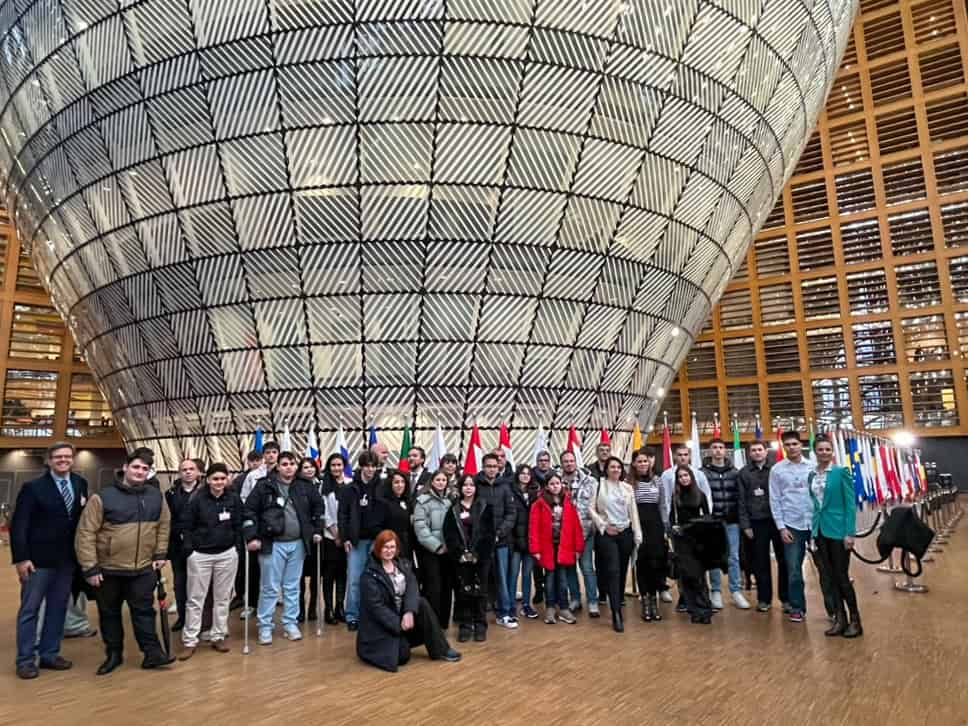
This study visit, organised by EfVET, took a delegation of 44 learners and teachers from all Euro4VET partner organisations for a set of meetings and visits, on February 16th and 17th.
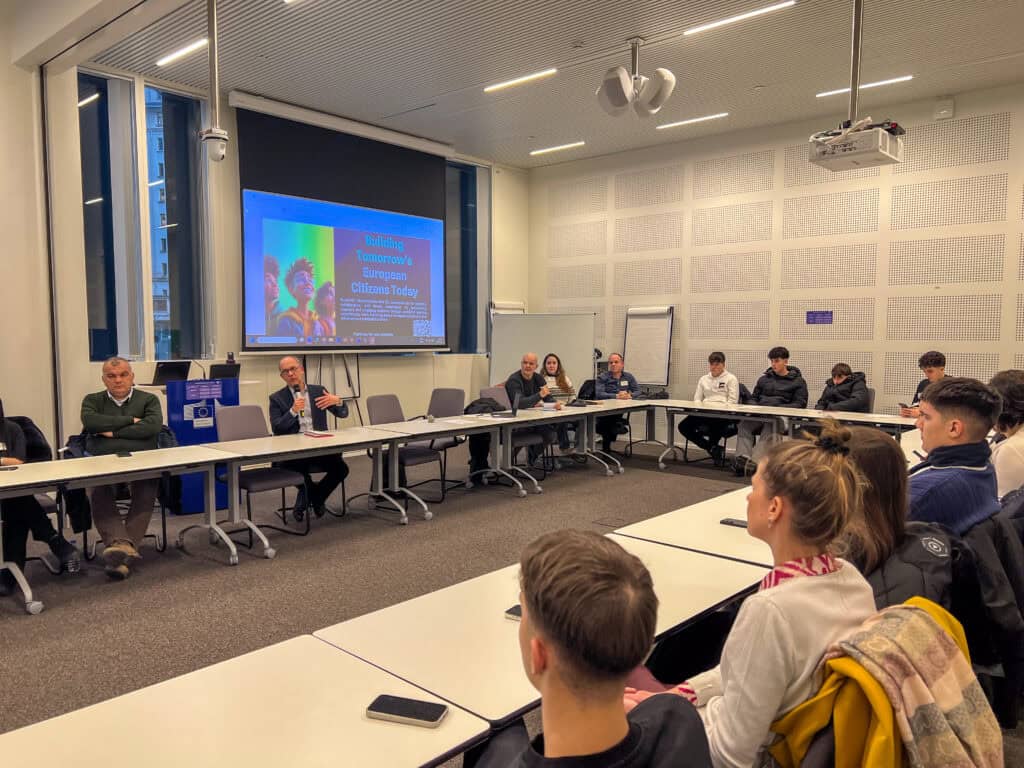
On the first day, the delegation had a meeting with Mr. Koen Bois D’Enghien (from the European Commission’s Directorate-General for Employment, Social Affairs and Inclusion – DG EMPL), during which they got to know what is the main purpose of the European Commission, and especially DG EMPL, and had the opportunity to discuss with Mr. D’Enghien about the importance of being active citizens, fully aware of their rights and responsibilities. During this meeting, learners from Euro4VET Coordination partner, INSIGNARE (PT), also presented the project in terms of main objectives and results, and explained what impact their participation in the project is having on their awareness about the European Union, its mission and values.
The second day had a full agenda. It started early in the morning, with a guided visit to the Council of the European Union. Participants got to understand how it works and its relevance for all of the decisions made by the European Commission. Moreover, they heard about interesting curiosities (e.g., did you know that the Council has three different buildings in Brussels, all environmentally friendly – Justus Lipsius, Europa and Lex?).
After a quick lunch, the delegation visited the European Parliament (EP) and its Hemicycle, and learned interesting things about the way it functions with an active participation of all 720 representatives of the 27 Member States (did you know that the number of Members of the EP increased from 705 during the previous term?). The participants then visited the House of European History, which has a permanent exhibition focused on the European past and on what binds the continent together, and moved to the last appointment of the day: a meeting with the Heads of Unit, of Department and of Section of the European Education and Culture Executive Agency (EACEA), responsible for managing all Jean Monnet projects, including Euro4VET.
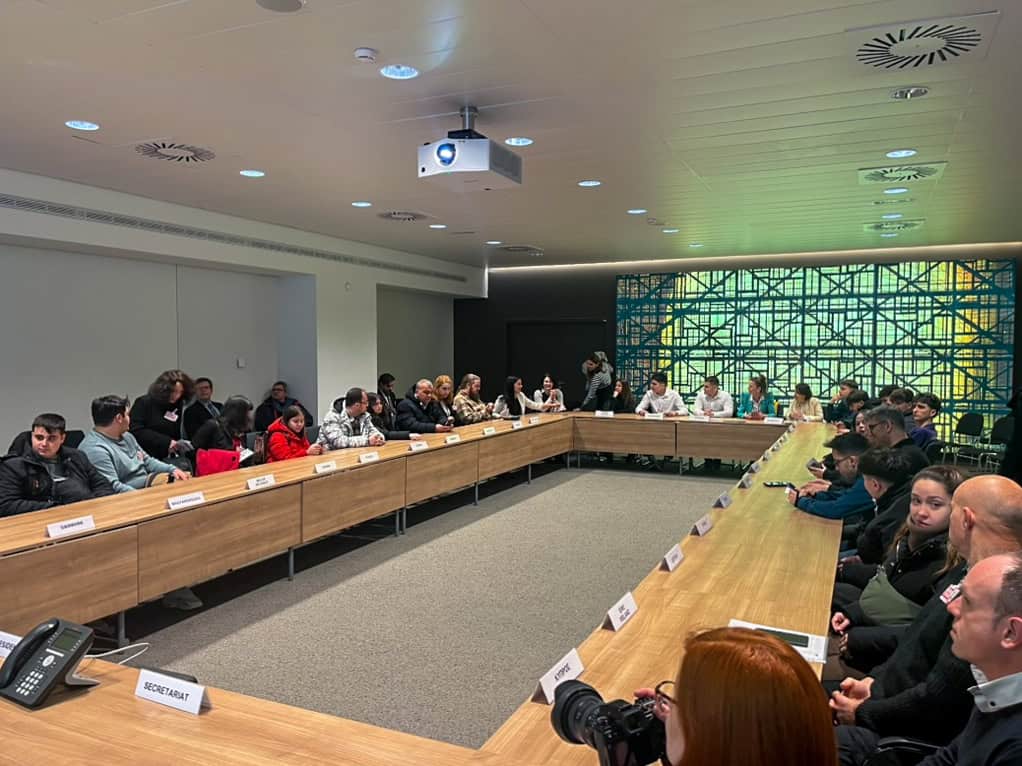
During this meeting, the delegation had the opportunity to understand how EACEA operates, and the relevance of Jean Monnet projects for Vocational Education and Training. Moreover, there was a Q&A session where participants had the chance to share their perspective about the project and its impact on themselves and their schools.
During the meetings with DG EMPL and EACEA, the learners made a quick interview to the hosts, with questions focused on the following topics:
- Relevance of VET for the European democracy;
- VET Teacher as multipliers of European values in local communities;
- Empowering learners beyond employability;
- Contribution of VET in defending Europe’s values and culture;
- Role of European institutions in supporting VET providers, teachers and learners in strengthening democratic awareness and active citizenship.
At the end of the visit, all participants provided a very positive feedback about this experience, and will for sure share with their colleagues everything they learned during their stay in Brussels, once they come back to Portugal, Spain, Finland, North Macedonia and Türkiye!
For more details about this study visit, please access to Euro4VET website (https://euro4vet.wixsite.com/euro4vet), where you can also find the links for the project’s social media, and to its podcast “3 Minutes of Europe”.