
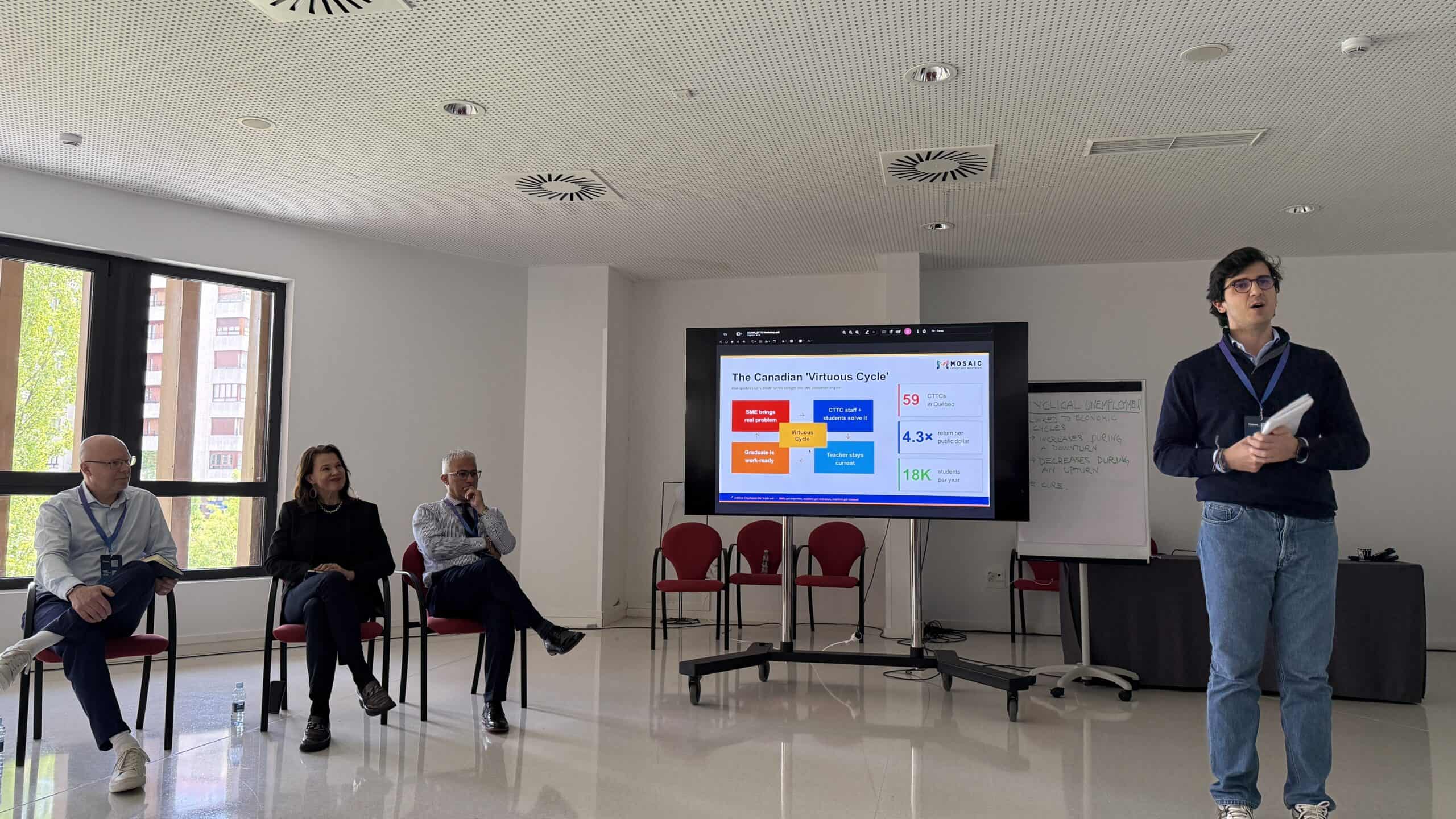
WORKSHOP: From Skills to Applied Research Ecosystems: Bridging the SME Innovation Gap through VET-UAS Integration
Workshop moderated by Carlo Ferretti (Materahub)
Speakers: Elina Pylkkänen (Ministry of Economic Affairs and Employment of Finland), Georgios Zisimos (ETF) and Ola Kukkasniemi (Wooden Oy)
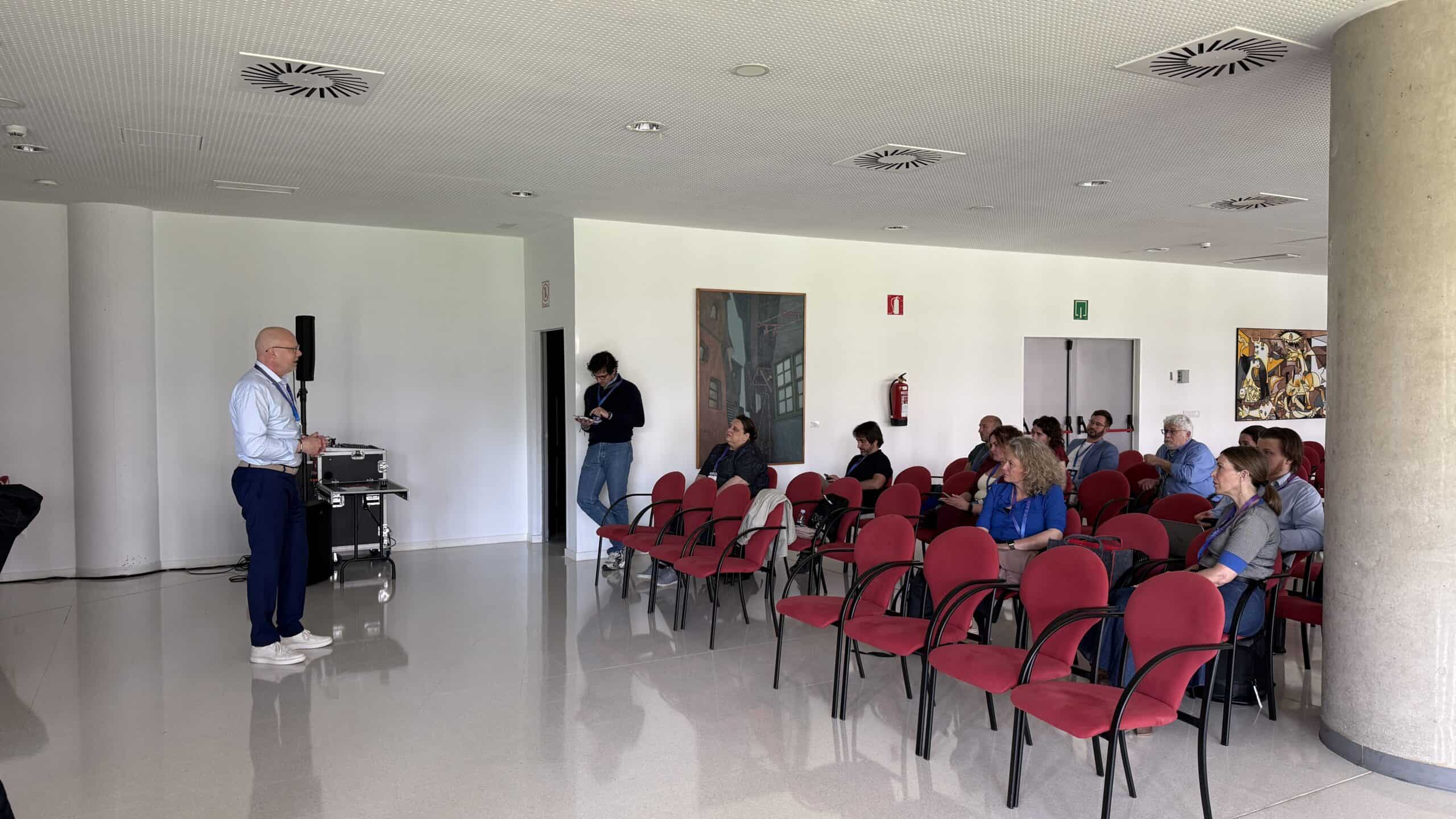
At the LCAMP conference in Vitoria-Gasteiz, Spain, this workshop presented the findings of the MOSAIC paper. This paper offered a detailed analysis of how Europe could transform vocational education and training (VET) systems, as well as universities of applied sciences (UAS), into sustainable engines for innovation within small and medium-sized enterprises (SMEs). The discussion focused on the importance of strengthening the connection between education, research, and industry to increase productivity and competitiveness in European economies.
Inspired by the Canadian CCTT model, the presentation traced a comprehensive journey that began with international benchmarking. It examined the most successful frameworks and best practices from abroad, identifying the key elements that could be adapted to the European context. This comparative approach offered valuable insights into how applied research institutions could support SMEs directly through innovation, technology transfer and skills development.
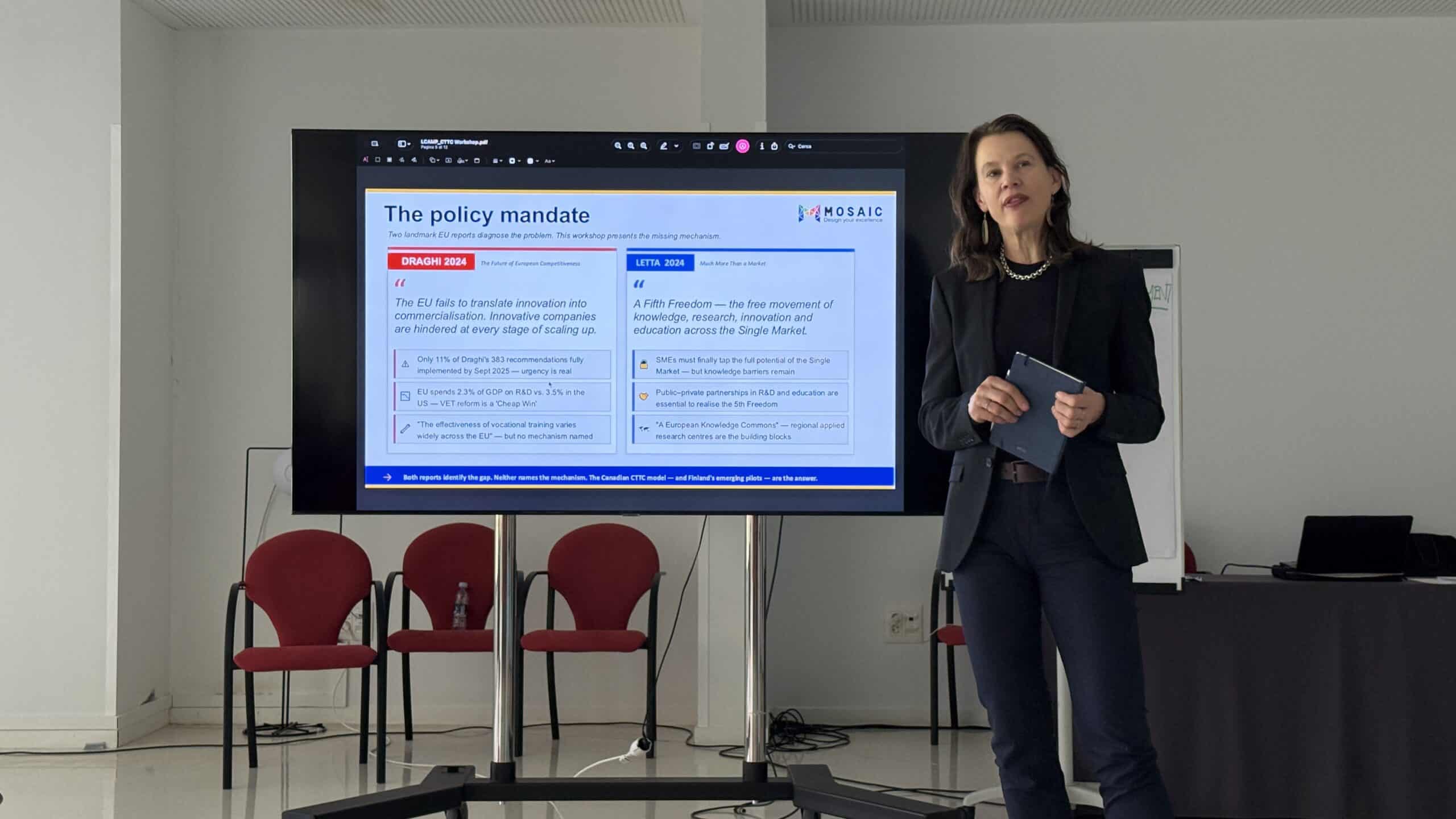
The discussion begins with Europe’s position in global innovation. Compared to countries such as the United States and China, Europe appears to be less competitive. One speaker highlights the significant investment gap, pointing out that “Europe dedicates around 2.3% of GDP to innovation, while the United States invests about 3.5%”.
A central theme throughout the discussion is the role of education in shaping the economy. It is emphasised that education systems must be closely aligned with the real needs of organisations and sectors. Without this connection, even highly educated individuals may struggle to find employment.
Speakers have stressed that skills alone are not enough unless they are relevant. As one participant explained, ‘There is a need to create a bridge between the skills developed in education and those required in the labour market.’ This highlights the importance of designing education systems that respond directly to economic demands.
The structure of Europe’s economy also plays a role. Since “99% of businesses are small and medium enterprises”, education must prepare individuals for employment and entrepreneurship within smaller organisations.
A key issue raised is that of unemployment despite economic growth. One speaker noted that, even though GDP continues to rise and living standards improve, unemployment remains high due to structural changes. This suggests that traditional education models may no longer be sufficient in such an economy.
Education is presented as a key solution to this challenge. Although policy measures such as investment stimulation are important, “without educating people with the right and relevant skills, economic growth cannot fully translate into employment”.
International comparisons can provide useful insights. In Canada, for example, vocational education leads to almost zero unemployment because it is directly linked to labour market needs. This highlights the potential of practical, skills-based education to improve employment outcomes.
Another important issue that was discussed was regulation. It was pointed out that ‘excessive regulation in Europe can limit innovation and hinder the growth of start-ups’. This issue affects not only businesses, but also educational institutions that are trying to adapt quickly to change.
Collaboration is seen as essential for improving education systems. One speaker argued that ‘those who design education policies must understand the economy, and vice versa’. Successful examples demonstrate the importance of strong cooperation between universities, industries and local governments.
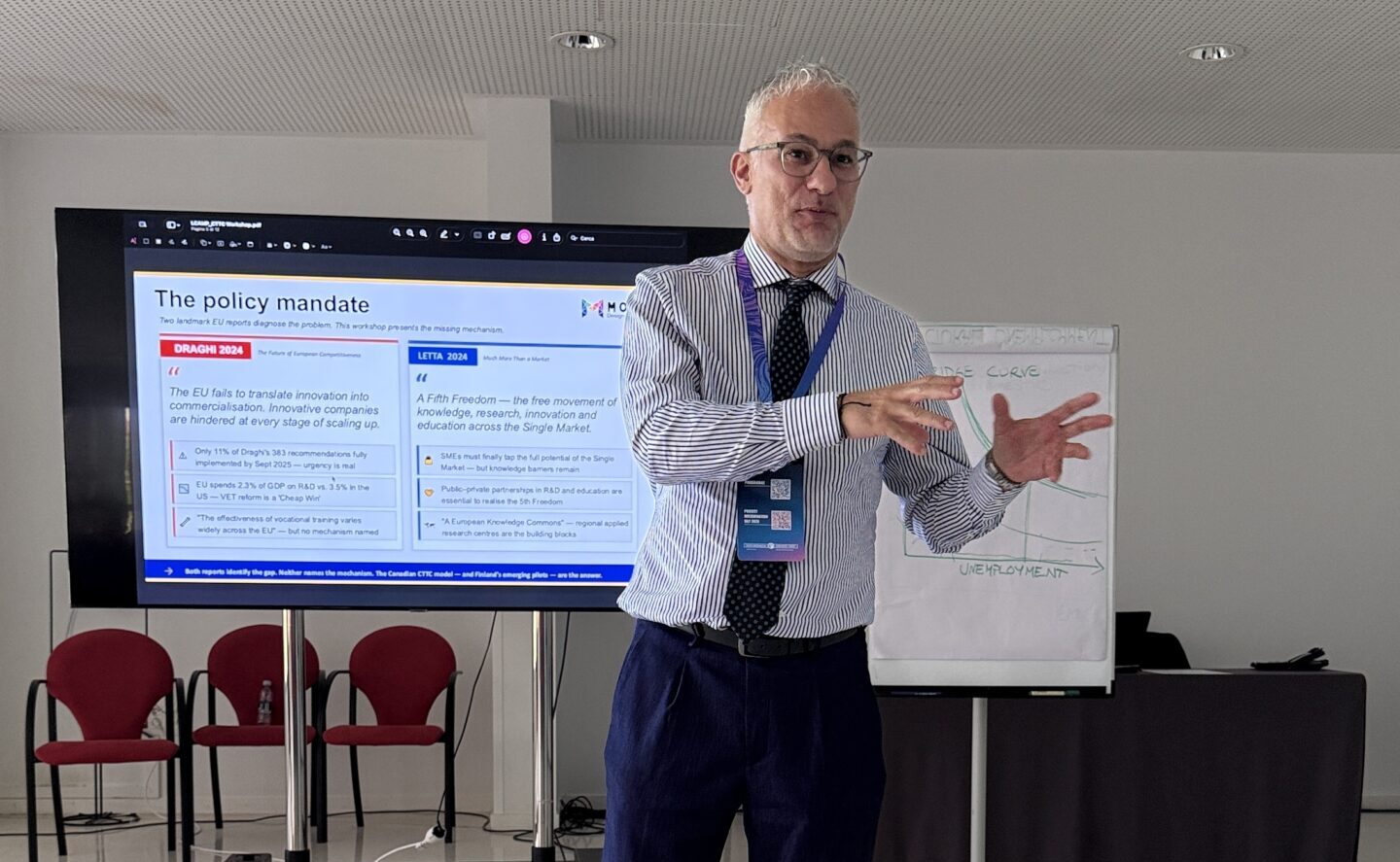
However, there are still gaps in coordination. It is a critical observation that ‘education ministries are often not sufficiently integrated into broader economic strategies’, which weakens the overall impact of reforms.
The discussion also explores innovative education models. These new approaches challenge traditional systems and include apprenticeship-based learning and alternative schools. One example is a model in which students learn through hands-on experience, technology and collaboration, sometimes without traditional teachers.
The workshop concluded with a cross-regional dialogue, in which participants exchanged their perspectives and experiences from various regions of Europe. In particular, the discussion linked these new insights to the Basque Country’s well-established excellence, which is renowned for its innovative ecosystem and the effective integration of education and industry. This exchange of knowledge helped to develop a shared vision for the future.