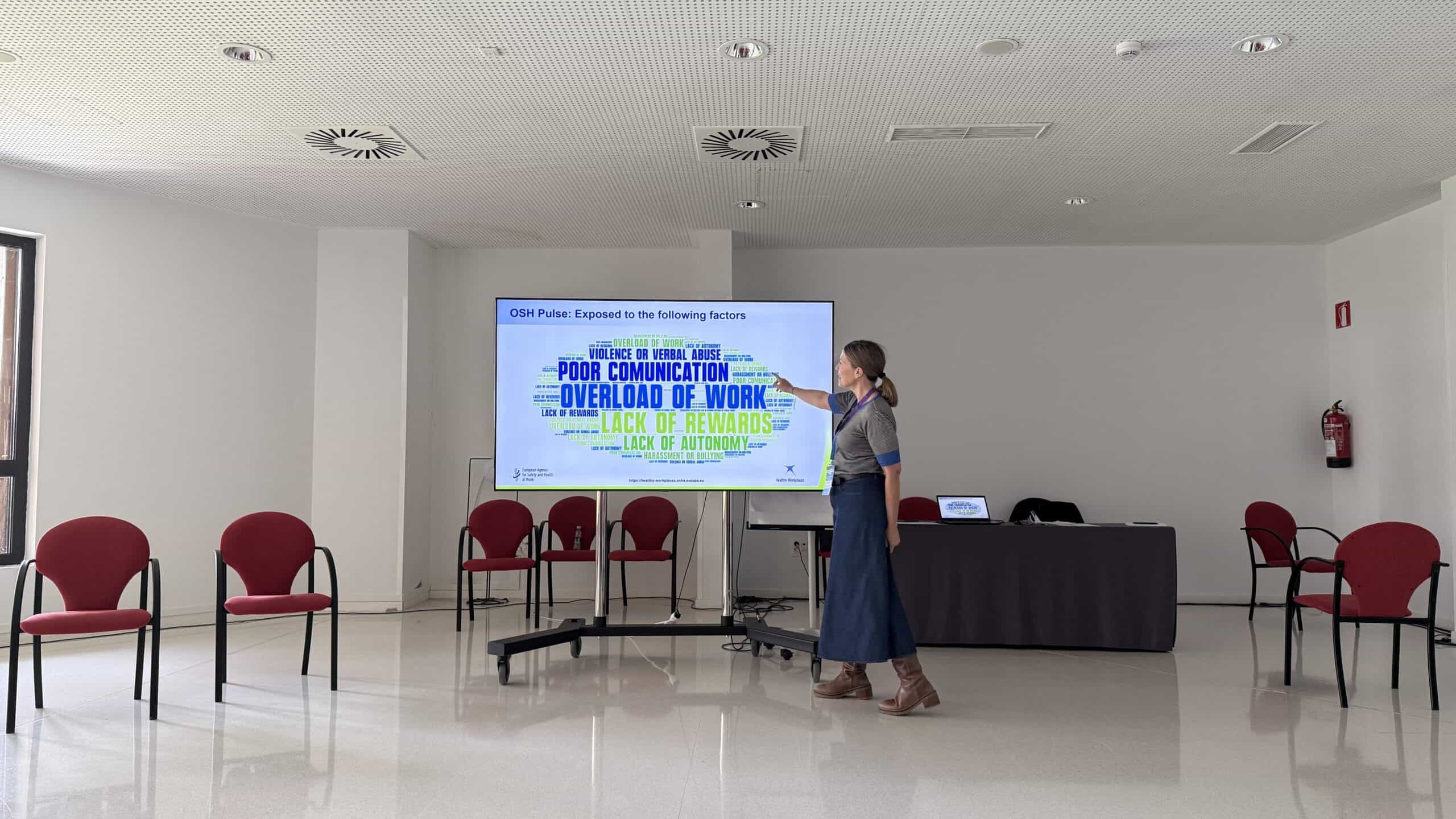
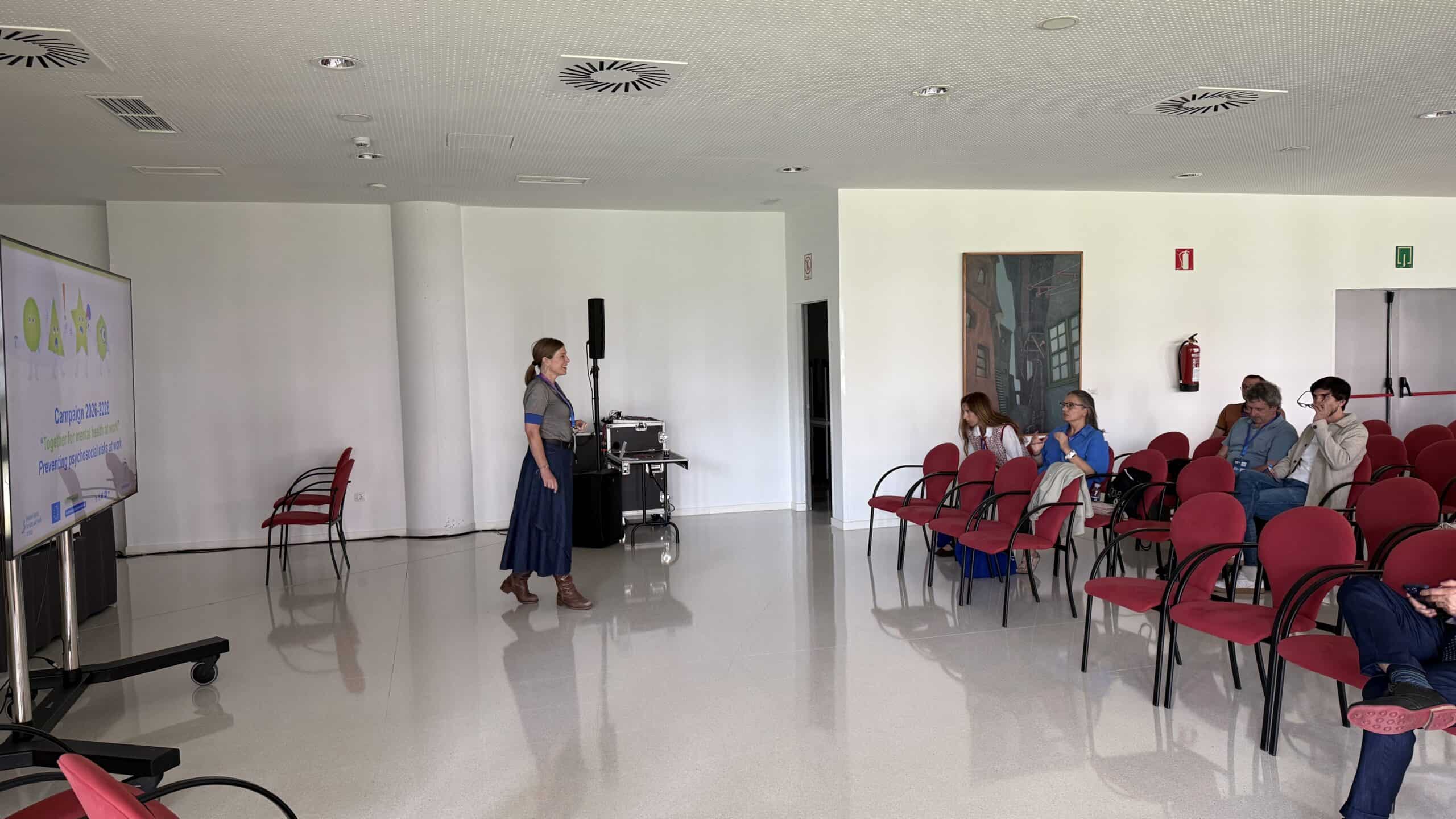
The workshop, ‘Digitalisation: its positive and negative impact on mental health and well-being at work’, took place during the LCAMP (Learner-Centric Advanced Manufacturing Platform for CoVEs) event. It brought together diverse stakeholders from education, industry and policy. Engaging in open discussions on the sensitive and deeply personal topic of mental health at work was both insightful and inspiring, particularly in the contexts of vocational education and training (VET) schools and micro and small enterprises (SMEs). The workshop was moderated by EU-OSHA and EfVET.
Violaine Roggeri highlighted that the world of work is changing rapidly today. Digitalisation and artificial intelligence are transforming the way we work, learn and collaborate. While these developments offer clear advantages, such as greater efficiency, new learning tools and increased flexibility, they also present new challenges, particularly with regard to mental health and well-being.
At the EfVET annual conference in Fátima, these issues were at the heart of the discussions. Experts discussed how digital tools can enhance training and safety, providing virtual environments where workers can practise using protective equipment, for example. However, research also shows that increased connectivity, constant notifications and high workloads can contribute to stress, burnout and reduced creativity.
These conversations provided a valuable opportunity to explore the perspectives of both workers and employers, drawing on key findings from the OSHpulse and ESENER surveys. The dialogue not only identified shared challenges, such as stress, workload and the impact of digitalisation, but also emphasised the importance of fostering supportive workplace cultures where mental health issues can be openly discussed and addressed.
In fact, recent survey data confirms that concerns about work-related stress remain common across Europe. Many workers report feeling overwhelmed by constant digital communication and not having enough time to focus, reflect and recharge. Nevertheless, a significant proportion of workers still feel uncomfortable discussing mental health issues with their managers, indicating that much work remains to be done.
From small enterprises to large organisations, workplaces across the board are recognising the growing need to ensure that workers feel confident and supported. Nobody should feel ashamed or intimidated about speaking up about stress, workload or mental health concerns. Building this culture requires awareness, education and a shared sense of responsibility among employers, workers and policymakers.
At the European Agency for Safety and Health at Work (EU-OSHA), we are dedicated to turning these insights into action. As part of the upcoming EU Healthy Workplaces Campaign, we look forward to sharing further evidence, practical tools, and preventive measures with the aim of promoting healthier, safer, and more resilient working environments across Europe.
Health and safety at work should be more than just compliance; it should be an integral part of our daily work routine. By promoting balance, encouraging open dialogue and backing preventive measures, we can create workplaces that are more productive, healthier and more sustainable for everyone. Together, we can prioritise well-being at work—not just for today, but for the future.