

The event, “From Vision to Action: Empowering Skills Development, Capacity Building and Inclusive Learning for Europe’s Digital Future”, which took place in Brussels on 16 April 2026, brought together policymakers, practitioners and industry leaders to discuss how Europe can successfully turn its digital ambitions into reality. Hosted under the auspices of the Cypriot Council Presidency and supported by the Cyprus Broadband Competence Office (BCO), the Cypriot Deputy Ministry of Research, Innovation and Digital Policy, and the BCO Support Facility, the event offered a relevant opportunity to review progress and determine practical next steps.
As Europe accelerates its digital transformation, the conversation is shifting from ambition to implementation. Although considerable investment has gone into connectivity infrastructure, ensuring that citizens, institutions, and economies can reap the full benefits of these developments requires more than technology alone. Skills development, institutional capacity, and inclusive learning systems are now at the heart of Europe’s digital success. A high-level discussion addressed the future Multiannual Financial Framework (MFF) and its role in supporting strategic investments in digital infrastructure and skills. Participants emphasised the importance of aligning financial instruments with Europe’s long-term competitiveness objectives
The need for continuous upskilling and reskilling was identified as a key aspect of Europe’s digital transformation. It is essential to ensure that the workforce is equipped with the right skills, not only to drive innovation but also to maintain economic resilience and global competitiveness.
Speakers emphasised that competitiveness in the digital age hinges on having the right skills in the workforce. This encompasses advanced technical expertise as well as continuous reskilling and upskilling opportunities to adapt to rapidly evolving technologies.
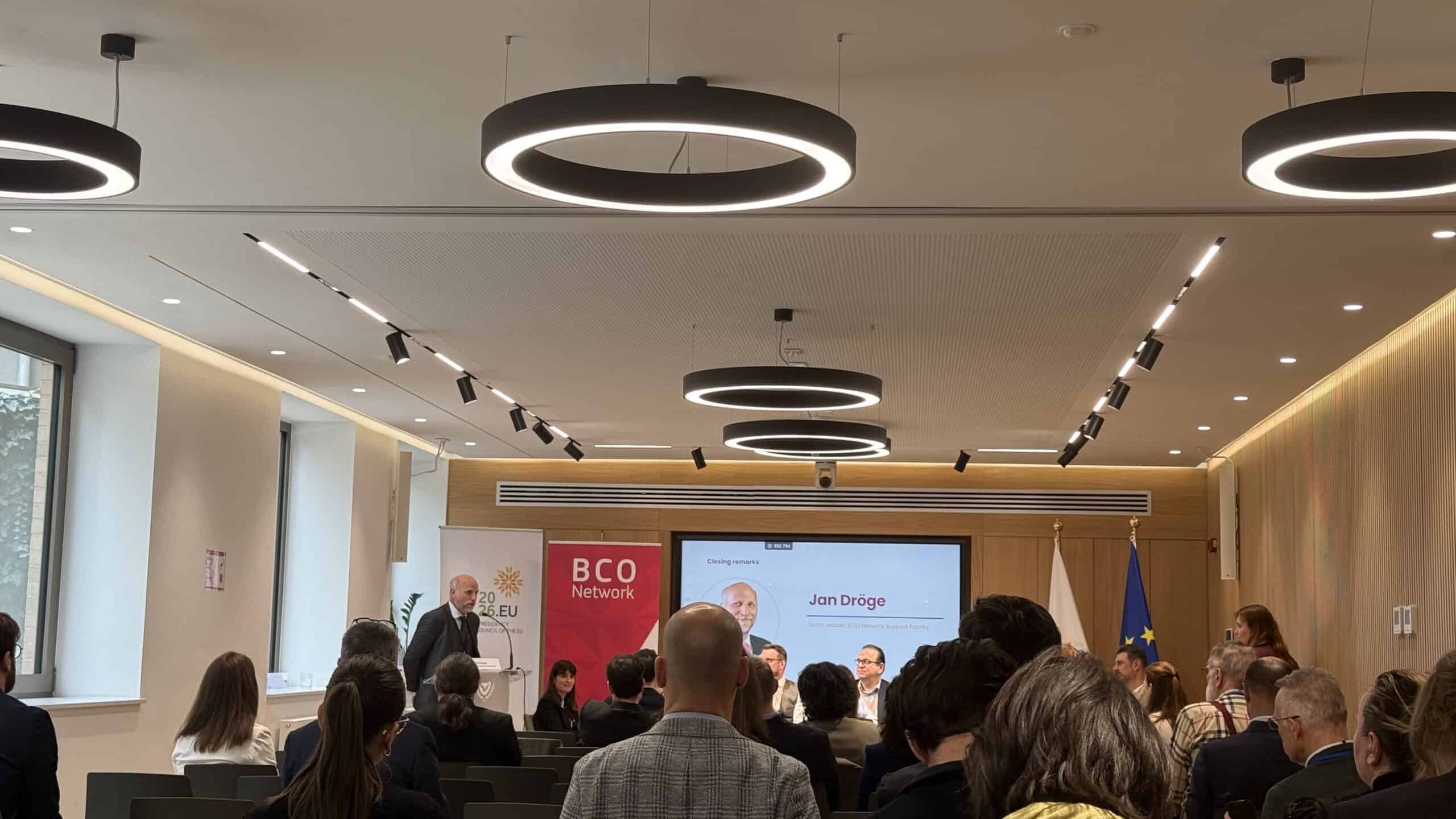
The discussions reaffirmed that achieving Europe’s digital ambitions requires a coordinated approach combining infrastructure investment with sustained efforts in skills development, capacity building and inclusive learning. The event showcased concrete pathways for translating policy into practice by fostering collaboration between public authorities, private-sector actors and educational organisations.
Ultimately, the event showed that Europe is defining a clear vision for its digital future and taking the necessary steps to make it a reality.
In the first panel, Manuela Geleng (Director for Jobs and Skills at the European Commission’s Directorate-General for Employment, Social Affairs and Inclusion) framed skills as a strategic policy lever operating at the intersection of economic performance and social cohesion. From a competitiveness perspective, she emphasised that skills are a critical enabler of productivity growth, innovation capacity and the effective adoption of new technologies within European industries. Therefore, skills systems must be agile enough to anticipate and respond to the rapidly evolving demands of the labour market, particularly in the context of the twin digital and green transitions.
The need for continuous upskilling and reskilling was identified as a key aspect of Europe’s digital transformation. It is essential to ensure that the workforce is equipped with the right skills, not only to drive innovation but also to maintain economic resilience and global competitiveness.
In light of the rapid diffusion of artificial intelligence, which is accelerating structural shifts across labour markets and redefining skills requirements at pace, this gap is becoming increasingly critical. In this context, skills policy must be understood as a central component of Europe’s broader economic and social strategy, extending beyond traditional employment considerations. This perspective is reflected in key policy discussions on European competitiveness, including those highlighted in the Draghi Report on European Competitiveness, which underline the need for sustained investment in human capital as a prerequisite for long-term growth and resilience.
Manuela Geleng also emphasised that skills policies play a key role in determining social outcomes. They directly affect levels of inequality and social inclusion by influencing access to employment, career progression and income distribution.
This dual function highlights the need for integrated policy approaches that align labour market, education and social policies, ensuring that investments in skills contribute both to economic resilience and to more cohesive, inclusive societies. Christina Kattami, MFF Attaché, Cyprus Permanent Representation to the EU, offered a broader geopolitical perspective, aligning the discussion with the vision of the Cyprus Presidency: ‘an autonomous Europe open to the world’. Over the past three and a half months, we have seen that achieving this goal requires serious effort from all sides. A key challenge is the Multiannual Financial Framework (MFF), and the EU budget is central to this because it supports:
- Digital infrastructure
- Skills development
- Long-term economic resilience
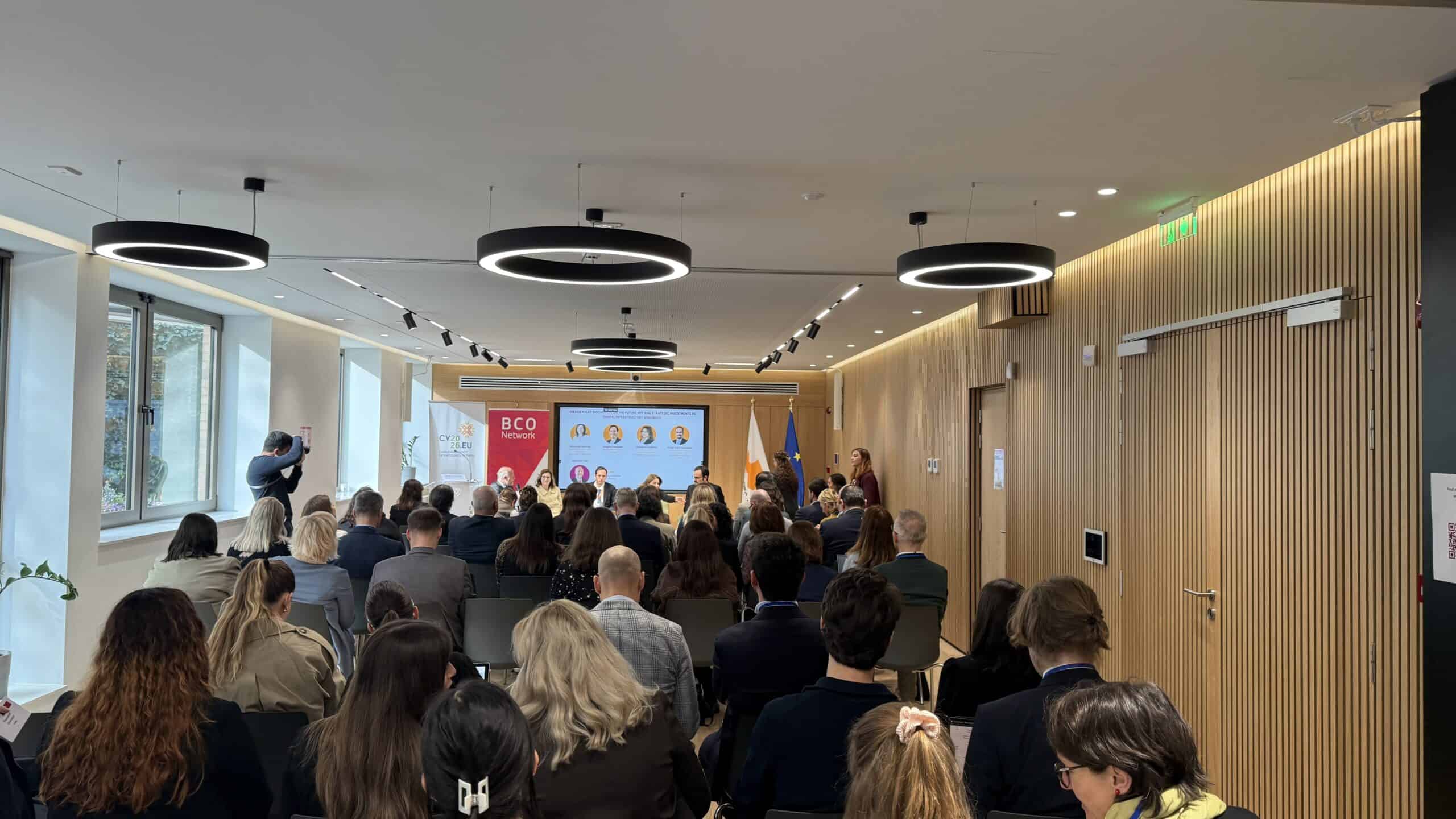
The MFF is not just a budget; it is a strategic tool that ensures these priorities are realised across all sectors. Through coordinated efforts, innovative financing and a commitment to inclusion, we can ensure that no one is left behind. By connecting education, infrastructure and digital development, Europe can strengthen its long-term economic model and remain open, competitive and forward-looking.
Several negotiations are progressing simultaneously, with the aim of reaching an agreement at an upcoming Council meeting, which is considered an important milestone. A key part of the process is creating a central ‘budget box’ containing the financial figures that EU leaders must agree on. This box determines how much funding each programme receives and will be discussed at the European Council.
The second panel was titled: “From vision to action – Europe’s innovation leadership in digital infrastructure, digital technology and industry”, moderated by Dimitra Vasilia (Schuman Associate, Skills Coalition).
Speakers:
- Andronikos Kakkouras, Broadband Competence Office (BCO) Cyprus
- David Lamb, EU CAP Network
- Panayiotis Philimis, Cyprus Research and Innovation Center (CyRIC)
- Vincent Richir, Mastercard Europe
- Diana Filip, JA Europe
- Menno Bart, The Adecco Group
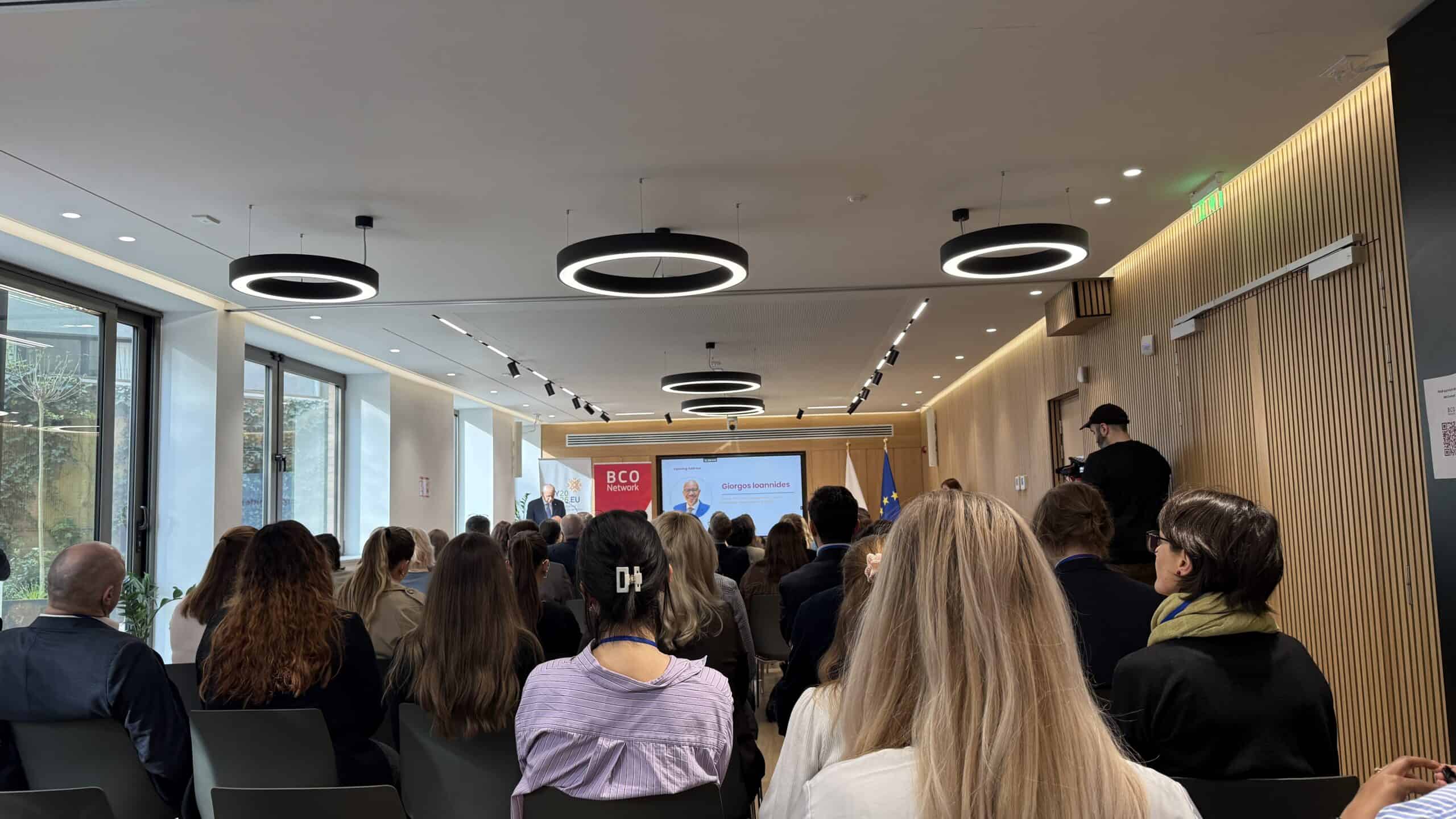
The speakers emphasised the importance of considering the broader European context when discussing policy and practice. It is important to understand not only what is designed at a policy level, but also what actually happens in practice. A key part of this effort involves providing hands-on support and training, particularly in artificial intelligence and cloud services. Throughout this work, we are witnessing the growing importance of digital payments and cybersecurity. As digital systems expand, maintaining trust becomes essential.
Another major priority is developing skills, especially digital skills, to ensure that everyone can participate in the digital economy. This involves promoting equal opportunities, particularly for women, in entrepreneurship and technology. Particular focus is given to promoting equal opportunities for women in entrepreneurship and technology.
Speakers also emphasised the importance of building strong innovation ecosystems that connect start-ups, governments, education systems and industry. Such ecosystems are vital for turning ideas into real impact. Digital transformation is not just about technology; it is also about people and inclusion, ensuring that nobody is left behind as systems evolve.