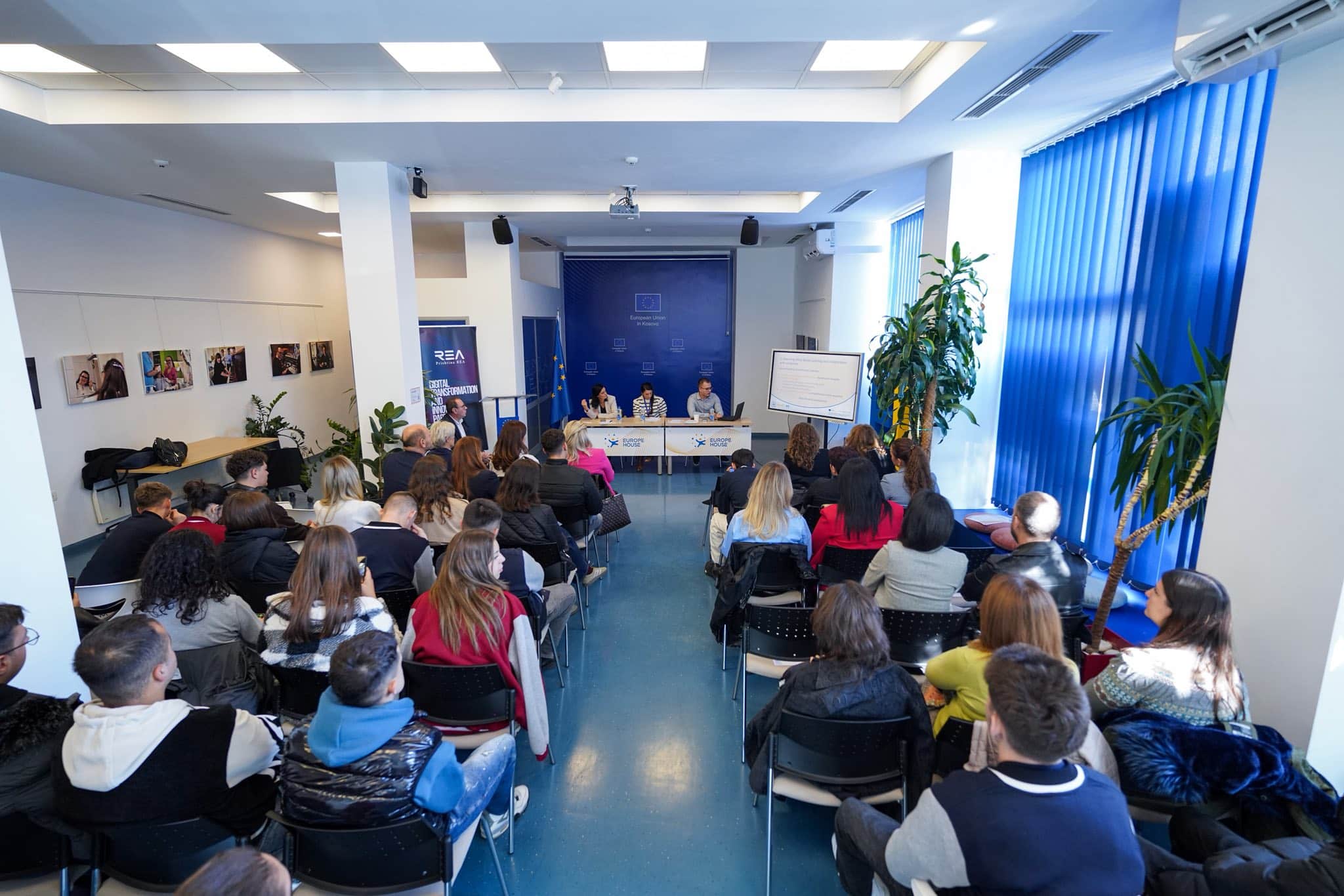
The Multiplier Event of the Erasmus+ funded project “DC VET WB – Developing Capacity for VET Systems in the Western Balkans” was successfully held on 20 October 2025 at Europe House in Prishtina. The event brought together representatives from vocational education and training (VET) institutions, ministries, international organizations, and project partners from across the Western Balkans, as well as the EU Office in Pristina. It served as a platform to present the activities, achievements, and results of the project, while reflecting on its impact on VET modernization, inclusion, and international cooperation in the region.
The event opened with Mr. Ahmet Jetullahu-Meti, Director of Prishtina REA, who welcomed participants and highlighted the importance of collaboration between education providers, businesses, and international partners to advance vocational education and align it with the evolving needs of the labor market. Ms. Giulia Ucciero, from UNISER (Italy), the project’s coordinating organization, then shared a reflection on the three-year journey of collaboration among the seven project partners from Italy, Spain, Finland, Albania, Montenegro, Bosnia and Herzegovina, and Kosovo. This partnership has focused on strengthening VET systems through the exchange of best practices, innovation, and shared learning.
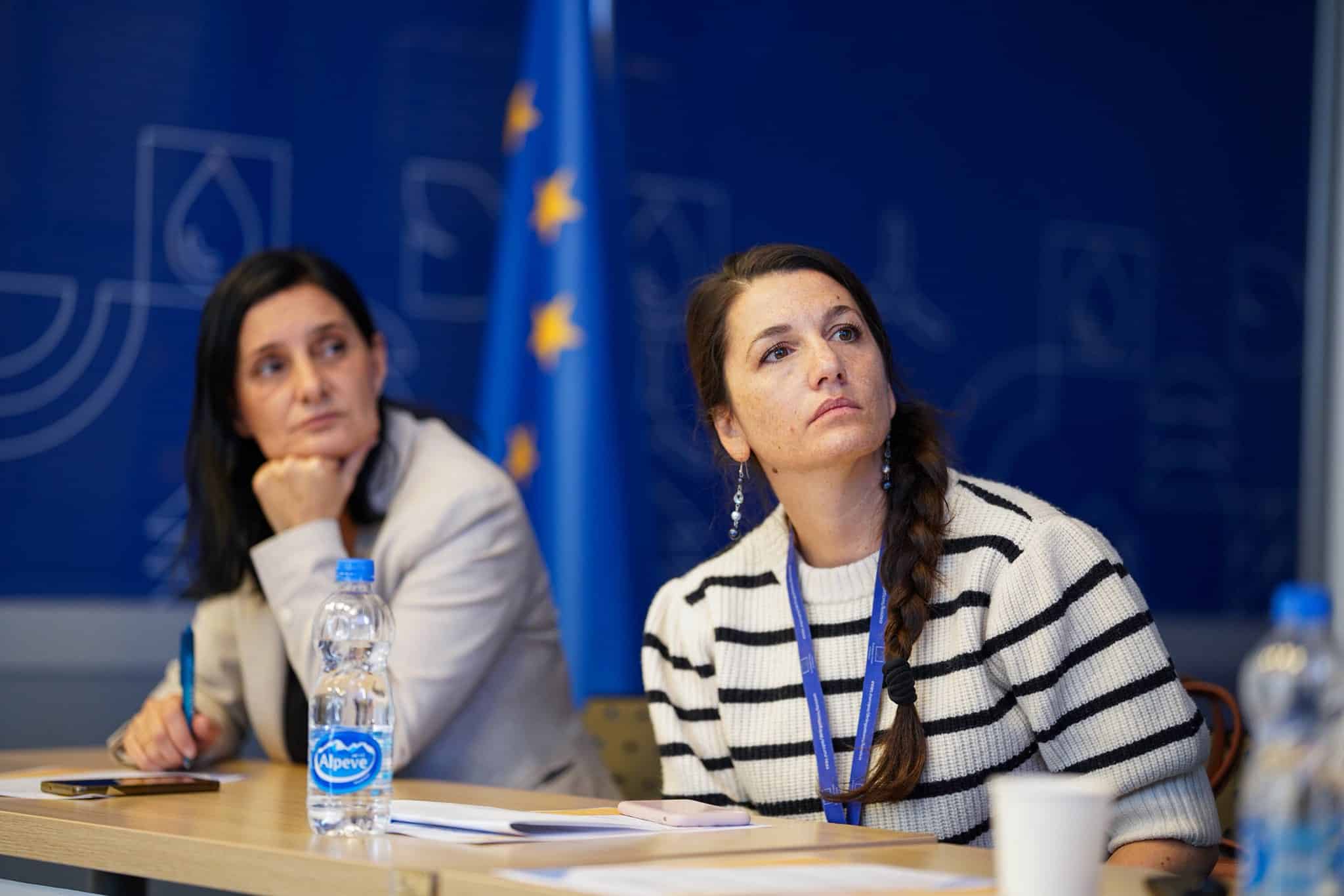
Following the introduction, Ms. Lucia Parducci, representative of the EU Office in Kosovo, addressed the audience, emphasizing the European Union’s continued support for enhancing vocational education and training in the Western Balkans. She commended the DC VET WB project as an exemplary model of regional cooperation, noting how it has equipped young people and educators with the skills and competences necessary for a digital and globalized labor market.
A greeting address was also delivered by Ms. Valbona Fetiu-Mjeku, from the Ministry of Education, Science, Technology, and Innovation (MESTI). She praised the project for its efforts in promoting the inclusion of disadvantaged students and building the professional capacities of teachers and school staff. She emphasized that such initiatives contribute not only to improving teaching quality but also to fostering equal opportunities and employability for youth across Kosovo and the wider region. Ms. Mimika Dobroshi, National Coordinator at the Kosovo Erasmus+ Office, also delivered a welcoming speech, congratulating the consortium for its tangible results and encouraging schools to continue participating in Erasmus+ projects as a way to internationalize education and foster innovation.
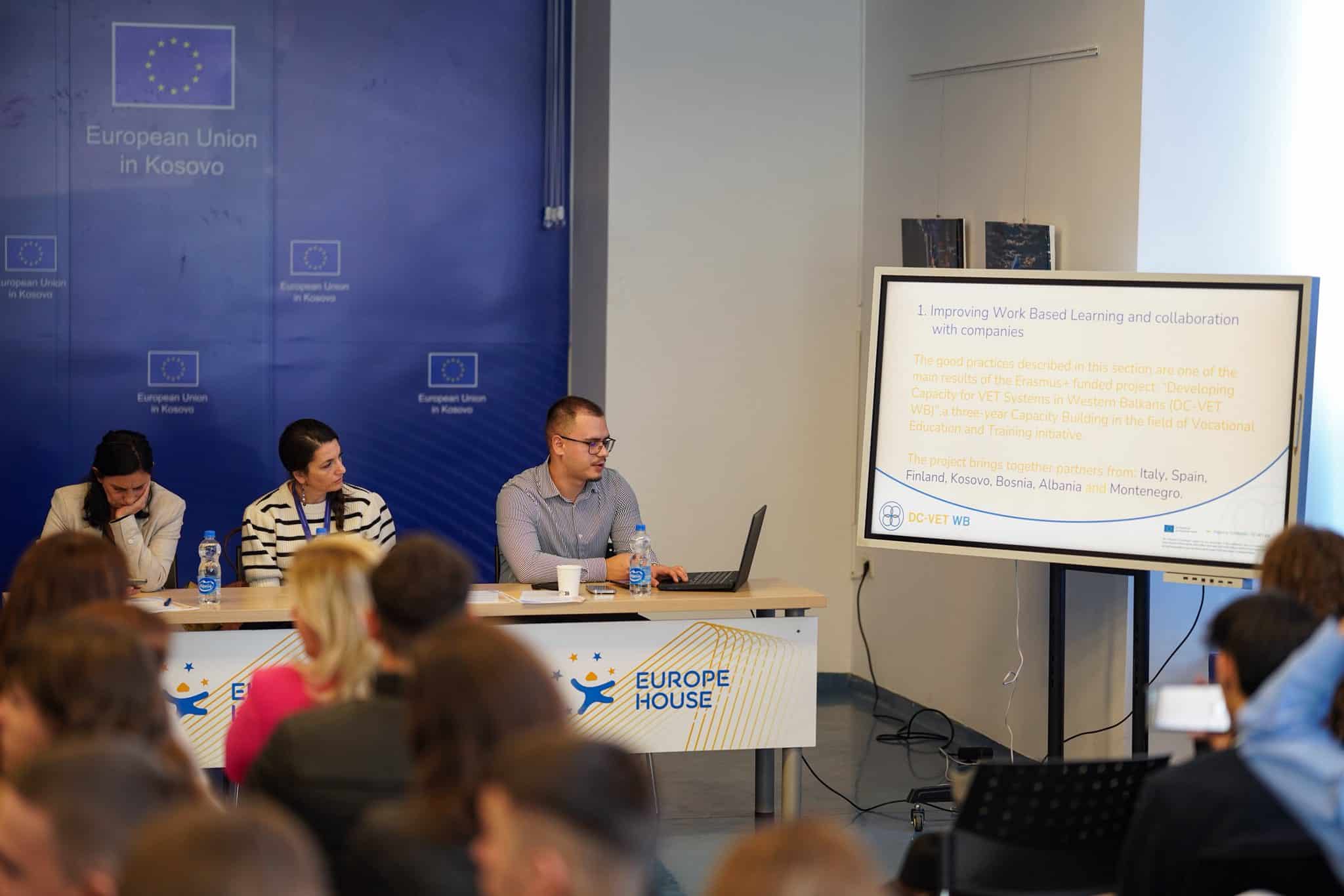
After the introductory remarks, Mr. Jon Jetullahu, Local Coordinator at Prishtina REA, delivered a comprehensive presentation on the activities and results of the DC VET WB project. His presentation highlighted the key achievements across the project’s three primary work packages:
- Improving Work-Based Learning (WBL) and Collaboration with Companies
This work package focused on transforming VET systems in the region by promoting modern WBL models, strengthening school-company partnerships, and enhancing teacher competences. Teachers from the region participated in study visits to Finland, Spain, and Italy, where they explored innovative approaches to work-based learning and collaboration with companies. Upon their return, these teachers implemented the new methods, engaging over 240 students and 46 VET staff members in pilot activities. The results and best practices were documented and shared in an online repository, available for other VET institutions at dcvetwb.eu/resources. - Fostering Social Inclusion in VET Systems
A key component of the project was the development of a Toolkit for Social Inclusion, designed to help VET teachers create more inclusive and student-centered learning environments. The process included four stages: research, training, testing, and feedback. Data collected from over 80 VET schools and organizations revealed that 90% of respondents work with students facing social or educational barriers. Based on these findings, a 3-day seminar on inclusive education was organized in Helsinki, Finland, where teachers from six countries participated in workshops focused on individual learning plans, alternative teaching methods, and student engagement strategies. After the training, teachers implemented these methods, contributing to the final version of the toolkit, which is now available online. - Internationalization of VET Systems
To support VET institutions in expanding their international strategies, the project launched an e-learning course on internationalization. This course enabled teachers and school leaders to gain practical knowledge in Erasmus+ mobility management, partnership building, and European project planning. The course materials are available online, allowing participants to enhance their skills and obtain certification upon completing the required modules and final test. Additionally, the project organized blended mobility activities, combining online collaboration with in-person exchange. A notable highlight was the five-day physical mobility event in Durrës, Albania, where students and teachers from across the Western Balkans worked together on workshops focused on renewable energy, entrepreneurship, automation, and ICT. This event promoted teamwork, creativity, and intercultural exchange, culminating in project presentations and a certificate ceremony.
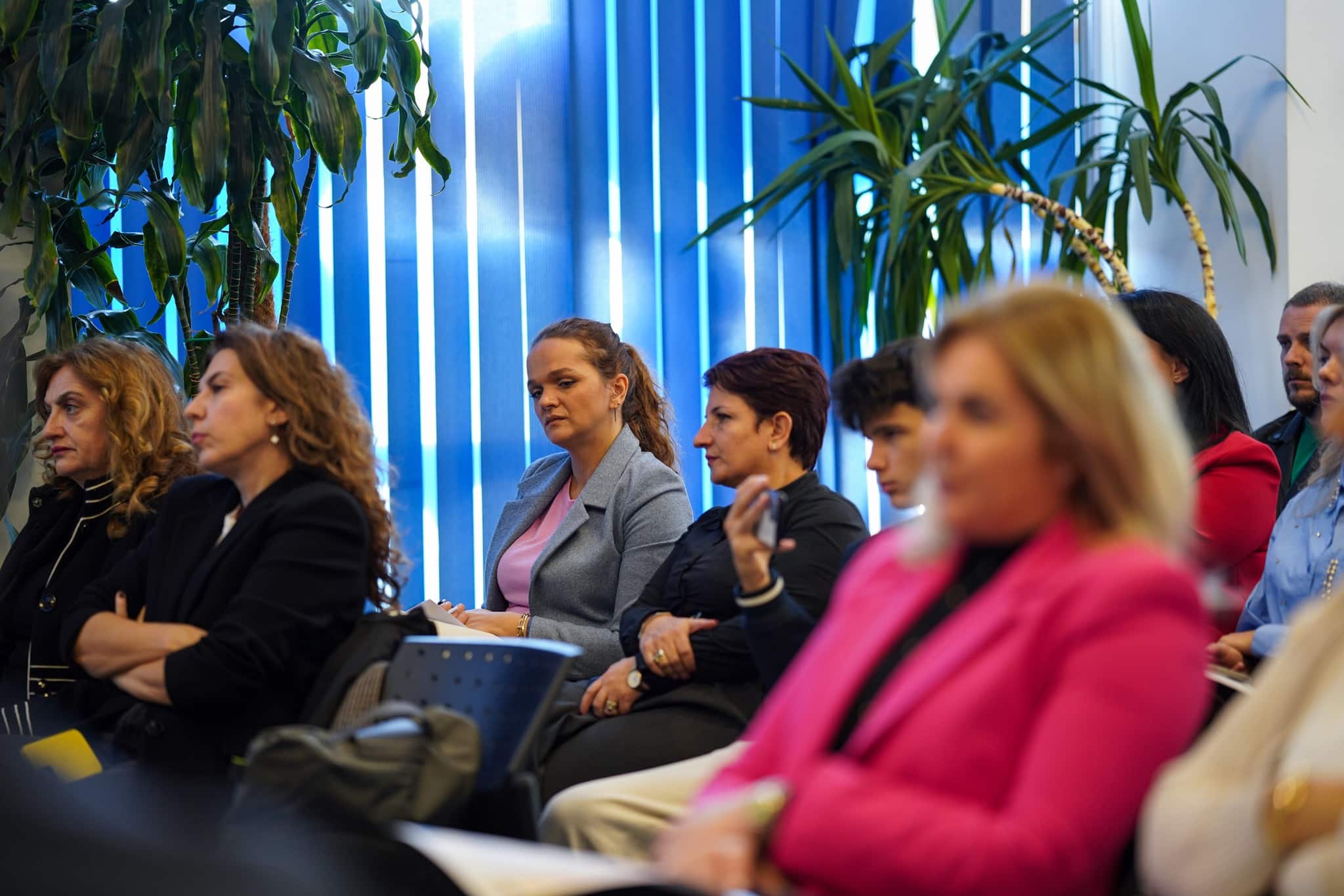
The Multiplier Event also featured powerful testimonials from teachers who shared their personal experiences and reflections on how their participation in DC VET WB activities had impacted their teaching practices and student engagement. These stories underscored the positive effect of the project on both educators and students, particularly in terms of creating more inclusive and collaborative learning environments. Many teachers expressed how the exchange of good practices, particularly in work-based learning and inclusive education, had helped them tailor their teaching to better support their students’ needs.
The event concluded with a networking session, allowing participants to connect, exchange ideas, and discuss potential future collaborations. This interaction helped ensure that the impact of the DC-VET WB project will continue to resonate in the years to come, fostering ongoing cooperation among institutions and partners in the region.
Through initiatives like DC-VET WB, vocational education in the Western Balkans is evolving to meet the demands of a changing labor market. The Multiplier Event not only celebrated the project’s successes but also set the stage for the continued modernization and internationalization of VET systems across the region. As VET institutions continue to build on these achievements, they are better equipped to prepare students for future challenges, while strengthening regional and international cooperation. The collective efforts of project partners, educators, and businesses ensure that the future of VET in the region will be more inclusive, innovative, and aligned with the evolving needs of both students and the global workforce.