
EfVET is pleased to share the latest developments from the ENNEPlus project, where Social Incubation activities are supporting VET learners in turning ideas generated during the Eco-Digithons into concrete and socially relevant solutions.
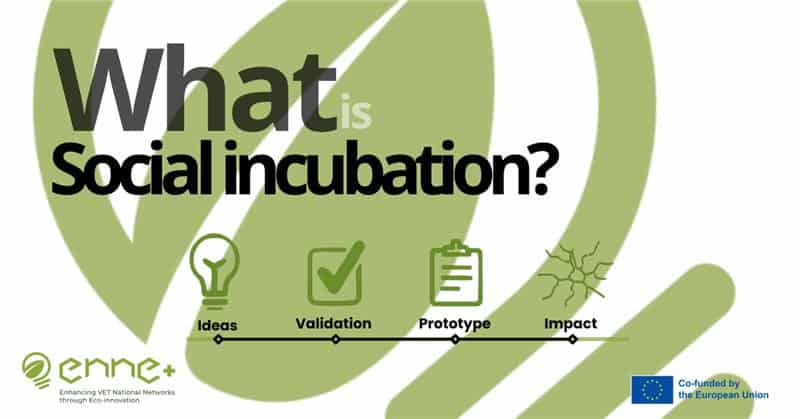
At the core of ENNEPlus is a structured Social Incubation process designed to guide learners step by step, from early ideation to validation and prototyping. This process brings together VET providers, companies, civil society organisations and local authorities, creating a collaborative environment where ideas can be tested and strengthened in real contexts. Following the Eco-Digithons organised in participating countries, the most promising ideas, typically the top three per country, have entered the incubation phase. Learner teams are now refining their concepts through market research, feedback sessions with stakeholders and pilot testing. This helps them better understand user needs and assess feasibility as they progressively improve their solutions before moving into prototyping stages.
A key milestone has been the implementation of Social Incubation Workshops, where project partners came together to reflect on the process and share experiences across countries. These sessions focused on improving the overall incubation approach, identifying what works or not and how to strengthen the methodology moving forward.
Several important lessons have emerged. The quality of collaboration within local ecosystems is essential. While many projects engaged external actors, there is a need for clearer roles, stronger commitment and more continuous involvement from companies, public bodies and social organisations. Access to resources also remains a challenge, particularly in terms of funding knowledge, regulatory understanding and entrepreneurial skills among learner teams. Actually, ensuring real social impact requires stronger support, including early identification of end users and more systematic testing in real-life conditions.
At the same time, partners identified a number of good practices. VET centres can act as connectors within their local ecosystems, bringing together relevant actors and supporting collaboration. Early involvement of stakeholders, combined with opportunities for peer learning and cross-project exchange, has proven particularly valuable. Mentorship, both technical and focused on social impact, plays a central role in supporting learners throughout the process.
Through these activities, ENNEPlus shows how VET can go beyond skills development and contribute directly to local ecoinnovation.
👉 Want to learn more or get involved?
Join the ENNEPlus Community of Practice: 🔗 https://cop.enneplusproject.eu/