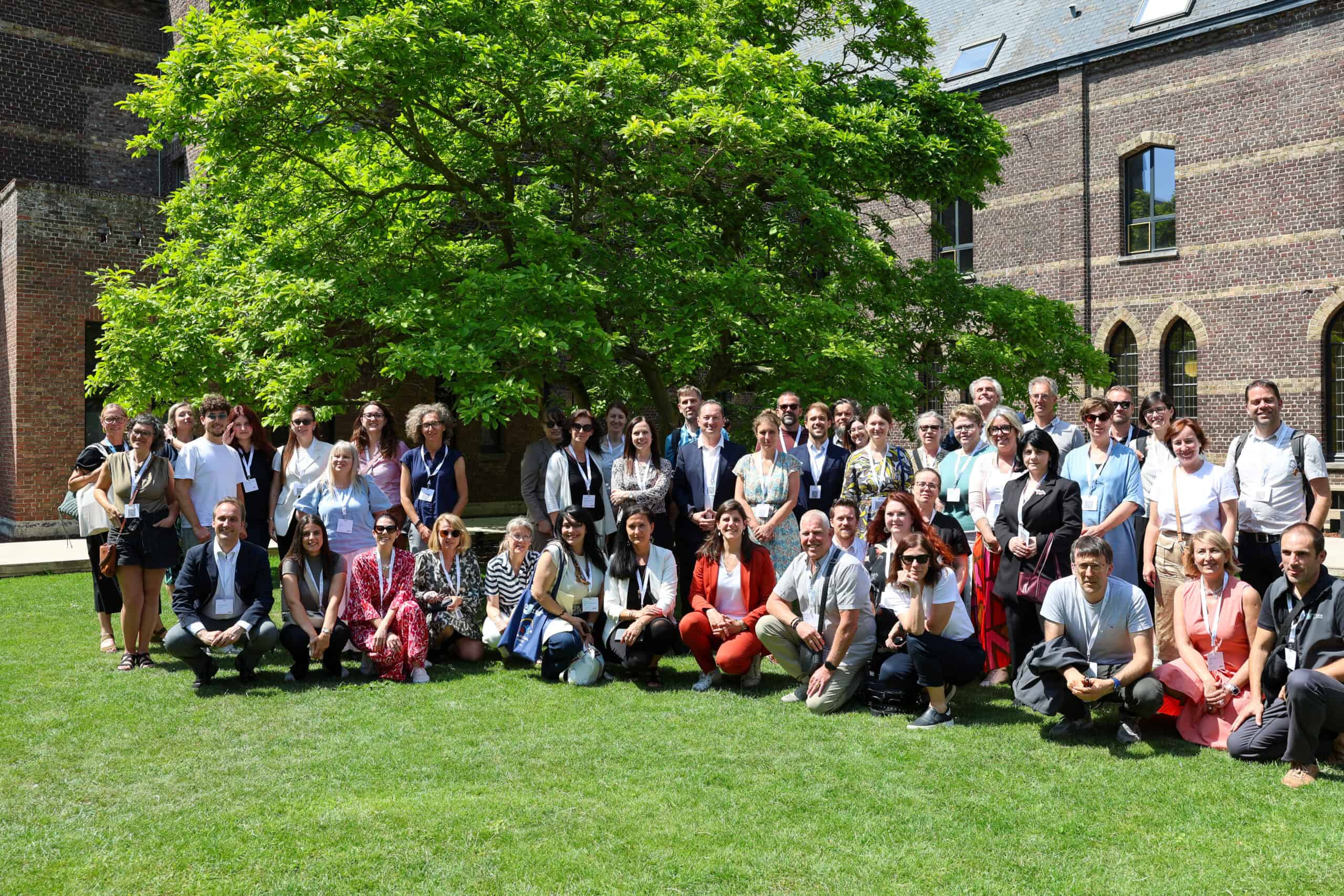
The 2nd Global VET Thematic Team annual event, “Skills for a Competitive Europe”, took place in Bruges from 26 to 28 May. The aim of the event, ‘Skills for a Competitive Europe’, was to explore how European VET institutions, together with public authorities and private-sector partners, can strengthen Europe’s competitiveness through skills development, innovation and international cooperation.
The goal of the gathering was clear and timely: to explore how European VET institutions together with public authorities and private sector partners, can strengthen Europe’s competitiveness through skills development, innovation and international cooperation.
On ‘Day One’, culture, community and creativity were combined. Participants explored the historic streets of Bruges and visited CVO MIRAS college — while behind the scenes, students prepared and served dinner for all attendees: a simple but meaningful gesture that perfectly embodied the spirit of vocational education in action.
On ‘Day Two’, delegates were taken out of the conference room and into the classroom for school visits across Bruges. It offered a chance to experience the Flemish education system, which is widely recognised as a prime example of work-based learning where education and the workplace are tightly integrated.
Valentina Chanina officially opened the event on behalf of EfVET, setting up a welcoming and ambitious tone for the days ahead. Oscar Prat van Thiel, OPTC / WSDA expertly guided the programme throughout both days, moderating the event with energy and insight, keeping discussions focused and ensuring every voice was heard.
The afternoon session began with a warm welcome address from Mrs. Chara Baeyens, Director of Class and School Services at Katholiek Onderwijs Vlaanderen, the organisation that represent Catholic education in Flanders. Mrs. Chara Baeyens opened with the simple but powerful conviction that internationalisation is not an end, but rather a driver of quality education for all. When teachers engage internationally, they don’t just observe different practices; they also reflect on them, question them and grow as a result. Similarly, when learners go abroad, they develop adaptability, communication and problem-solving skills that traditional classrooms simply cannot replicate. In her closing address to the event, she delivered a clear and direct message: as Europe debates competitiveness and skills, we must not lose sight of the broader purpose of education. A Europe worth building is one that cooperates, listens and learns from the world around it, instead of simply out-competing others.
Following a warm welcome, the congress moved into its first plenary session, which brought together three high-profile speakers whose contributions were powerful and inspiring.
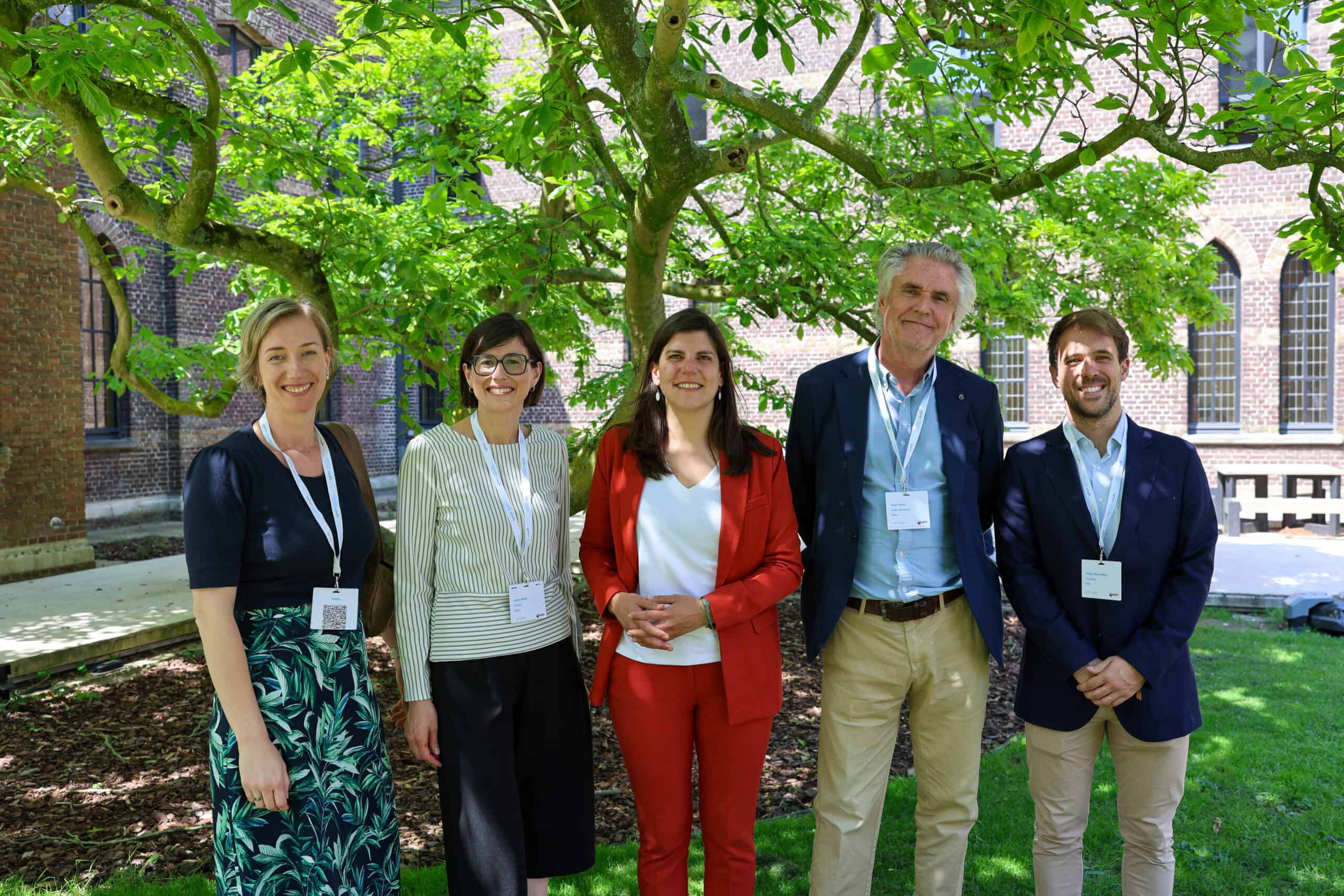
MEP Brigitte Van der Berg opened her address at the European Parliament with a warm and reflective opening remark. Recalling that she had explored the origins of the host organisation, she highlighted its establishment in 1991 to advocate for VET students and address the challenge of gaining recognition as key innovation drivers. She acknowledged that the academic-vocational divide was already painfully familiar back then, with many adults significantly disengaged as a result. Reading that history felt uncomfortably familiar, she said, because, while progress has undoubtedly been made, the fundamental question of parity of esteem between vocational and academic pathways remains. She admitted candidly that she wished society were further along in understanding the equal value of vocational education. Addressing this issue is exactly what she wants to do. One of the most powerful messages in her speech was a simple but often overlooked fact: Europe relies on vocational professionals. From construction and renewable energy to ports, factories and healthcare, practical training is indispensable. She argued that without them, there can be no green transition, no industrial competitiveness, and no resilient Europe.
Yet, despite their enormous contribution, vocational students still report feeling undervalued and believe that they are pursuing a ‘lower’ form of education. MEP Brigitte Van der Berg called for a fundamental cultural shift, stressing that Europe’s true competitive advantage lies not in laboratory innovations or policy documents, but in the skilled individuals who build, install, maintain and deliver essential services every day. She insisted that education systems must nurture individual potential rather than simply steering students toward workforce gaps. MEP Brigitte Van der Berg added that people perform best when they feel responsible for their own future, and this must be reflected in the design and delivery of VET.
MEP Brigitte Van der Berg highlighted a persistent problem: policies affecting vocational students are all too often designed without consulting them. To address this problem, she set up a VET Student Advisory Panel in the European Parliament. Initially, this involved around 13 schools from the Netherlands, but she intends to expand it into a full EU-wide student advisory board.
MEP Brigitte Van der Berg also championed opening European Parliament internships to VET graduates, which is a practical step towards institutional inclusion. She encouraged ministries, companies and organisations across Europe to invest equally in opportunities for vocational and academically educated young people, pointing out that many VET students struggle for months just to find a placement. Regarding international mobility, she expressed concerns about the proposed Erasmus programme for 2025–2028, contending that it does not adequately promote VET participation. Notably, it lacks a minimum percentage requirement for vocational students. She proposed amendments to allocate funding specifically for VET and guaranteed that at least 12% of VET students would have access to international mobility experiences.
MEP Brigitte Van der Berg closed with a powerful reminder that European integration should focus on people, not just goods. Plumbers, nurses, technicians, chefs and construction workers are not just workers — they are citizens who build and sustain our communities every day. This is why equal recognition of their skills and qualifications is essential, not optional.
She rejected the outdated divide between ‘higher’ and ‘lower’ education, arguing that practical intelligence is intelligence, craftsmanship is expertise, and technical excellence is excellence, plain and simple. Therefore, vocational education and training must be at the heart of Europe’s future, not a secondary path. She concluded that practical skills do not stand on the sidelines of Europe’s future. They are Europe’s future.
In Mr. Alexis Hoyaux’s (G3 DGINTPA, European Commission) speech, he outlined the importance of bringing together organisations and professionals working in vocational education and training (VET) across different regions. He acknowledged that development cooperation is currently facing challenges, with major donors, including the United States, reducing funding. This makes the work of organisations committed to skills development even more critical. He stressed that now, more than ever, we cannot afford to forget the real and lasting needs on the ground, particularly in Africa and Latin America.
Alexis Hoyaux remarks concerned the European Commission’s Global Gateway initiative, which is Europe’s strategic framework for international investment and development. He emphasised that, within this framework, skills development is not an afterthought. The Global Gateway is demand-driven rather than supply-driven, meaning that skills development is directly connected to real investment priorities and private sector engagement.
Through Global Gateway Flagships, the initiative extends beyond infrastructure to incorporate skills training, gender inclusion and good governance. The message was clear: when Europe invests abroad, it must invest in people as well as in roads and energy systems.
Stressing the importance of civil society as an equal partner in development, he expressed concern about the growing trend of authoritarian governments in Latin America for sidelining civil society organisations. He said that Europe must insist that civil society has a seat at the table in all partnership frameworks.
Alexis Hoyaux also emphasised the importance of multi-stakeholder cooperation within the European Commission itself, noting that various departments, including those responsible for trade and development, are increasingly collaborating, a development that he views as both positive and necessary.
Alexis gave special mention to Enable, a Brussels-based organisation that he described with pride as a strong example of a non-competitive, collaborative partnership, where participation is based on a genuine willingness to work together rather than institutional obligation.
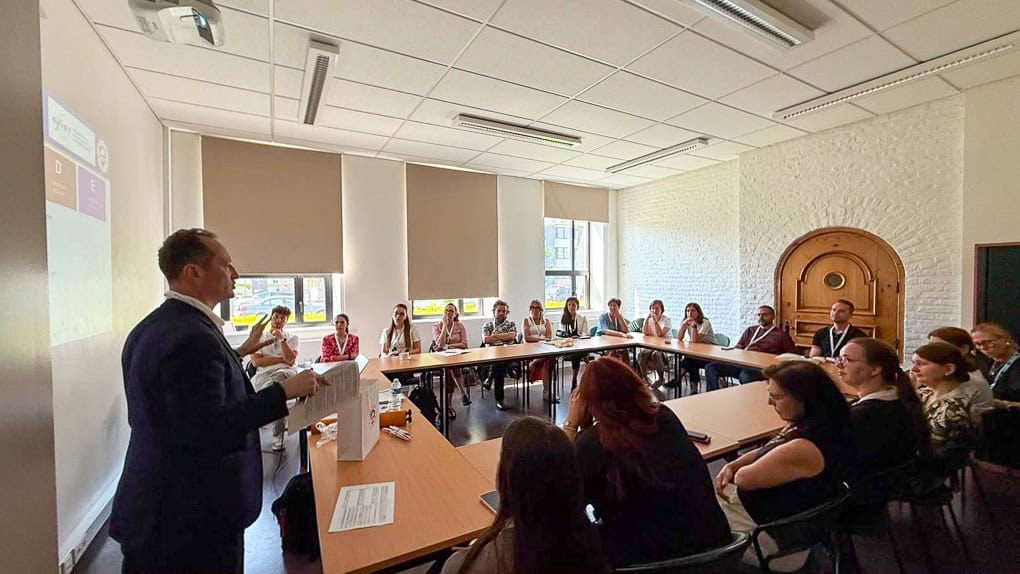
The Multiannual Financial Framework (MFF) is the EU’s financial planning instrument for the next four years. The new budget proposals will create significant opportunities for VET institutions to become involved in European-funded international programmes. His message to those present was clear: get involved, become part of it and ensure you always have a strong, committed local partner.
Alexis also cited Brazil’s SENAI and SENAC — large-scale, industry-integrated training centres — as a model worth studying. By training four million people a year while maintaining strong job placement rates, they demonstrate what can be achieved when training is genuinely connected to the private sector rather than operating in isolation.
In his speech, he offered a panoramic view of where vocational education fits within Europe’s broader global ambitions. The core argument was both practical and ambitious: Europe’s competitiveness abroad depends on its ability to export not just goods and capital, but also skills, training expertise and educational partnerships.
The invitation to VET institutions across Europe is to step beyond national borders, engage with the Global Gateway, connect with counterparts in Latin America, Africa and beyond, and build lasting, locally owned partnerships that survive the end of a project cycle.
Mrs. Martina Winkler of the Team Europe Initiative on Opportunity-driven Skills and VET in Africa (TEI OP-VET), representing a team of international development cooperation agencies including French, Finnish and German partners, introduced what she described as an evolving and practical approach to vocational education and training. Her organisation operates across Sub-Saharan Africa under the broader Team Europe framework, bringing together development finance, technical expertise, and on-the-ground training delivery with a focus on private sector engagement.
Mrs. Winkler’s core message was simple yet powerful: skills development only works when it is directly connected to real investment and job opportunities.
She introduced the “Demand-Driven VET” approach, which is a significant departure from traditional skills development models and is used by her organisation. Rather than starting with the education system and pushing training outwards, this approach works in reverse: it starts with concrete needs in the private sector and works backwards to design appropriate training.
Enrique Romeo from Asociacion Mundus presented a practical example from Côte d’Ivoire, focusing on the renewable energy sector. He underlined that the Ivorian government is actively promoting renewable energy through fiscal incentives — for example, companies importing solar equipment pay reduced or no taxes — and an interministerial decree requiring enterprises above a certain size to conduct energy audits. This is creating genuine market demand for two specific technical profiles: solar technicians and energy efficiency experts.
These findings were then translated into two practical, focused training programmes — short, three-month courses in which only 20% of the time is spent in the classroom and 75% is hands-on practical experience in the field.
In conclusion, Martina Winkler’s presentation offered a refreshingly grounded and honest perspective on what it takes to make vocational training work in developing countries.
The central lesson is both simple and challenging: start where the jobs are, not where the classrooms are. Real investment must be identified, real skills gaps mapped, targeted training designed, and graduates connected to real employers. The measure of success should be employment contracts signed, not courses delivered.
In a world where development budgets are shrinking and pressure to demonstrate impact is growing, this kind of rigorous, private-sector-anchored, results-focused approach may well represent the future of international VET cooperation. It is not easy. It requires patience, strong local networks and a willingness to engage with businesses as well as governments. When it works, however — as the Côte d’Ivoire example suggests it can — it creates something rare and valuable: training that actually leads to jobs and jobs that can improve lives.
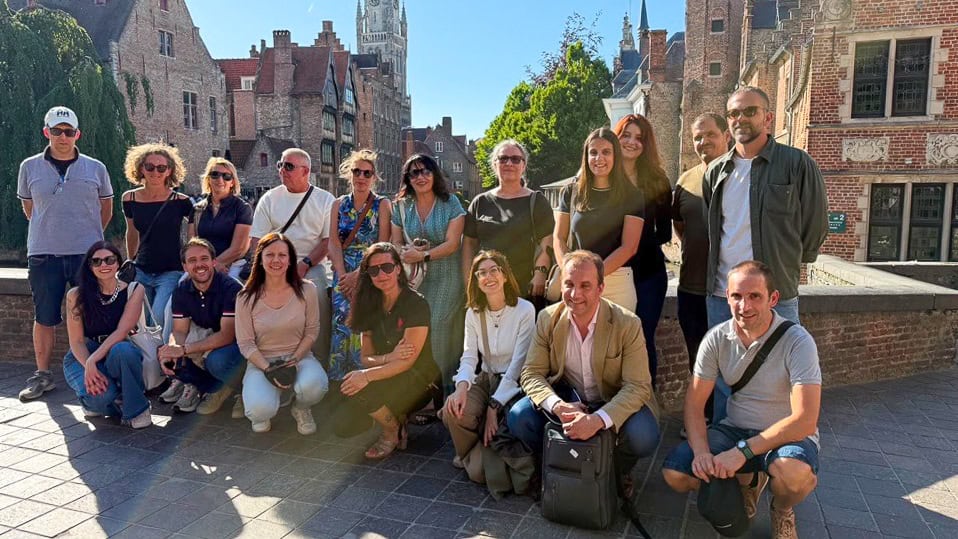
The first day of the 2nd Global VET Thematic Team Annual Event in Bruges set a rich and inspiring tone, combining high-level policy discussions with practical, hands-on learning and meaningful cross-border dialogue.
Three key messages emerged from the day’s sessions:
Skills development must be demand-driven. Start with real business needs, identify the gaps, and develop targeted training to fill them.
Secondly, quality over quantity for a focused, validated three-month course beats a lengthy programme every time.
Thirdly, partnerships are everything — but only when they are genuine. The message was consistent whether in Kenya, Côte d’Ivoire or China: find the right partners, build trust slowly and ensure that every party brings real value to the table.
Europe must work as one. From the Global Gateway to international VET cooperation, the days of European countries working in separate silos abroad are over. Coordination, alignment and a unified approach are no longer optional — they are essential.
As it began, the day ended with energy, curiosity and a shared commitment to placing vocational education and training at the heart of Europe’s future.
On the third and final day of the 2nd Global VET Thematic Team Annual Event, participants went straight into workshop sessions.
After two days of inspiring plenary sessions, school visits and cross-border conversations, the focus of Day Three was to take the ideas and insights gathered throughout the event and develop them into concrete recommendations and actionable outcomes.
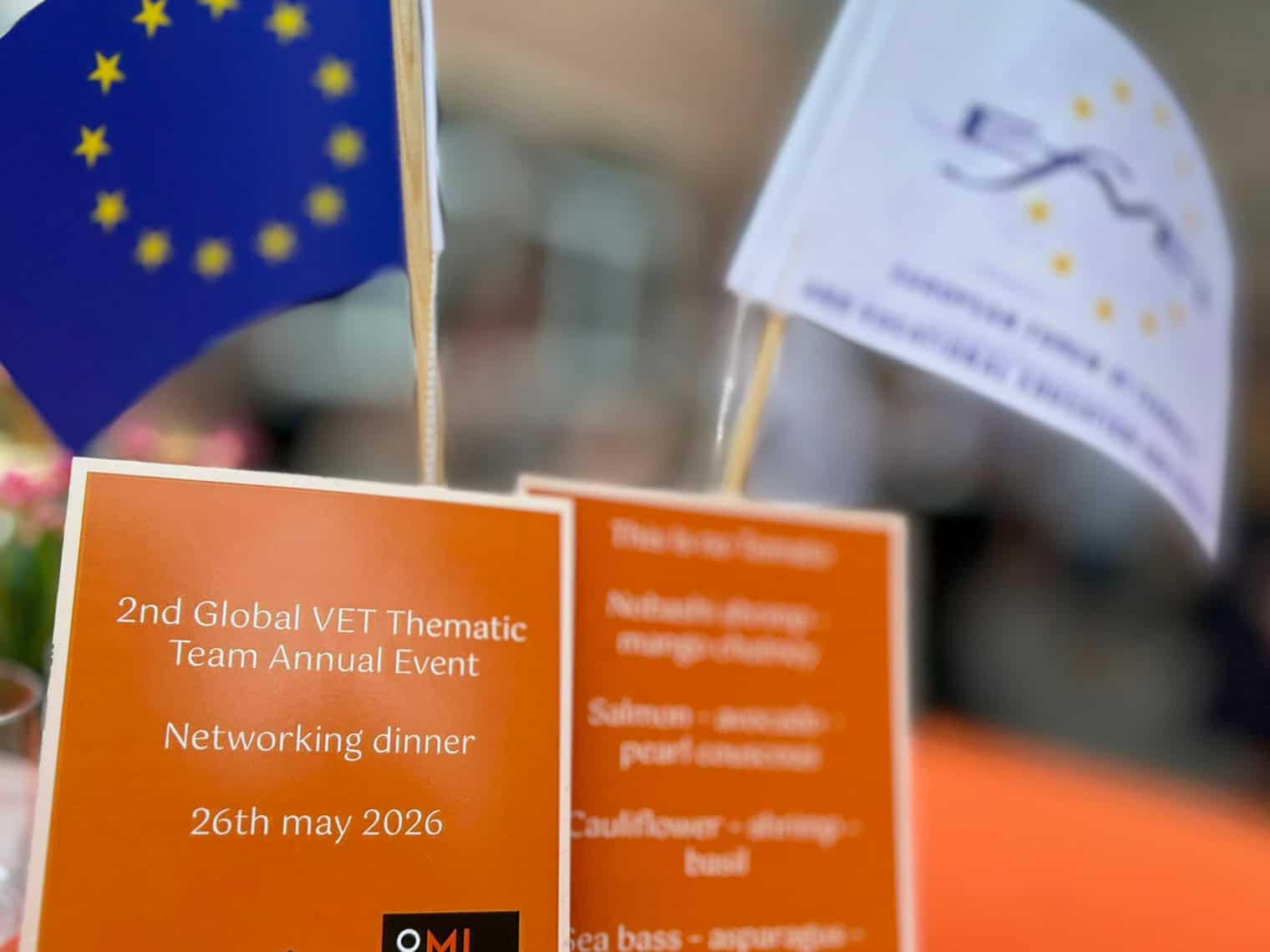
Conclusion of the 2nd Global VET Thematic Teams
This gathering proved once again that bringing people together in person has a powerful impact. Throughout the event, a clear message emerged: collaboration, openness, and human connection lie at the heart of everything we do.
From Africa to China and Europe to the rest of the world, projects shared showed that VET is truly a global movement. Whether we are building partnerships, securing funding, designing communication campaigns or exploring new markets, we always find that the answers come from working together and listening to each other.
The energy, creativity and warmth in the room — including an unforgettable song performed ‘our way’ — reminded us why we do this. Not just for the knowledge, but for the people.
As we leave, we take with us new ideas, new friends and renewed motivation to improve vocational education.
Thank you to the Global VET Thematic Team coordinators, EfVET Team, Board of EfVET, Belgian organisers, all the speakers and every participant who made this event so special.