
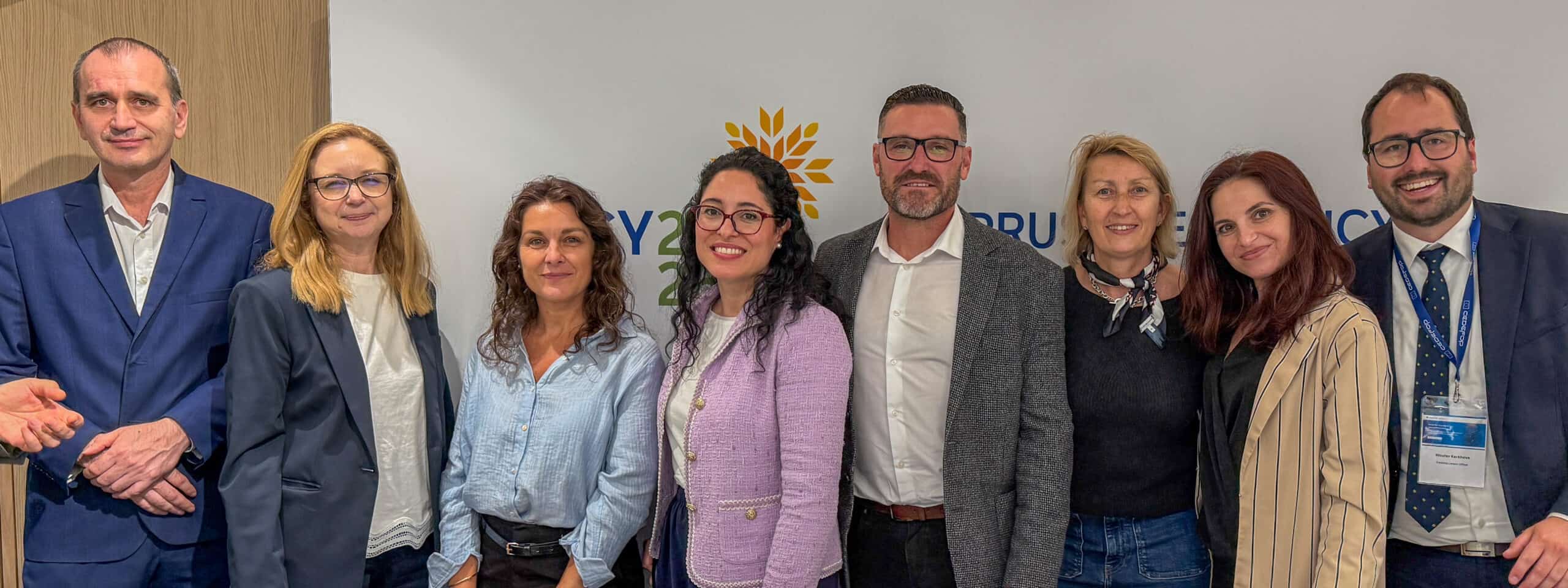
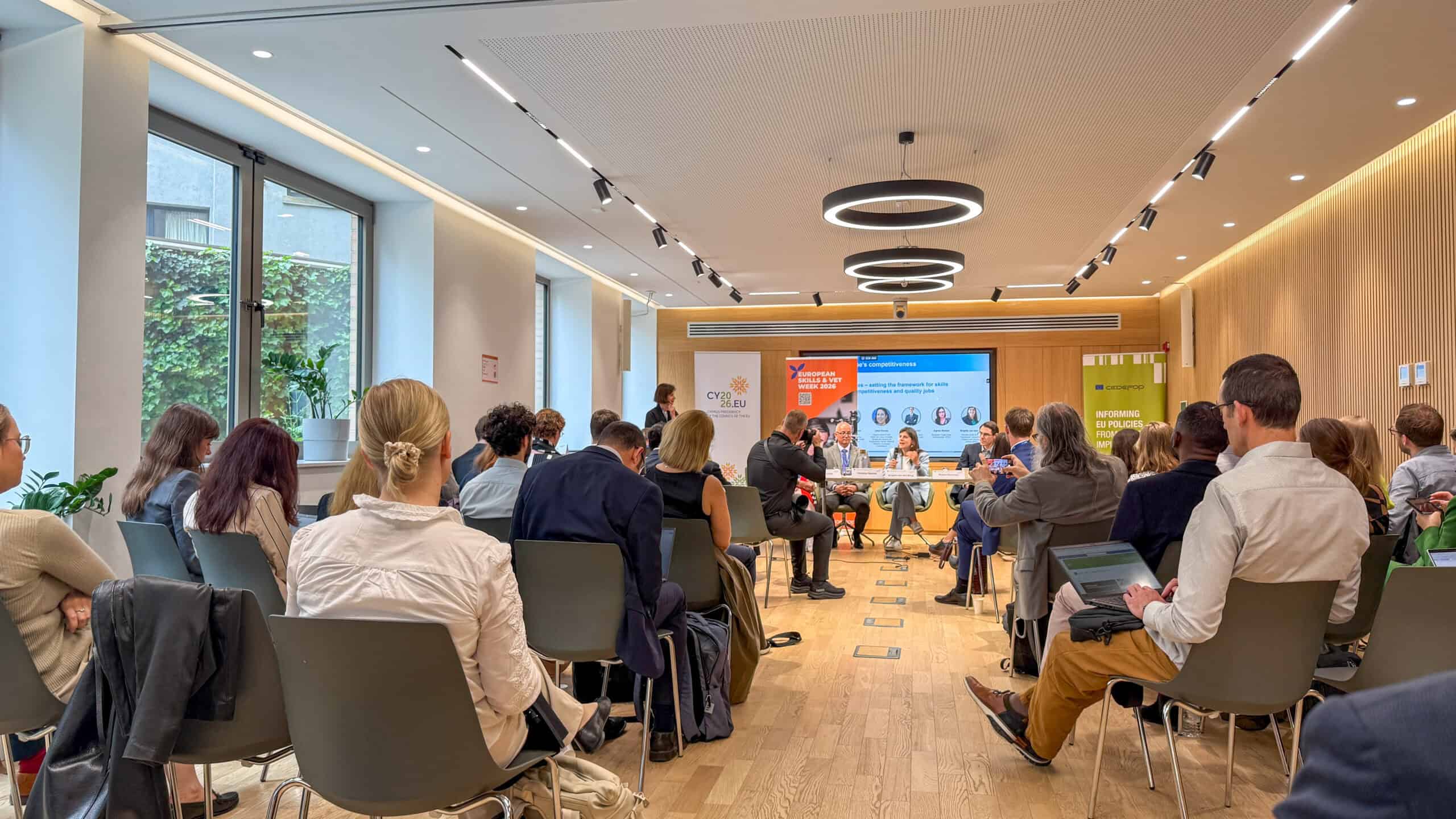
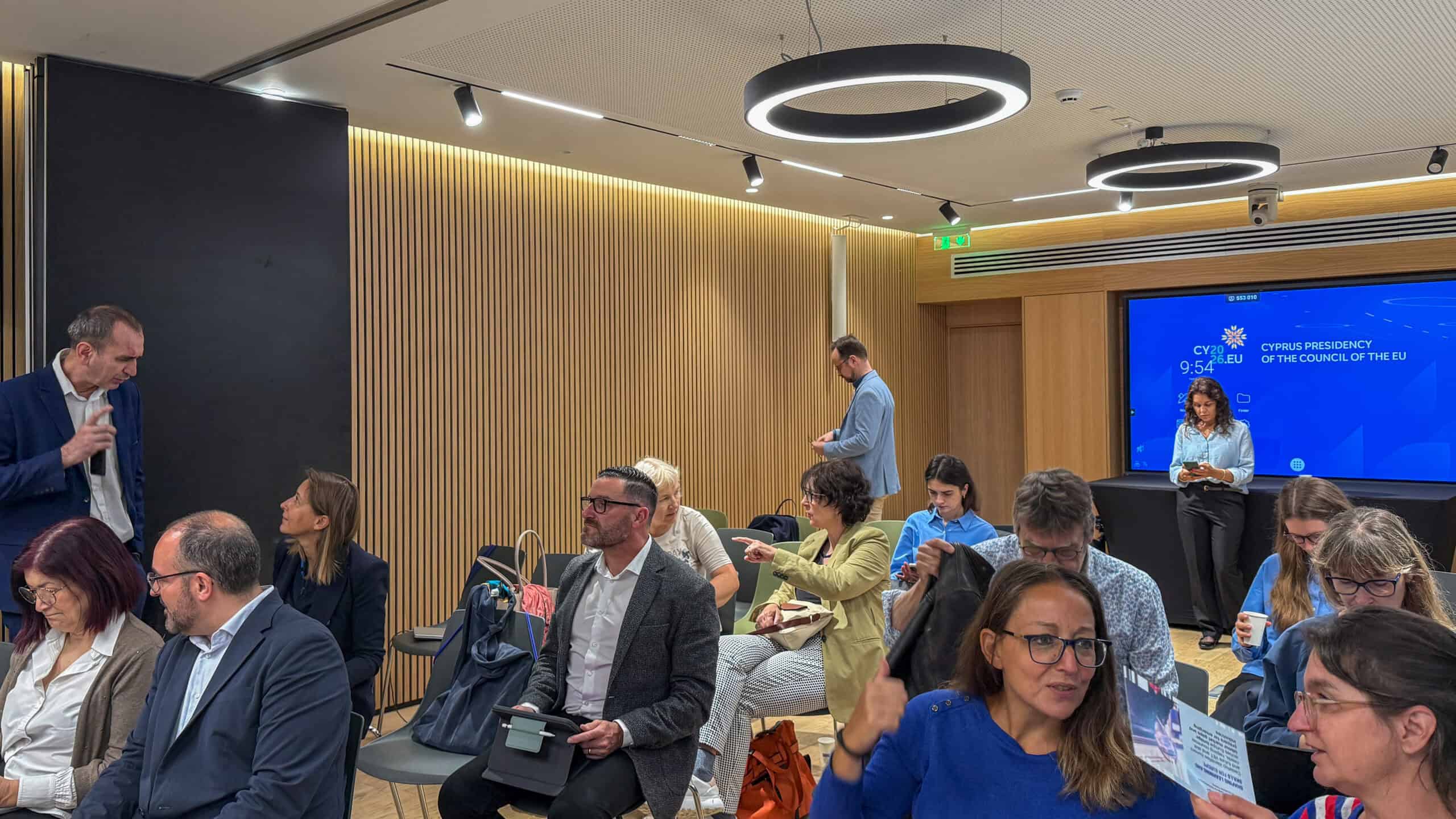
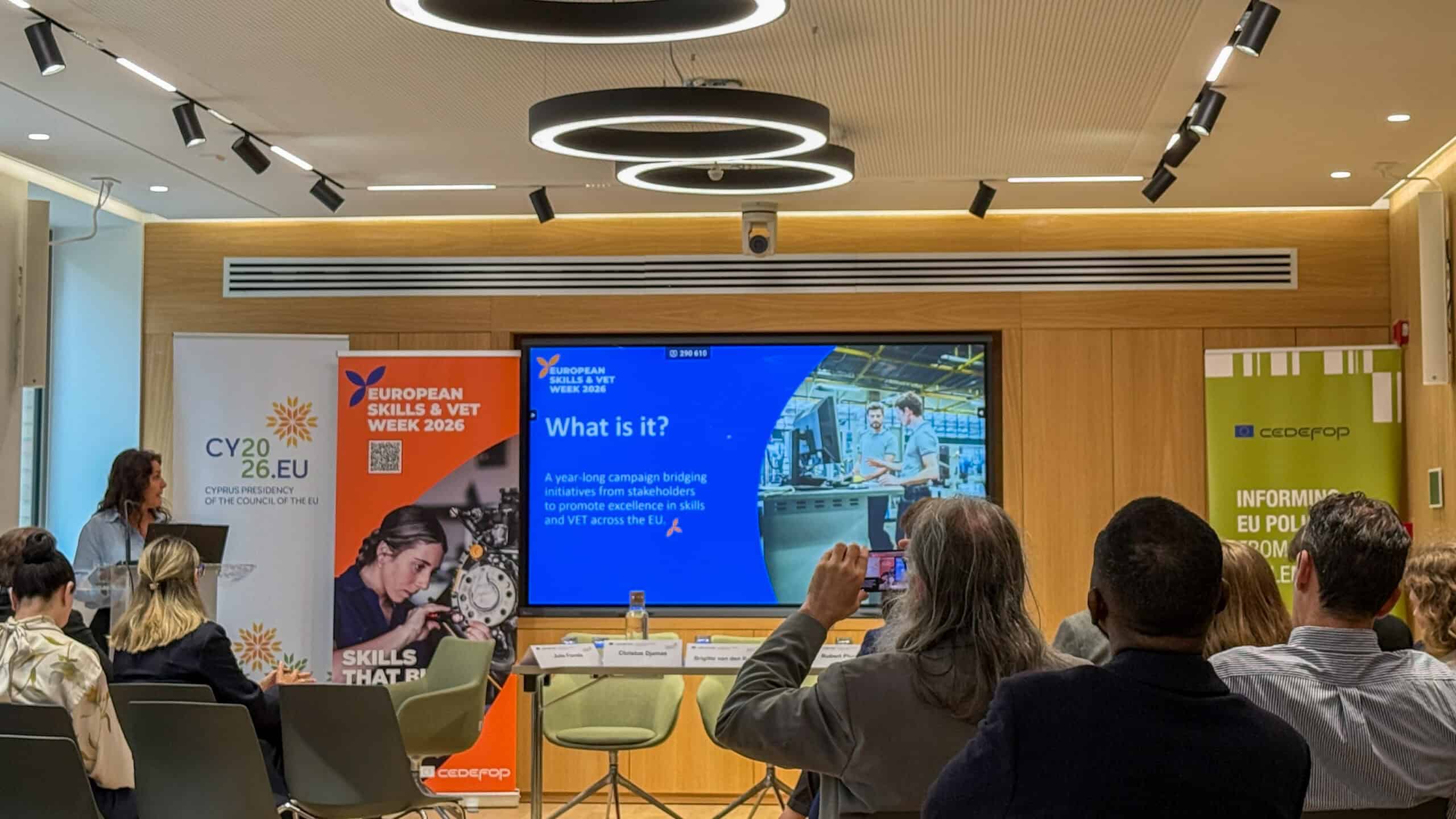
On 2 June, Cedefop organised the 20th Cedefop Brussels Seminar, titled ‘Skills for Europe’s Competitiveness‘, in cooperation with the Cyprus Presidency of the Council of the European Union. This event brought together policymakers, social partners, researchers, and Brussels-based stakeholders to discuss how skills development and workplace learning can boost Europe’s competitiveness while improving job quality. A wide range of senior figures were present at the seminar, including representatives from Cedefop, the Cyprus EU Presidency, the European Commission, academia, European social partners and the European Parliament. This broad participation reinforced the event’s role as a key platform for EU-level dialogue between research and policymakers.
The seminar was centred on Cedefop’s new European Training and Learning Survey, which brought together research, policy reflection and stakeholder dialogue. The seminar concluded with a clear, shared message: Europe’s competitiveness depends on sustained investment in skills, stronger workplace learning cultures and human-centred approaches to economic transformation.
Kika Kattami, Education, Sport and Youth Counsellor and Attaché at the Permanent Representation of Cyprus to the European Union in Brussels, opened the high-level meeting with a compelling address, setting the tone for a rich and forward-looking discussion on ‘Skills for Europe’s Competitiveness’. In her opening remarks, Ms Kattami emphasised that, as the Cyprus Presidency of the Council of the European Union enters its final stages, urgent and concrete action on human capital development is needed. “A strong, competitive and resilient Europe fundamentally depends on its human capital. Investing in people, equipping them with the right skills and enabling them to adapt and thrive in a rapidly changing world are indispensable prerequisites for Europe’s future prosperity and competitiveness.’
Kattami was clear that the skills agenda goes far beyond filling labour market gaps. She highlighted the importance of a broader, more inclusive approach to skills, ensuring that all learners develop the fundamental competencies that form the foundation of lifelong learning, active citizenship, and social inclusion.“Strengthening these foundational skills,” she noted, “is not only a matter of economic necessity — it is also a matter of equity.”
Looking ahead, Kattami announced a forthcoming conference, organised in cooperation with the European Training Foundation on 24–25 June, which will address youth and women’s empowerment, digital transition skills, and skills mobility across Europe.
She closed her address with a call to action, inviting all participants to engage deeply and help transform discussions into concrete insights for Europe’s future, ensuring lifelong learning is embedded throughout education and training.
Juergen Siebel, Executive Director of Cedefop, said in a video message address that the EU faces “a convergence of pressures” including technological transformation, demographic change, climate change, productivity gaps, and skills and labour shortages. He added that adult learning and vocational education and training are “strategic assets” for responding to those challenges.
Juergen Siebel opened by highlighting the significance of the occasion, noting that this seminar marks the 20th edition of Cedefop’s Brussels Seminar — a platform that, over a decade, has become a recognised space for evidence-based debate on vocational education and training (VET), skills, and lifelong learning, always aligned with the priorities of EU Presidencies.
He also highlighted new research from Cedefop’s European Training and Learning Survey, which is said to be the first survey to systematically map what drives skills development in the workplace. Key findings included:
- Curricula and qualifications open doors and pave pathways to good jobs
- Equally powerful are workplace conditions — job autonomy, managerial support, and a culture where learning is part of work itself.
Mr Juergen in his closing remarks, Siebel delivered a powerful policy message, stressing that skills decisions ultimately concern people — specifically, whether workers have the opportunity to grow and whether Europe is building an economy that utilises the full potential of its entire workforce, rather than just parts of it. He reaffirmed that the seminar and the 2026 European Skills and VET initiative share the same mission: “To recognise vocational education and continuing skills development as cornerstones of Europe’s future.”
Elias Margadjis delivered the most compelling speech of the day, drawing on economic theory and geopolitical thinking to argue that skills are the modern equivalent of power. In an evolving digital world, he highlighted that Europe’s prosperity depends on its capacity to invest in human capital, particularly in areas such as digital technologies, engineering, data science and advanced manufacturing, in order to stimulate innovation and mitigate labour market imbalances. He pointed to the practical benefits of skills investment, notably its power to reduce labour market mismatches, address workforce shortages and strengthen Europe’s overall economic resilience. He stressed that these are not abstract goals, but urgent necessities in an increasingly competitive global landscape.“Human capital has become the decisive factor in economic competitiveness and strategic influence. Europe’s future prosperity and resilience will depend on its capacity to invest in skills, knowledge, and innovation.”
Georgi Dimitrov, Member of Cabinet of Executive Vice-President Roxana Minzatu, Social Rights and Skills, Quality Jobs and Preparedness, European Commission delivered a brief but pointed intervention. Speaking on behalf of Executive Vice President Mînzatu, he conveyed her strong personal commitment to VET, noting it will remain a top priority as new initiatives are undertaken.
Mr Dimitrov stressed that quality in vocational education and training is a recurring topic, but one where the right measures are still lacking. He acknowledged that this is a complex challenge involving salaries, working conditions and systemic factors, but insisted that improvement is possible, drawing a colourful football analogy: “You can relegate a club from a lower to a higher league — it is possible, it’s not easy, but it can happen. VET should open doors, enable progression, and carry the status and standing it deserves, becoming a first choice rather than a fallback option.”
He also emphasised that businesses must be involved, as they are closest to labour market needs and are essential partners in any effective VET system.
Dimitrov outlined two significant Commission commitments:
- A proposed 80% budget increase for education and training
- An ambition for at least 50% policy ambition in this area
Georgi Dimitrov acknowledged these are difficult processes, particularly within the negotiations on the Multiannual Financial Framework (MFF), but expressed confidence in a positive outcome. He closed by urging all stakeholders to align and intensify their messaging around VET, both inside and outside institutional circles. He said that seminars like this one and the upcoming European Skills and VET Week are vital opportunities to raise awareness and shift public perception.
During the Policy perspectives – setting the framework for skills strengthening competitiveness and quality jobs the five speakers stressed:
Julie Fionda, Deputy Head of Unit EMPL B2, DG- EMPL, European Commission stressed that while skills policy must work at system level, the Commission is actively addressing the demand side through Individual Learning Accounts, Pacts for Skills, and upcoming country-specific recommendations on education and skills.
Christos Djamas, Human Resource Development Authority Ministry of Labour and Social Insurance, Cyprus, highlighted that Cyprus funds training for over 100,000 workers and jobseekers annually. He called for a shift from training as a mere activity to building genuine learning-oriented workplaces, noting that competitiveness depends on workplaces that actually use and develop skills effectively.
Brigitte van der Berg, Member of the European Parliament, Committee on Employment and Social Affairs identified missing bridges between skills, job quality, and competitiveness policy. She championed the Quality Jobs Act as an opportunity to embed reskilling as a worker’s right, and called for greater investment in Centres of Vocational Excellence and EuroSkills events.
Robert Plummer, Confederation of European Business, BusinessEurope pointed to Europe’s productivity gap and called for stronger workplace learning cultures, better alignment between company and individual training needs, and meaningful social dialogue between employers and workers.
Agnes Roman, European Trade Unions (ETUC) delivered a stark warning — 50% of workers receive no structured training. She called for a binding right to training, equal access for all workers, and full implementation of existing EU directives to ensure training rights exist in practice, not just on paper.
Across all five panel speakers, one message rang clear — skills alone are not enough. How work is organised, how workplaces are managed, and how learning is embedded into daily working life are just as vital as qualifications and training programmes. Closing these gaps will require genuine collaboration between institutions, employers, trade unions, and policymakers at every level. Europe’s competitiveness will ultimately be built not just on what people know, but on whether workplaces truly allow them to grow.
Marcia Bizzotto, Cedefop marked the official launch of the 2026 European Skills and VET Week and featured rich discussions on how to better connect learning, workplace quality, and economic growth.
Key messages from the day included the need to make VET a first choice, not a fallback, invest in teachers and workplace learning cultures, and ensure that training rights exist in practice, not just on paper. Speakers also underlined that Europe’s competitiveness is ultimately decided not in boardrooms, but in classrooms, workshops, and training centres.
Ramona David, Cedefop closing remarks with a united and urgent call — skills policies must move from paper to practice. Europe’s most educated generation deserves workplaces that match their talent, and developing genuine learning cultures is no longer optional. It is Europe’s most pressing priority.