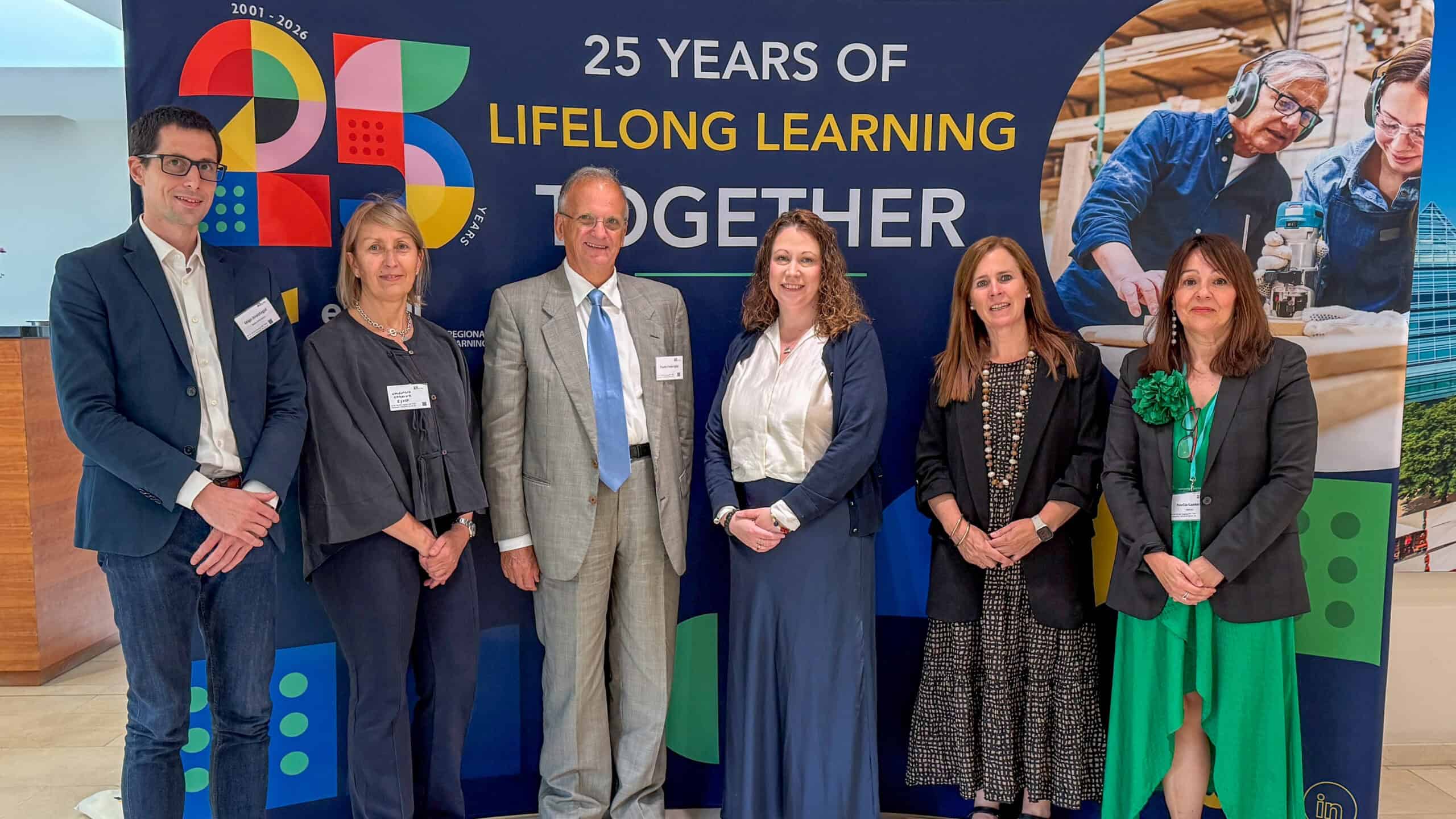
On 11 June 2026 in Brussels, the European Association of Regional and Local Authorities for Lifelong Learning (EARLALL) celebrated its 25th anniversary.
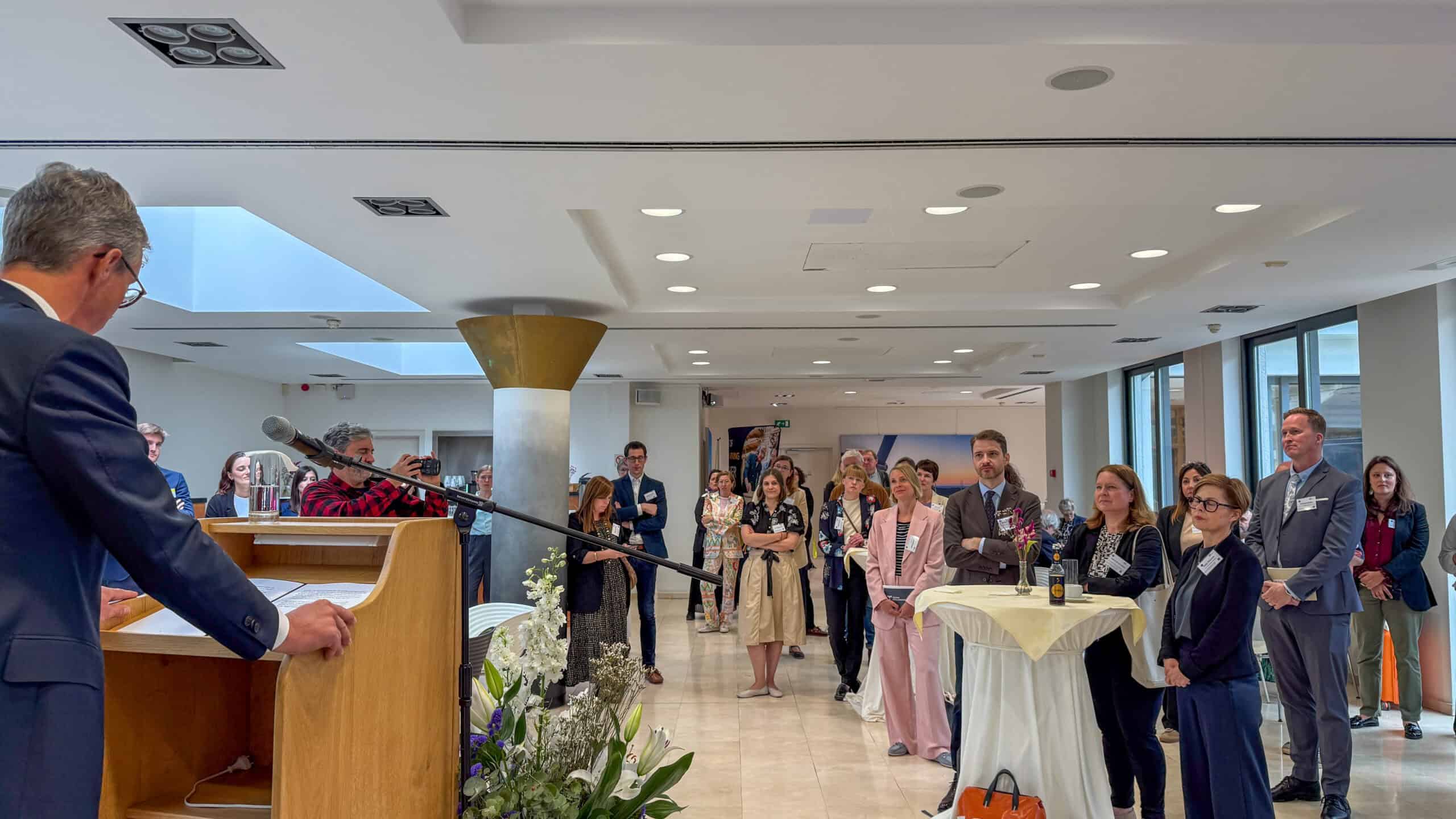
With more than 100 representatives from European regions, institutions, education providers, practitioners, and partner organisations gathered at the Representation of the State of Baden-Württemberg to the European Union. The event was a significant milestone for our network — both a moment to reflect on a quarter century of regional cooperation in lifelong learning and to look ahead to the future of skills and education in Europe.
Opening the celebration, Mr Bodo Lehmann, Head of the Baden-Württemberg State Representation in Brussels, highlighted the growing importance of lifelong learning in a rapidly changing world.
The afternoon’s “Lifelong Learning through the regions” exhibition showcased this diversity of regional action. The stands showcased innovative initiatives and European cooperation projects from across the network.
The afternoon working groups gave participants the chance to share their experiences and find regional solutions to shared European issues.
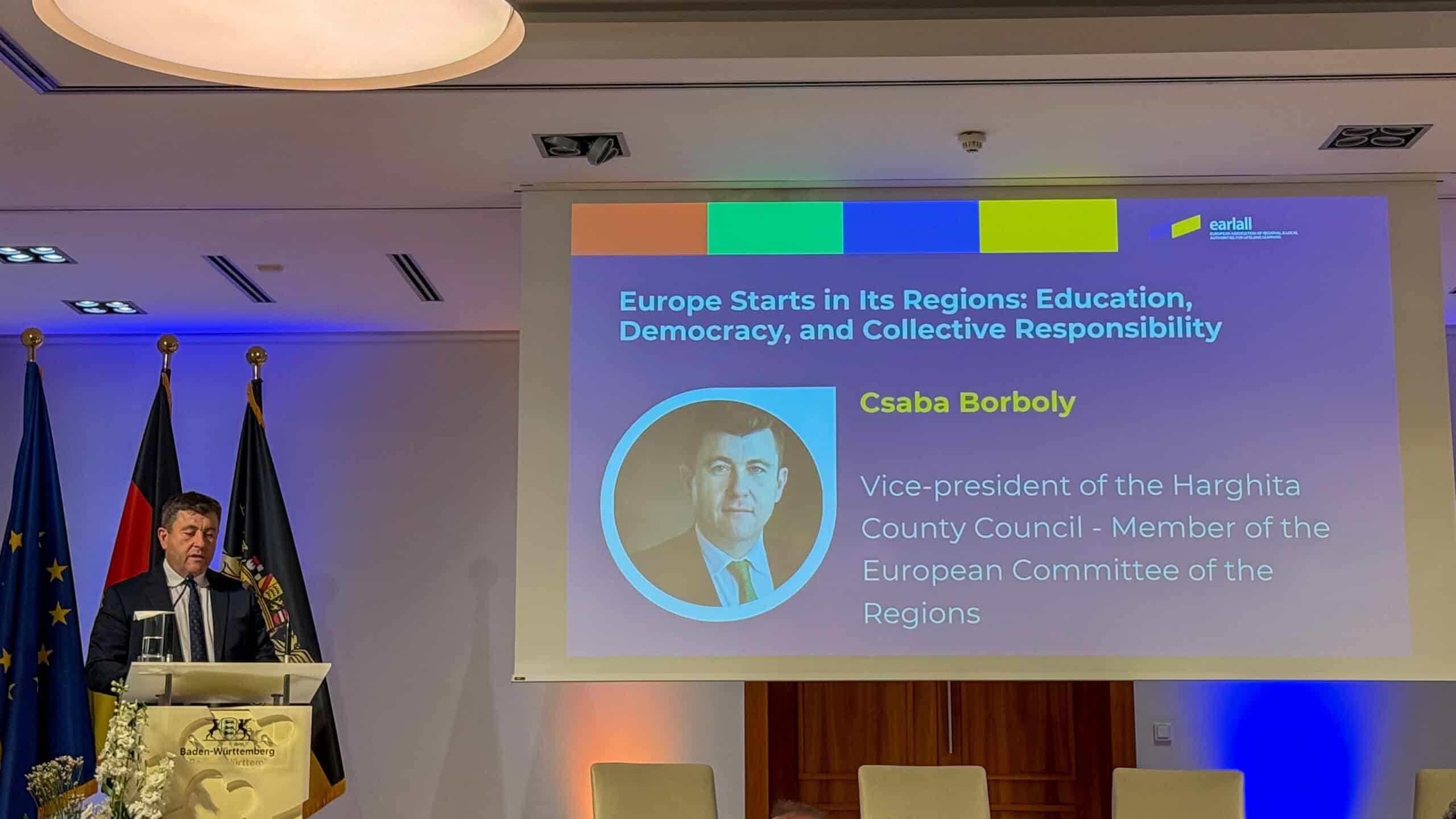
Csaba Borboly, Vice-President of Harghita County Council and member of the European Committee of the Regions, further reinforced the regional perspective. ‘Not every learner goes to university, and that is perfectly fine. We need all kinds of learning, recognised and valued equally. Education cannot be managed from a distance. Skills cannot be developed in a ministry at a national level. Lifelong learning happens in the community — it happens where you are.’
The importance of European cooperation in education was echoed in a video address by MEP Bogdan Andrzej Zdrojewski, who praised the impact of the Erasmus+ programme and called for increased investment to make participation more accessible and inclusive.
Dr Pieter Sprangers (University of Antwerp) encouraged participants to rethink traditional concepts of education and lifelong learning. He contended that lifelong learning should be viewed not as a luxury, but as ‘the infrastructure of a resilient society’. He highlighted the limitations of education systems designed around a single stage of life and advocated a transition towards flexible, learner-centred ecosystems that support continuous development across the lifespan.
His presentation invited participants to imagine hybrid, open, inclusive and experimental learning systems that would enable people to adapt to change and actively shape the future of their communities. Vulnerable citizens are at risk of being left behind. The solution lies not in creating more institutions, but in fostering human connections: learning ambassadors and tools that spark meaningful conversations about learning in everyday life.
In the first scenario, ‘The Unknown Classroom’, Irene Schäfer (Director of up PAMINA vhs) and Paolo Federighi (Honorary Professor of Adult and Continuing Education at the University of Florence) explored the future of regionally rooted adult education institutions. They reflected on the decline in participation in adult learning, the disruptive impact of artificial intelligence, and the changing demands of the labour market, while emphasising the enduring value of trusted local institutions.
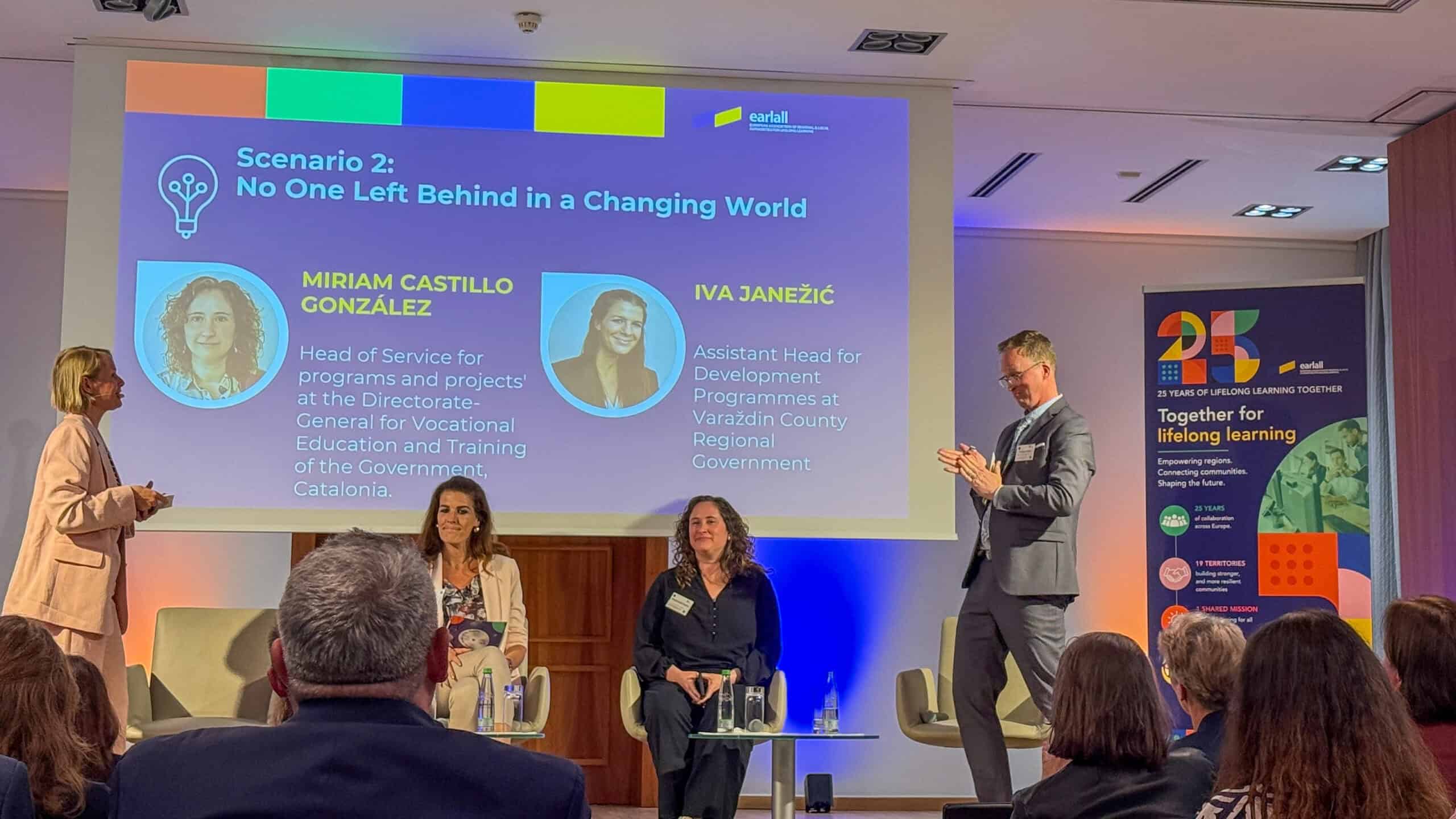
The second scenario, ‘No One Left Behind in a Changing World’, focused on demographic change, labour shortages, and the need for more inclusive learning systems. Miriam Castillo (Head of Service for Programmes and Projects at the Directorate-General for Vocational Education and Training within the Government of Catalonia) and Iva Janežić (Assistant Head for Development Programmes in Varaždin County) discussed how lifelong learning systems must evolve to respond to increasingly diverse learner needs.
The closing of the EARLALL 25th Anniversary Conference was a time for gratitude, reflection and moving forward. Speakers reflected proudly on 25 years of collaboration, innovation and shared commitment, noting that the network’s true strength lies not only in what it has achieved, but also in how it has achieved it: through cross-regional cooperation, openness and a deep belief in the power of lifelong learning.
The closing remarks concluded with a fitting image borrowed from Albert Einstein: ‘Life is like riding a bicycle. To keep your balance, you must keep moving.’ EARLALL has been riding that bicycle for 25 years. As long as the network continues to move forward together, it will maintain its balance.
The path ahead is set for at least the next five years, as outlined by Madeleine Jonsson, EARLALL President, and Noelia Cantero, EARLALL Director.