
The TUADIG needs analysis is guiding the development of future-oriented training for agricultural VET teachers.
European agriculture is undergoing a twin transition. Digitalisation and sustainability are transforming work processes, occupational roles and the competences required from future professionals. Data-driven farming, automation, smart machinery, drones and digital management systems are becoming an increasingly important part of agricultural work.
This transformation is particularly significant in Ukraine, where agriculture is a central pillar of the national economy, an important source of employment and a major contributor to exports. Before Russia’s full-scale invasion, agriculture accounted for 10.9 per cent of Ukraine’s GDP, employed around 2.5 million people and represented 41 per cent of the country’s exports. Despite the enormous damage caused by the war, modernising agriculture is considered an important part of Ukraine’s recovery and future European integration. (European Union, 2024.)
In this context, vocational education and training has a crucial role. It must prepare learners to operate modern machinery, interpret data, work with automated systems and adapt to evolving technologies.
TUADIG – Transforming Ukrainian Agricultural Education for the Digital Era – is a three-year Erasmus+ Capacity Building in VET project running from 2026 to 2028. It brings together Ukrainian and European VET providers, higher education institutions and agricultural stakeholders. The project aims to modernise Ukrainian agricultural VET through digital, simulation-based and immersive learning solutions, while strengthening teachers’ pedagogical and technological competences.
Combining the perspectives of teachers and working life
One of the first steps in TUADIG was to conduct a needs analysis to identify priorities for teacher trainings and institutional development.
The analysis drew on two main sources of data: a survey completed by 57 agricultural VET teachers from four Ukrainian institutions and a survey of 13 industry partners, including farms, contractors and agricultural technology companies. It examined teachers’ digital and pedagogical competence, their readiness to use technology, simulation facilities in institutions and the future skills expected by employers.
The findings indicate that the skills needs of the agricultural sector are developing rapidly, while education has not yet kept pace in all areas. Teachers generally have a sound pedagogical foundation and positive attitudes towards new technologies. However, gaps remain between the technologies used in modern agricultural workplaces and those currently accessible or integrated into teaching.
Simulation is available, but its pedagogical use varies
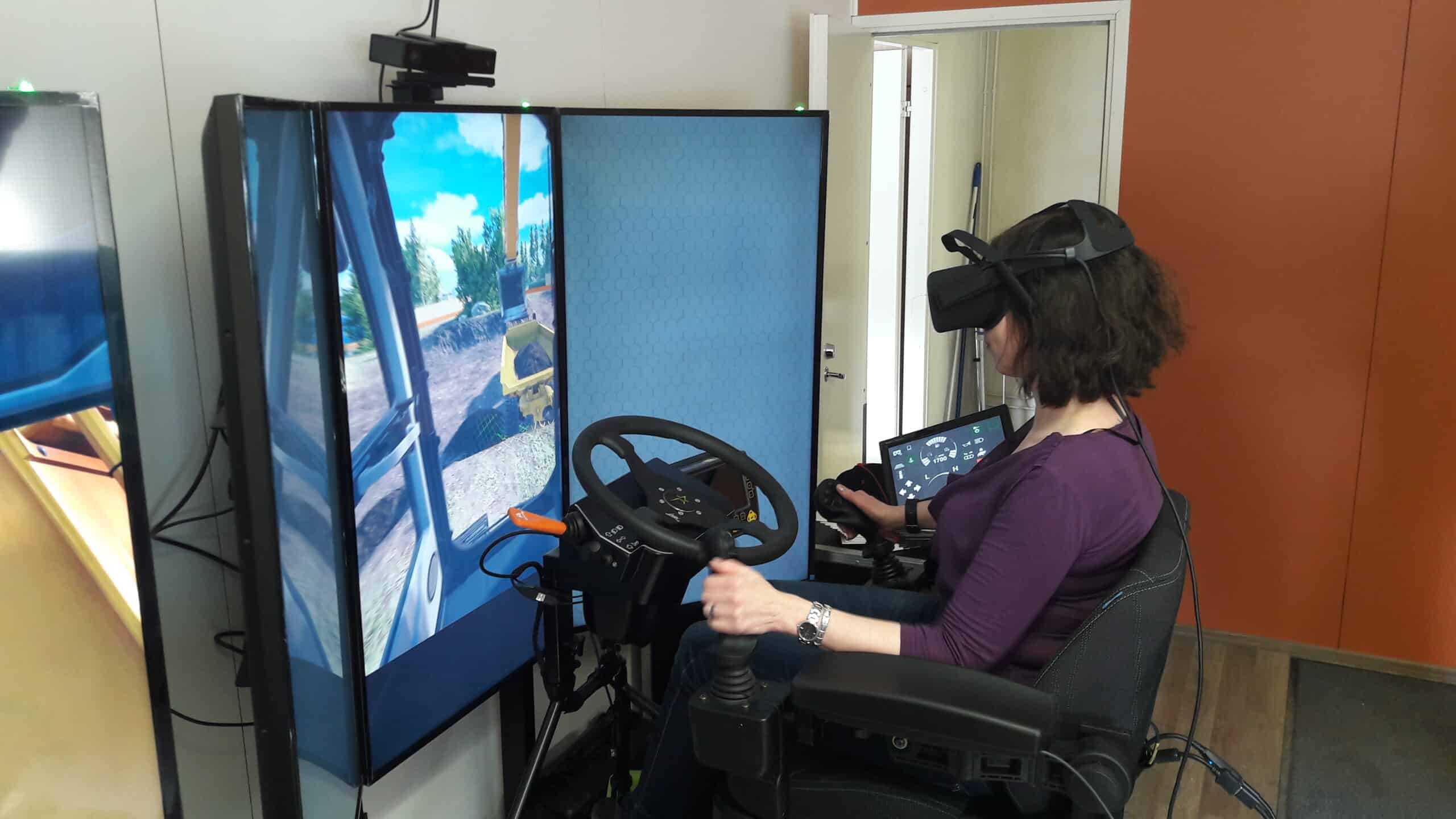
Simulation-based learning is already present in the participating institutions, and it is mainly used for practising equipment operation and developing practical skills safely. However, its use remains uneven. Almost half of the teachers reported that simulations were not currently part of their own teaching.
The needs analysis also revealed that access to equipment alone does not guarantee effective learning. Teachers identified development needs in designing simulation scenarios, facilitating learning activities, assessing performance and conducting structured debriefings.
Assessment and feedback practices were found to be largely teacher-led. Learner-centred approaches such as self-assessment, peer feedback and reflective discussion were used less frequently.
These findings highlight a broader pedagogical principle. A simulator is not a learning method itself. For simulation-based learning to be effective, teachers need to define clear competence goals, create an authentic scenario, prepare learners for the activity and facilitate reflection afterwards. The debriefing phase is particularly important because it helps learners connect their actions and decisions to professional practices.
A strong digital foundation, but gaps in emerging technologies
Teachers assessed their competence in general digital tools and learning environments as relatively strong. Platforms such as Moodle and Microsoft 365 were already familiar, and attitudes towards adopting new technologies were mainly positive.
The most significant competence gaps were related to specialised and emerging agricultural technologies such as drones, precision farming, automation, immersive XR environments and data-driven systems. One important reason for these gaps is that many educational institutions do not yet have access to modern agricultural equipment and technologies, limiting teachers’ opportunities to gain practical experience and integrate them into their teaching.
Industry partners emphasised many of the same priorities. They expect agriculture to become increasingly digital, automated and data-driven, creating demand for skills in smart machinery, data use, system integration and autonomous technologies. At the same time, stakeholders assessed the current ability of education to meet these needs as only moderate.
The issue is therefore not simply whether teachers possess general digital skills. The next step is to develop sector-specific digital competence and the pedagogical ability to integrate new technologies into authentic occupational learning.
From findings to practical teacher training
The results are now directly informing the design of TUADIG’s training activities. As its first training programme, the project is developing an open online course on simulation pedagogy, scheduled for publication in autumn 2026.
The course will provide Ukrainian teachers with practical tools to design, facilitate and assess simulation-based learning in different educational settings. An English-language version will also be openly available to VET teachers across Europe.
During the project, tractor and drone simulators will be acquired for the participating educational institutions. In later phases, TUADIG will organise two in-person trainings focusing on the pedagogical use of drone and tractor simulations, and immersive learning environments. These technologies will enable teachers to create safe, authentic and workplace-oriented learning experiences for agricultural VET students. The project will also support shared institutional practices so that simulation equipment does not remain dependent on individual enthusiasts.
The needs analysis offers once again a good reminder for agricultural VET and for vocational education more widely. Technological investment must be accompanied by pedagogical capacity building, organisational support and close cooperation with working life.
European cooperation as a two-way process
From YSAO’s perspective as a European VET provider and coordinator in TUADIG, the value of capacity building lies not in transferring ready-made European solutions to Ukraine. Agricultural VET is closely connected to local working-life practices, available technologies and national education structures. European partners can contribute pedagogical models, experience of competence-based VET and links to wider professional networks, but effective solutions must be developed together with Ukrainian teachers, institutions, authorities and employers.
This also makes the cooperation a learning process for the European partners. The questions raised by the needs analysis are familiar across Europe: How quickly can VET respond when occupational technologies change? How do we ensure that expensive equipment is used systematically for learning rather than by only a few enthusiastic teachers? And how do we give teachers enough pedagogical support to turn new technology into authentic, competence-oriented learning? Working together provides also an opportunity to examine our own practices while developing new ones with Ukrainian colleagues.
For a VET provider, sustainability is therefore as important as the technology itself. New simulators, digital tools and immersive environments create value only when teachers have the confidence to use them, learning activities are linked to clear occupational competences, and institutions create shared practices for access, maintenance and pedagogical use. Open learning materials, train-the-trainer approaches and cooperation with working life can help ensure that the competence developed during the project remains in the institutions after the project period ends.
The European dimension also matters beyond individual training activities. Cooperation connects Ukrainian VET providers with peers, networks and practices across Europe at a time when the country is rebuilding and moving closer to the European Union. At the same time, European partners can learn from the adaptability, resourcefulness and professional commitment of Ukrainian educators working in exceptionally demanding circumstances. Capacity building is strongest when expertise moves in both directions.
For YSAO, the long-term measure of success is therefore not the number of simulators purchased or courses completed. It is whether teachers can confidently design technology-supported learning, whether students gain competences that are relevant to modern agricultural work, and whether these practices become part of everyday institutional culture. The aim is to build the capacity to keep adapting as technologies, occupations and learning environments continue to change.
Minna Koskinen
Jamk University of Applied Sciences, School of Professional Teacher Education, Finland
https://www.linkedin.com/school/jamk-university-of-applied-sciences/posts/?feedView=all
Rea Tuominen
Project coordinator, Ylä-Savo Vocational College (YSAO, Finland)
https://www.linkedin.com/company/yl-savon-ammattiopisto/?viewAsMember=true
Reference:
European Union (2024). Ukrainian agriculture From Russian invasion to EU integration. Briefing. https://www.europarl.europa.eu/RegData/etudes/BRIE/2024/760432/EPRS_BRI%282024%29760432_EN.pdf
Use of AI:
Generative AI was used to assist with translating, structuring, and linguistically editing of the article based on content provided by the authors. The authors reviewed and revised the final text and are responsible for its accuracy and content.