
[Brussels, Belgium – 23.10.2026]
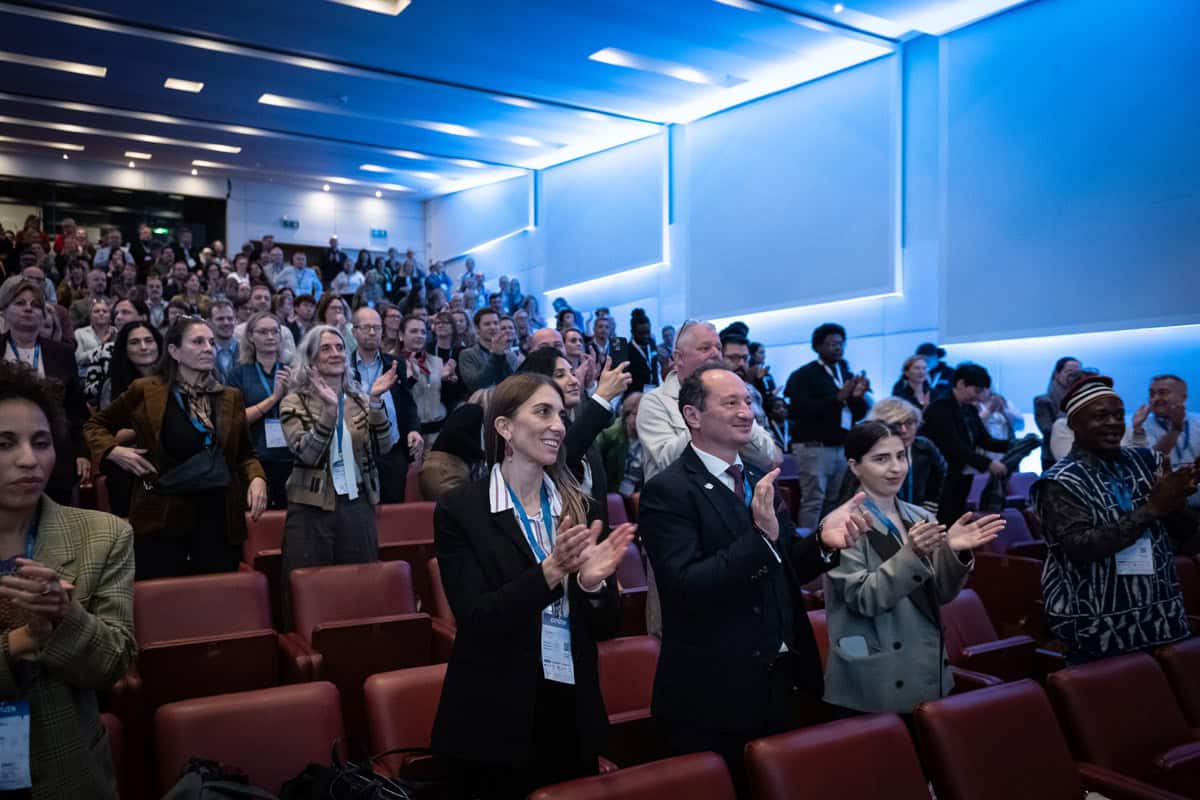
600 participants, 35 countries, 70 learners including participants to the EfVET Youth Forum and volunteers from the GO! centre, 70 sessions, 9 study visits, 25 speakers – all together to co-create VET. The 2026 Annual EfVET Conference “Global Citizenship Empowered by VET” came to a close on 23 October at the SQUARE Brussels Meeting Centre. The 35th edition of the Conference brought together TVET stakeholders from Europe and beyond, including policymakers, educators, industry leaders, EU officials and learners, to discuss how vocational education and training (VET) can prepare people to act as engaged citizens in a changing world.
Day 1: Learning from VET providers and listening to the EU institutions
Before the official opening of the conference, participants visited Belgian VET schools and European organisations in Brussels and surrounding cities, exploring the activities of grass-root VET stakeholders and learning from them best practices and on-the-ground experiences.
EfVET President Joachim James Calleja also welcomed the new members joining our network, 75 this year alone, inviting them to make the most out of the conference and seize the opportunities and benefits of being part of a community of 500+ members from 60+ countries.
The Conference opened on Wednesday evening with an institutional address by Mario Nava, Director-General for Employment, Social Affairs and Inclusion (DG EMPL) at the European Commission, who praised this year’s theme and reminded that VET is an empowering pathway for people, giving them the chance of quality employment in today’s globalised societies. He announced that the European Commission’s new European Strategy for VET will be a compass for schools and training centres and encouraged the EfVET community to keep engaging with the EU institutions.
Day 2: Exploring global citizenship empowered by VET – from policymaking to the classroom
On Thursday, EfVET President James Calleja opened the first full day of the programme, inviting delegates to reflect with honesty and depth on this year’s theme, taking the opportunity to challenge narratives and exchange on what can be done to support learners in becoming responsible and open citizens.
Participants then heard from Pilvi Torsti, Director of the European Training Foundation. In her keynote speech, she spoke about what can be learnt from VET practitioners in other countries, and why that matters for the future development of general and vocational education. Besides mentioning the ETF initiatives fostering a global community of vocational excellence, she challenged conference attendees to give every student the chance to learn with people from another country: starting with one class, one vocational task and making the exchange a regular part of the curriculum.
The day continued with the opening panel, addressing the main global trends in citizenship education, skills shortages, training, upskilling and reskilling. High-level guests from international organisations, the private sector and VET centres reflected on the need for shared agendas and the importance of involving VET providers and associations at all levels of policymaking – including learners in the conversation.
The parallel sessions offered delegates an opportunity to continue deepening the discussion on variations on the yearly theme: from looking at the experiences of other continents to the role of learning mobility in VET, and from innovative leadership practices for directors and principals to the core of it all, i.e. how to develop methodologies and tools to teach learners about citizenship education.
Across interactive roundtables and project matchmaking activities, delegates also explored how VET institutions can cooperate on shared projects, apply for funding and develop project ideas that have learners as their primary beneficiary.
Day 3: VET champions of today and the Youth Forum: learners take the stage
Friday opened with a high-level keynote by Brigitte van den Berg, Member of the European Parliament, who presented the results of her work in the European parliament to integrate VET graduates in the institution’s traineeships schemes and the content of the recently approved INI Report on VET and skills. She encouraged delegates to work on parity of esteem between VET and general and higher education, seeing vocational education and training as an investment that runs on quality and serves first and foremost learners.
In the morning, participants continued their exchanges in workshops sessions, which offered them practical tools, methodologies and ideas to concretely implement citizenship education, sustainability, internationalization, inclusion, guidance, digital tools and quality assurance in their daily practices.
Running in parallel with the Conference, the third edition of the Youth Forum gathered more than 30 VET students from EfVET training centres across Europe. Over three days, they took part in activities and dedicated workshops, visited European institutions and connected with peers from different countries. The activities culminated in the final Youth Forum Panel, where students pitched the results of their reflections on global citizenship to the full Conference audience. Along the main messages to VET providers and stakeholders, they demanded to be more involved in the decisions that affect them, and encouraged their teachers, trainers and principals to act on sustainability, digitalisation, inclusion and democracy at the school level.
More than just an Annual Conference: a cultural event for all
For the first time, the EfVET Annual Conference hosted the thematic exhibition “The Hands that Built Europe”, a cultural initiative celebrating the stories of Europe’s most inspiring figures of work and vocational learning across centuries and disciplines. The exhibition showcased past and present “VET champions” who shaped apprenticeships, research, work-based learning, the evaluation of competences and the inclusion of disadvantaged learners through VET. The reading corner allowed participants to find out more about EFVET current research, publications and initiatives, such as the VET Pulse Magazine and the podcast “Bet on VET”. The Annual Conference also launched the book “Rewiring VET: from Policy Frameworks to Human Ecosystems”, a collection of edited and curated articles written by experts from different fields related to VET and skills.
Looking ahead: working together for stronger VET institutions
The closing remarks by EfVET President James Calleja reinstated the need to act and change the narrative on VET in Europe: VET needs to be rewired in order to become a viable, qualitative and transformative educational and training pathway for all learners. The conference ended with the announcement of the next Annual Conference, which will take place in Manavgat (Türkiye) from 20 to 22 October 2027.
Photos, presentations and highlights from the Conference and Youth Forum are available on EfVET’s LinkedIn, Facebook and Instagram accounts.
About EfVET
The European Forum of Technical and Vocational Education and Training (EfVET) is an EU nonprofit umbrella organisation, established in 1991 to build a network of VET stakeholders and secure a voice across Europe in European policymaking and practice arenas. EfVET represents 500+ members from 60+ countries (including Africa and Asia), reaching 5K+ VET providers, 200K+ VET practitioners and 2M+ learners.