
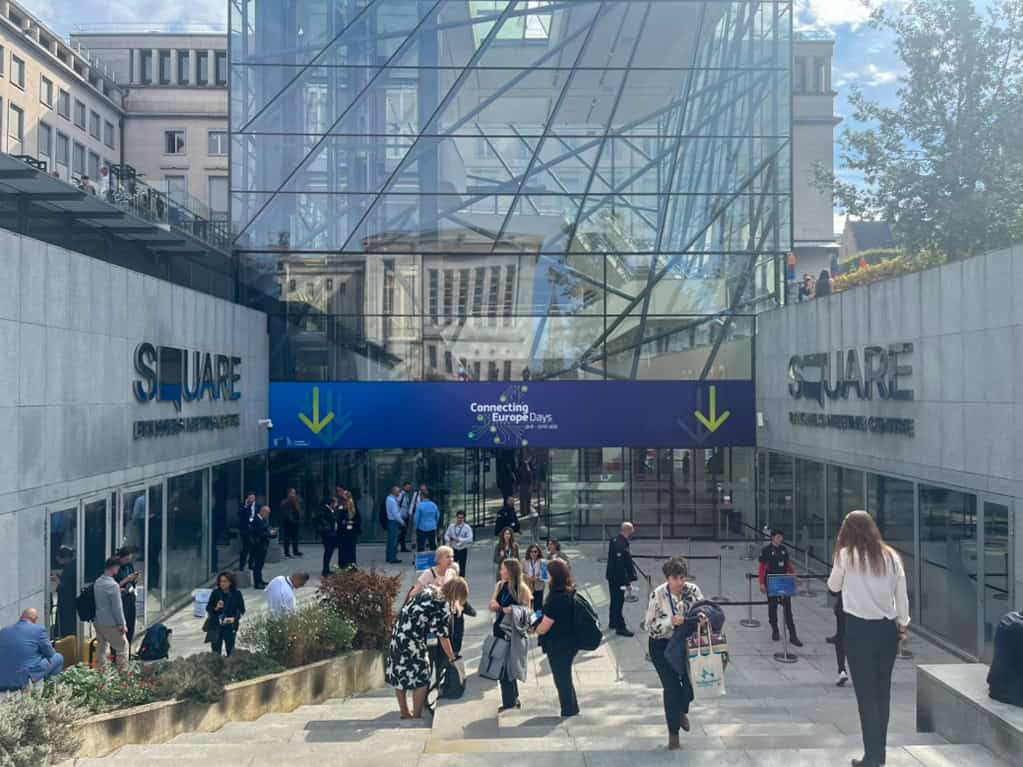
EfVET attended Connecting Europe Days 2026, Europe’s flagship mobility event, held from 28 September to 1 October 2026 at The Square in Brussels, Belgium. The conference brought together more than 3,700 participants, including ministers, politicians, financial institutions, industry representatives and transport stakeholders.
Opened by European Commission President Ursula von der Leyen and hosted by Apostolos Tzitzikostas, Commissioner for Sustainable Transport and Tourism, the conference explored how Europe’s transport system underpins competitiveness, resilience and global connectivity, and how future infrastructure will be funded and financed.
In an increasingly unstable geopolitical environment, sessions examined how transport and connectivity policies support competitiveness, strategic autonomy and resilient supply chains, enable military mobility, and strengthen Europe’s ability to act with partners beyond its borders.
For EfVET, the event was a valuable opportunity to follow the debate on the future European Transport Union and to bring a vocational education and training perspective to it: every railway, charging corridor and port upgrade depends on people with the right skills.
Building a true Transport Union
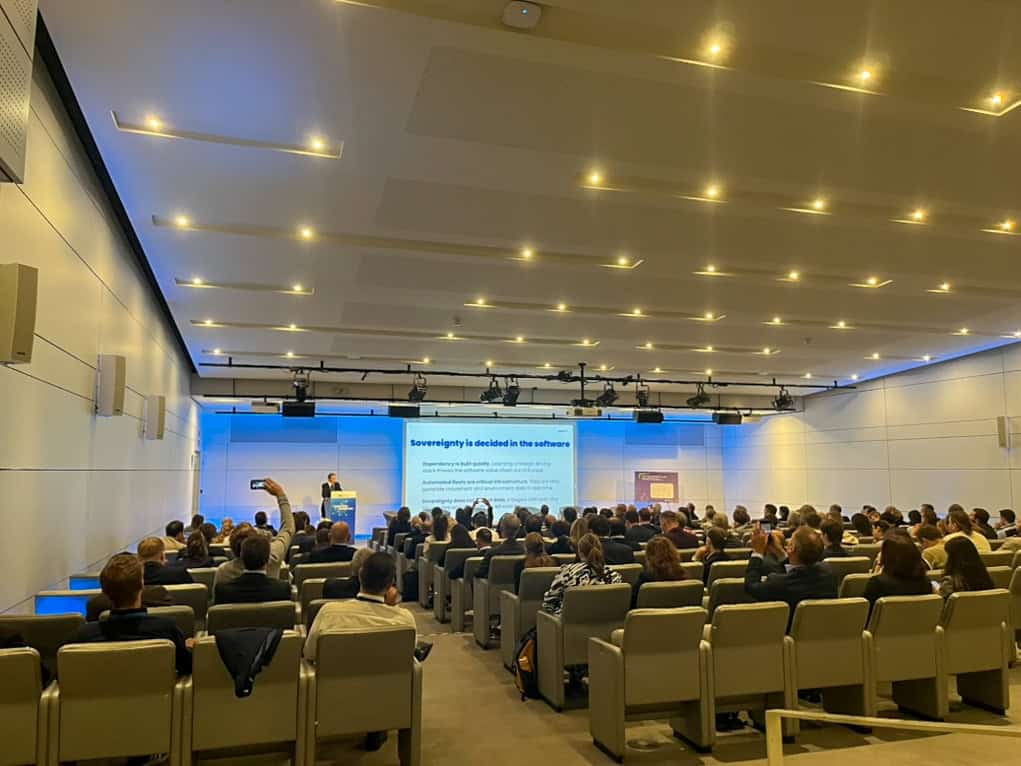
President von der Leyen opened the conference with a call to build a “true Transport Union”. She recalled the railway bridge rebuilt across the Rhine between Strasbourg and Kehl after World War II, and the modernised Vienna–Bratislava line that now links two capitals once divided by the Iron Curtain in under an hour. “While Europe’s leaders were building political integration, Europe’s engineers were building physical integration,” she said.
Her speech set out three priorities:
- Complete the connections within the Union. The Trans-European Transport Network (TEN-T) aims to turn 27 national systems into one European network. Completing it could raise EU GDP by 2.4% by 2050, around €467 billion. A new high-speed line will link Lisbon and Madrid in five hours by 2030 and around three hours by 2034. The Commission has proposed more than €50 billion for transport under Connecting Europe in the next long-term budget, more than twice today’s funding.
- Keep Europe at the forefront of transport innovation. European companies hold almost half of the global rail equipment and services market, and 70% of the world’s airspace is managed with European technology. Zero-emission trucks on Europe’s roads could grow from 26,000 today to 400,000 by 2030, supported by cross-border charging corridors. This summer, 18 Member States agreed to cooperate on large-scale cross-border testbeds for autonomous vehicles.
- Make the network ready for a more volatile world. Heat, floods and drought already disrupt rail, roads and waterways. She announced that the Commission will present a new European framework for climate resilience in the following month.
She also highlighted enlargement: with Ukraine, Moldova and the Western Balkans moving closer to the Union, new transport links, such as Moldova’s upgraded connections with Romania, are bringing “our future Union closer”. Notably for our community, she pointed to the Erasmus student travelling across Europe and the cross-border commuter as the people for whom transport makes Europe real every day.
Main announcements
Beyond the opening speech, the conference delivered several concrete outcomes:
- Autonomous vehicle testbeds: Portugal, Slovakia and Norway joined the cross-border initiative on testbeds for autonomous vehicles.
- Danube waterways: Danube transport ministers renewed their push for effective rehabilitation and maintenance of the river as a waterway.
- TEN-T corridors: The work plans of the TEN-T European Coordinators were published.
- ERTMS rail signalling: A new study found that fragmentation raises the cost of deploying the European Rail Traffic Management System (ERTMS) trackside, and recommends closer alignment to reduce expense.
Four days of debate
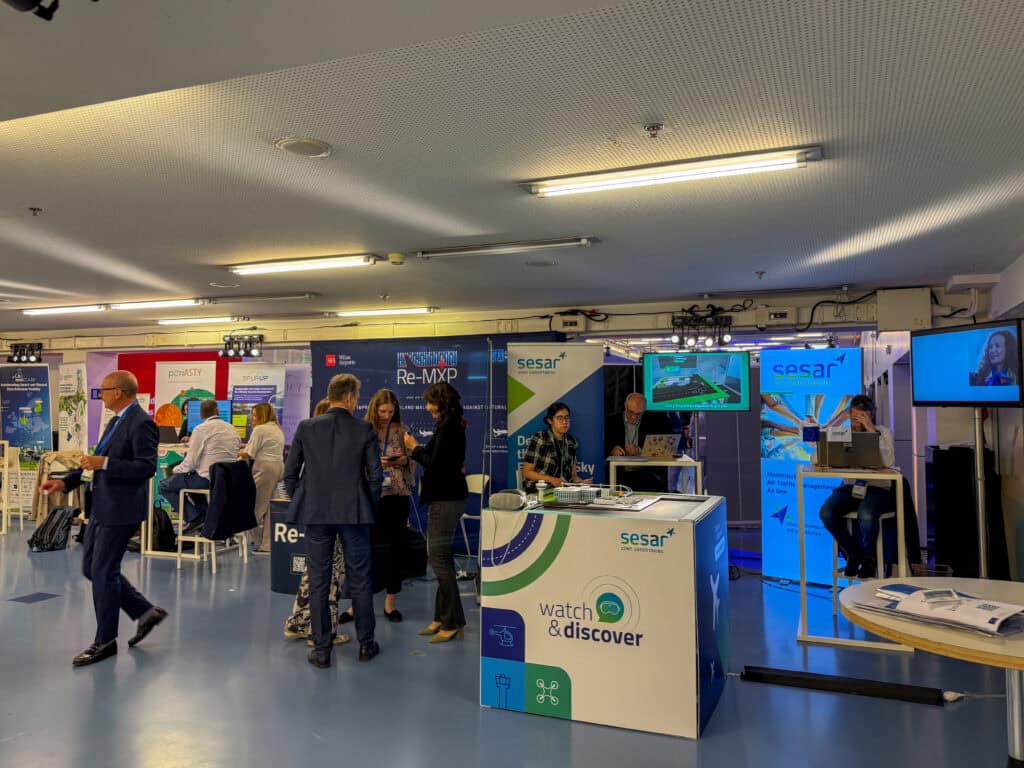
The programme reflected how far the transport agenda now reaches beyond infrastructure. The first plenary, “Prepared, secure and connected”, looked at how transport networks must respond to military needs and emerging threats, while a second turned to ports and the maritime sector as Europe’s gateways to the world. On the third day, plenaries asked whether high-speed rail is on track for implementation and how to mobilise investment for infrastructure that underpins both competitiveness and military mobility.
Around these, more than 30 thematic sessions covered rail freight, autonomous vehicles, zero-emission heavy-duty vehicles, inland waterways, sustainable aviation and marine fuels, data and AI, and connectivity as a driver of EU enlargement. The final day was devoted to meetings of the European Transport Corridors.
From EfVET’s perspective, it was encouraging to see the human side of transport on the agenda. Sessions addressed working conditions in transport and tourism, zero tolerance for violence and harassment in the maritime sector, transport poverty and the Social Climate Fund, and how to make TEN-T work for everyone through the Ambassadors for #DiversityInTransport. These are questions where education and training providers have a direct role to play.
Why it matters for VET
A European Transport Union will not be built by funding alone. Each priority discussed at Connecting Europe Days creates demand for skilled technicians, operators and engineers, and vocational education and training is where most of them are trained.
- Infrastructure delivery: Completing TEN-T and new high-speed lines requires construction, rail and maintenance professionals in every Member State.
- Electrification and automation: Scaling up to hundreds of thousands of zero-emission trucks, high-power charging networks and autonomous vehicle testing calls for new skills in electrical systems, diagnostics and digital technologies.
- Interoperability: Rolling out ERTMS across borders depends on staff trained to common European standards, not 27 national ones.
- Climate resilience: Adapting railways, roads, ports and waterways to heat, floods and drought needs workers who can assess risk and maintain infrastructure in new conditions.
- Mobility and enlargement: Better connections make learner and staff mobility easier, and open new opportunities for VET cooperation with Ukraine, Moldova and the Western Balkans.
EfVET will continue to make the case that skills are part of Europe’s infrastructure, and that VET providers should be partners in delivering the Transport Union.