
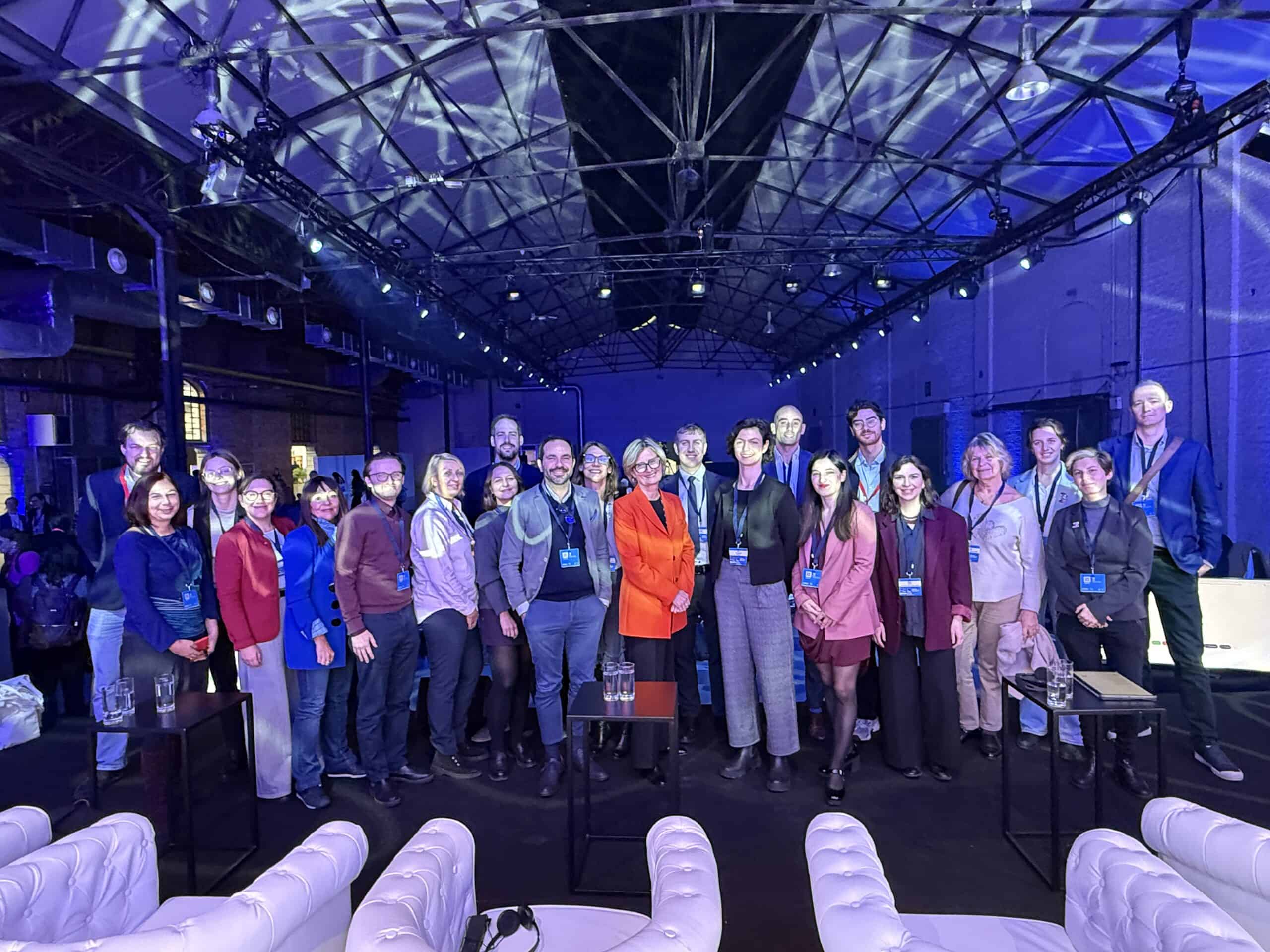
On 20 November, the European Commission hosted the 2026 European Education and Skills Summit at Tour & Taxis in Brussels. Under the theme “Schools for tomorrow: fit for the era of AI”, the the summit explored how Europe can create learning environments that are ready for artificial intelligence. Education stakeholders from across Europe came together to discuss the sector’s main challenges: declining basic skills, teacher shortages, digital transformation, and growing inequalities. Participants considered how schools can equip learners with the necessary skills and confidence for the future.
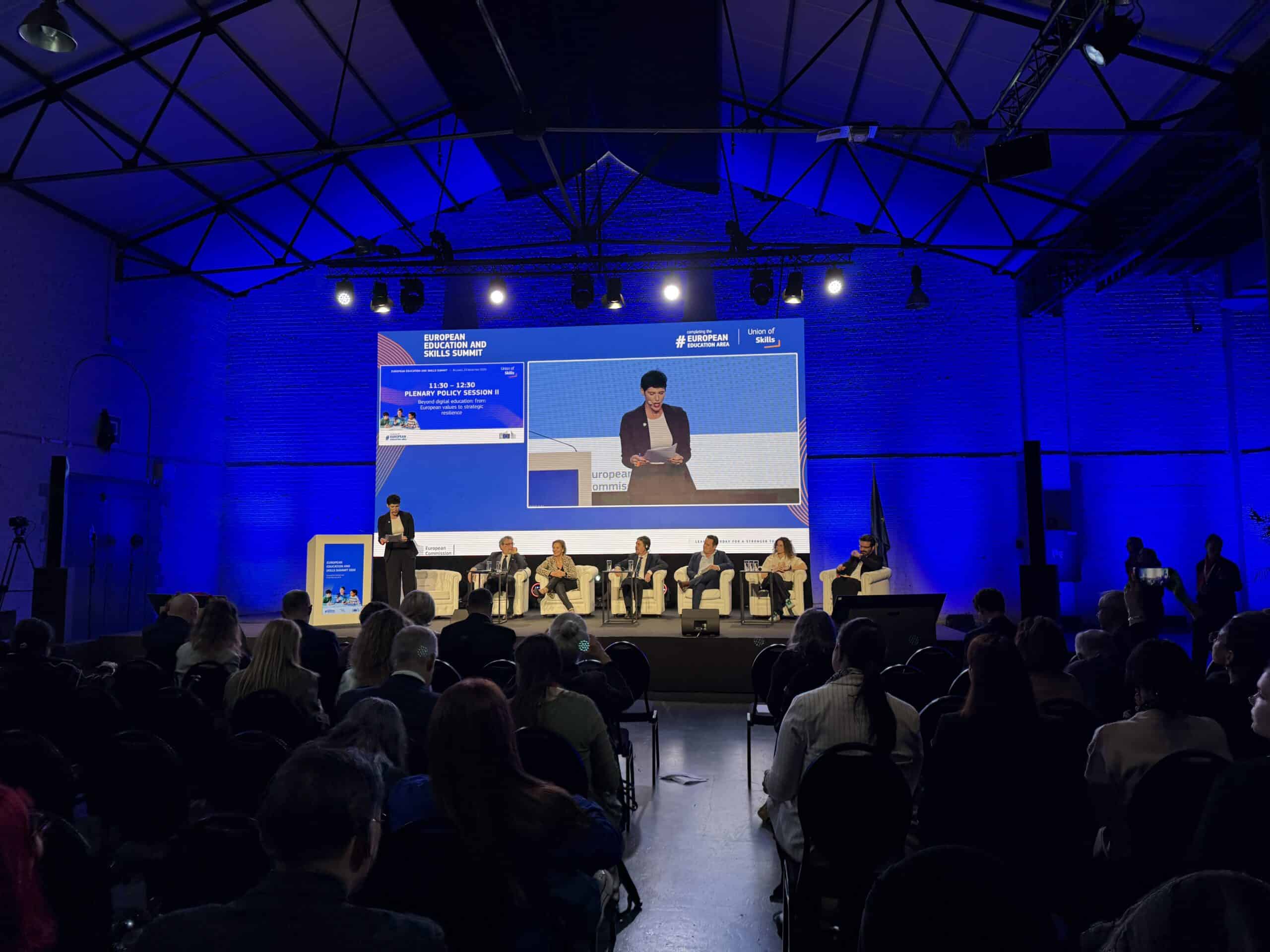
This was the first gathering of the education community since the Education and Skills Package was presented on 5 November, marking the start of its implementation. The programme combined high-level plenary sessions with interactive workshops, and audience members could submit questions and comments live via Slido. Alongside the sessions, an exhibition called ‘For Tomorrow’ offered three interactive spaces showcasing practical examples of how new ideas can be implemented in schools for the benefit of teachers and the wider community. These included a classroom with live demonstrations, a project space and a space dedicated to the future of learning.
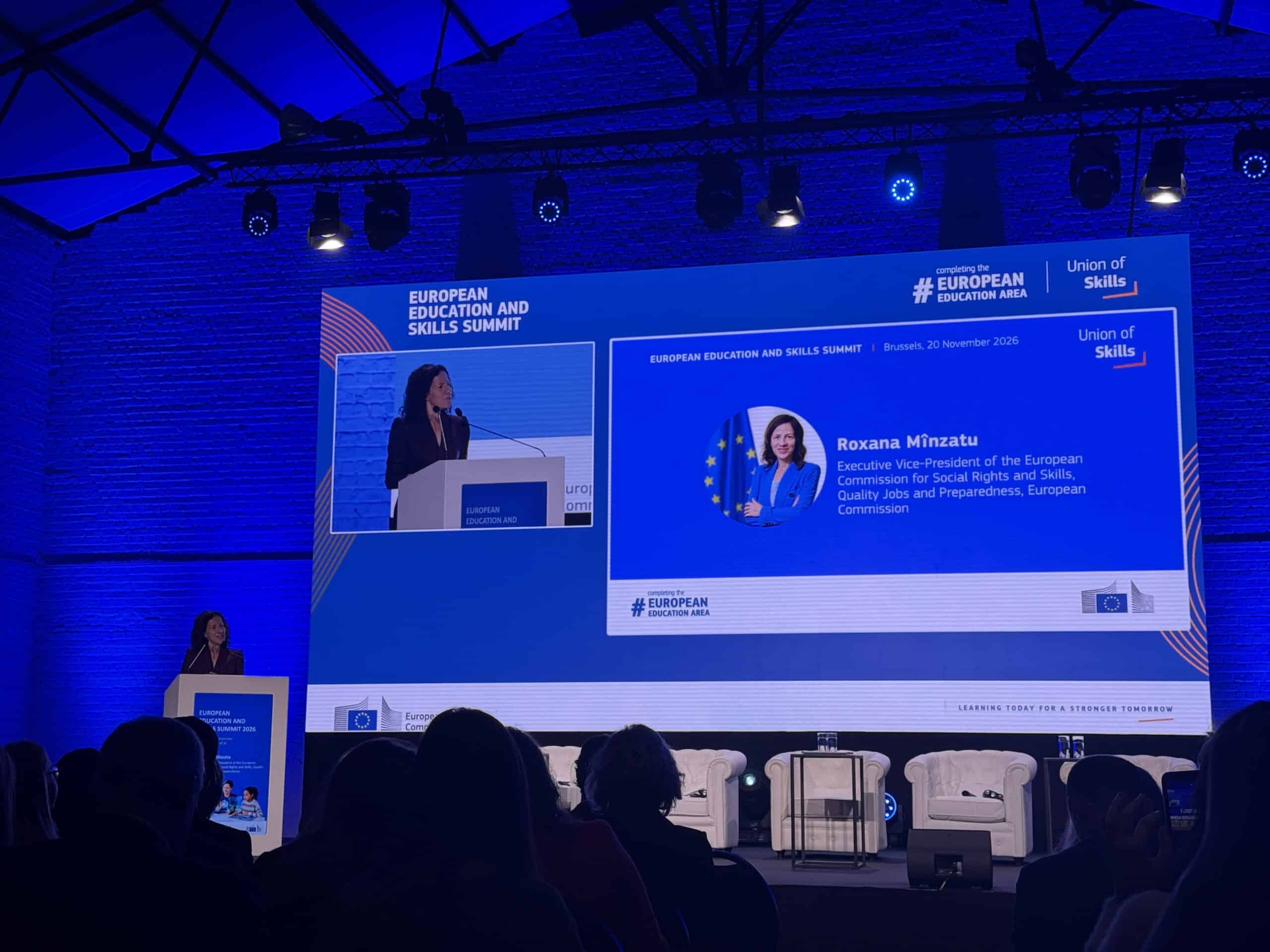
Executive Vice-President Roxana Mînzatu opened the summit by inviting participants to keep their feet on the ground and face today’s realities. Students across Europe are protesting for more resources, better school infrastructure and more teachers. She urged governments and finance ministers to recognise the fundamental importance of education to Europe’s future, and to prioritise it in all policies and budgetary decisions, including those relating to the next long-term EU budget.
Regarding AI, she warned that tools providing quick and easy answers could lead us to abandon our instinct to question them. She said that protecting that skill is the mission of the Package. Her message was based on four points. Firstly, teachers. Basic skills, AI and vocational training all depend on having enough well-respected and well-supported teachers. She called for teachers’ organisations to have stronger voices in policymaking and for a Teacher Academy to provide mentoring for novice teachers, as this was identified as the key to keeping them in the profession.
Basic skills. Member states are asked to prioritise these through the European Semester. European School Alliances bring together groups of schools from at least three countries to work on one basic skill and produce scalable blueprints.
Vocational education and training. The Commission wants VET to be recognised everywhere as a high-quality, prestigious path that often leads to better employment prospects than general secondary education. The Commission’s proposals are based on close cooperation between industry and VET schools. This includes sectoral skills accelerators for strategic industries, such as semiconductors, and micro-credentials developed in collaboration with these industries. Participation is optional for member states and schools. Safe, European AI and AI literacy. Schools need safe AI tools that are accessible in every classroom so that they are not dependent on providers who can withdraw their models. A European AI literacy certificate will be piloted for 15-year-olds next year.
Executive Vice-President Roxana Mînzatu concluded the day with the following words: ‘The more we are surrounded by technology, the more we should nurture our humanity.’
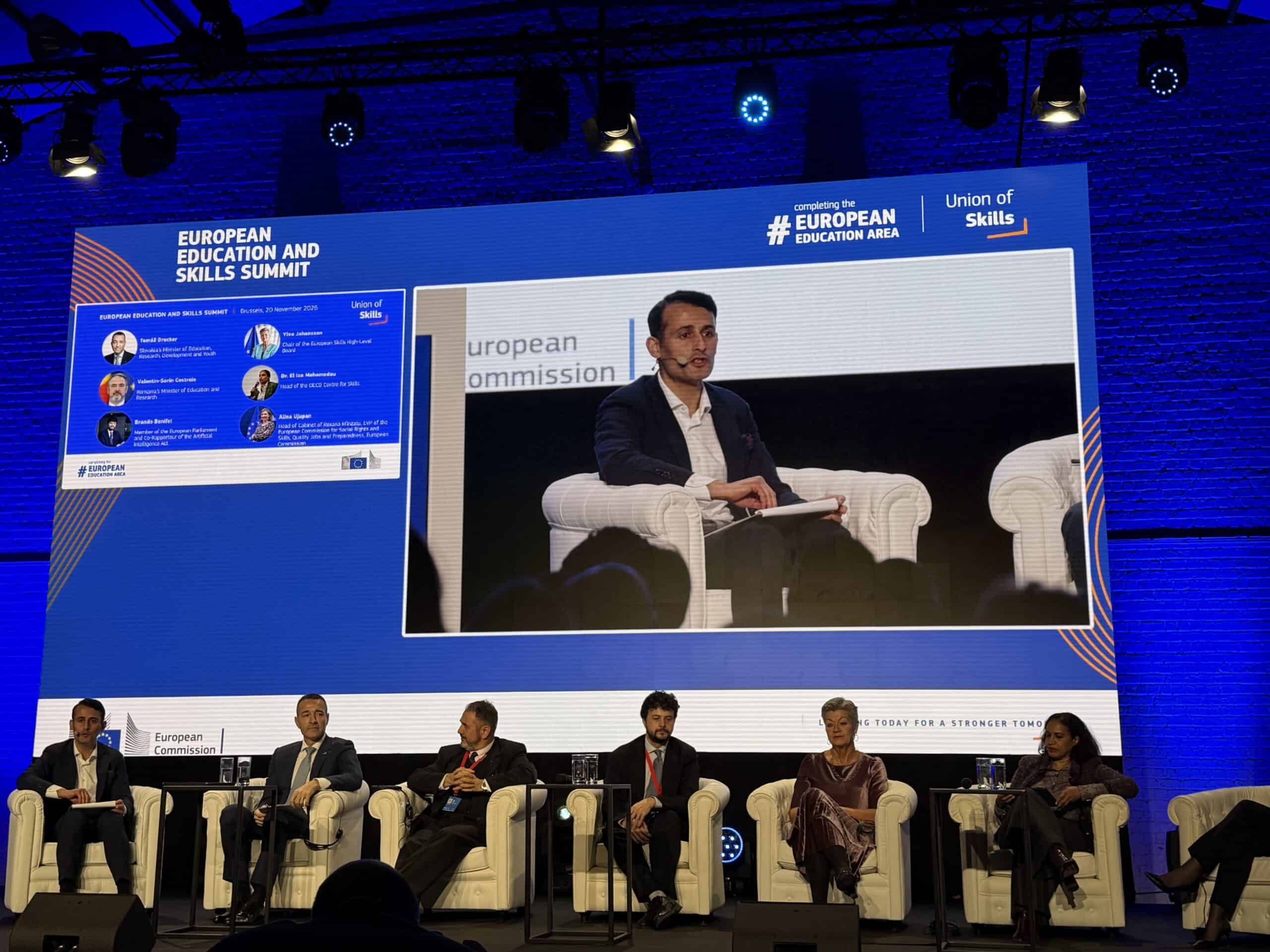
A student, a teacher and an innovator panel
Lars Westra, the 19-year-old former EU Youth Delegate to the United Nations, said that the real value of school lies in equipping students with the skills to transform anger and frustration into action. He urged decision-makers to stop underestimating young people. ‘We care,’ he said.
Rafael Montero, a maths teacher from Spain, described a student who used AI to solve every exercise, yet was unable to translate real-life situations into equations. He said that the question is how to use AI to focus on the human side of learning, and that teachers need AI literacy training to do so.
Diana Miron, a tech entrepreneur, argued that technology is a means to an end, valuable where it demonstrates learning outcomes and improves accessibility, but it is fine to leave it out where it is not helpful. She said that schools must be safe places to make mistakes.
All three agreed that students must be involved in shaping education, not just consulted, and that this involvement is integral to the process.
The first plenary session, titled “Setting the Course: Quality Education Fit for the Future” brought together four ministers, a Member of the European Parliament, and representatives from the employers’ federation. The ministers were from Ireland, Lithuania, Portugal and Slovenia, and the discussion focused on how to implement the Education and Skills Package. Five key messages emerged.
Teachers come first. Ireland’s Minister for Education, Hildegarde Naughton, highlighted shortages in science, mathematics and engineering. AI is a tool, not a replacement for thinking. Minister Naughton said that students need to be able to distinguish between facts and misinformation, and that they should treat AI like any other source of information. The day before, ministers had adopted Council conclusions on AI, as well as on the necessary skills and competences. Meanwhile, Portugal’s Minister Fernando Alexandre outlined plans for improved pay and career structures, as well as paid tuition for future teachers and subsidies for those who move to low-performing areas. Raminta Popovienė, Lithuania’s Minister of Education, Science and Sports, spoke about her country’s teachers’ agenda, which is based on professional autonomy and participation. She made this contribution while the Commission’s proposal for a European Teachers’ Agenda is still awaiting approval by the Council, and while Lithuania, like many other member states, is facing significant teacher recruitment challenges. She stressed that national and European policies only work if they consider local realities, and that regions and municipalities must be involved in developing potential solutions.MEP and Chair of the Parliament’s Culture and Education Committee Nela Riehl, a former teacher, called for teacher training in AI. Equity means equal opportunity. Slovenia’s Minister Borut Rončević defined it as equal opportunity, regardless of background or geography. Portugal demonstrated the potential of vocational education, reducing early school leaving from around 40% to 6% over 25 years.
Co-design beats decree. Daniel Wisniewski of EFEE said that policy is not made by decree; teachers and school leaders must co-design reforms and ministers may change, but institutions should remain.
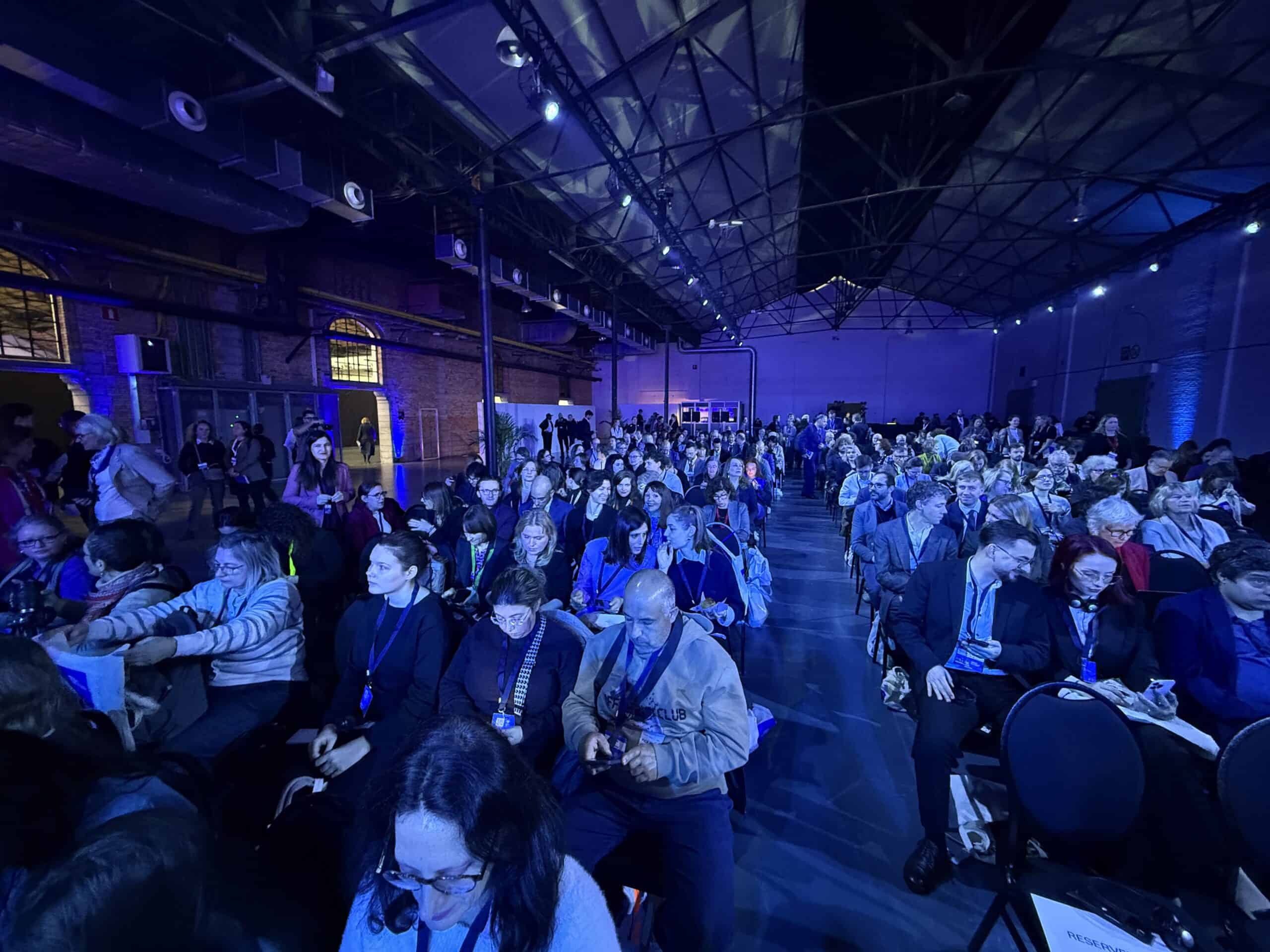
The second plenary session of the programme turned to digital education, trusted infrastructure, technological sovereignty and AI literacy. The third plenary, which focused on Europe’s talent pipeline, adopted a more critical tone.
Ylva Johansson, Chair of the European Skills High-Level Board, called for smart investment to enable upskilling, reskilling and lifelong learning, emphasising that this issue has been under discussion for the past four years. She also mentioned that AI is a topic of discussion at the Board. AI will be everywhere for our children, raising the question of what role schools should play. She called for a focus on human, interactive and creative skills. She also said that Europe lacks ambition and should be more self-critical. PISA results are poor, yet governments seem more concerned about energy bills.
El Iza Mohamedou, Head of the OECD Centre for Skills, said that PISA provides policy direction, not just alarming data, and that family support is declining. She called for children to be placed at the centre of education and for lifelong learning to be made a reality, as participation is low and education and training are not keeping pace with evolving skills needs.
Alina Ujupan, Head of Cabinet to Executive Vice-President Mînzatu, said that education is now at the heart of EU policy. She identified two key areas: the labour force of tomorrow and societal and democratic resilience.
Workshop: Strengthening the attractiveness of the teaching profession and improving career opportunities. The workshop addressed the central theme of the Summit: that teachers are the foundation of every other reform. The discussion focused on the EU Teachers’ Agenda, its implementation, and how to make teaching a profession that people want to pursue and remain in.
Jens Vermeersch, Internationalisation Policy Coordinator at GO! Education of the Flemish Community, reminded the audience that Europe consists of diverse systems, meaning there is no single solution that fits all. However, countries can learn from one another. He stressed the value of European cooperation funding, which he has experienced first-hand, and said it would be a pity if the Council decided to cut budgets in this field. He hoped that the Council would follow the Commission’s proposal. He also welcomed the comprehensive nature of the Teachers’ Agenda. It looks beyond initial teacher education to second-career teachers and special educational needs. Since skills are a priority for the EU, he said that people who enter teaching later in life also need support, which the proposal explicitly acknowledges.
When asked whether vocational education and training is still seen as a second choice, he said that policymakers have been discussing its status for 20 years, yet it is still not always viewed positively. One sign of progress is that, for the first time this year, a European traineeship scheme (the Blue Book) is open to VET trainees. Given the significant changes in the labour market and the difficulty that graduates are experiencing in finding employment, he believes that it is time to adopt an open-minded approach and provide support where it is needed.
Pia Ahrenkilde Hansen, the European Commission’s Director-General for Education, Youth, Sport and Culture, said that while the Commission can propose and support initiatives, decisions on teachers’ careers, preparation and working conditions lie with national authorities, school leaders and the teachers themselves. She added that things will only change if everyone works together. Pia Ahrenkilde Hansen expressed her anticipation for the ambitious Lithuanian Presidency to swiftly advance the agenda. She also highlighted the important role of social partners, stating that teachers and their representatives know what makes the job rewarding, and encouraging member states to strengthen dialogue with the profession.
Regarding funding, she acknowledged that new money is needed. EU funds will be brought together in upcoming national and regional partnership plans, including the European Social Fund Plus, to complement national and regional investment. She announced a new generation of Teacher Academies (‘Teacher Academies 2.0’), with applications opening in 2027 and focusing on novice teachers and school leaders. Erasmus+ will continue to fund mobility, cooperation and peer learning to spread best practice.
In her closing remarks, she said that Europe must “talk up” the role of teachers to reflect their true value because they make a real difference to children’s lives.
For the first time, the Summit offered a fully interactive experience that brought its theme to life through three spaces, which were a very interesting part of the day. The EdTech Lab presented innovative solutions from Europe’s EdTech community. In the Classroom, teachers and students showcased real-life examples of forward-looking learning practices. The Projects Library featured EU actions and initiatives that support innovation and the development of schools fit for the future. Together, these spaces let participants visualise the future of education and engage directly with educators, learners, innovators and project representatives.
Check the European Education and Skills Summit: https://education.ec.europa.eu/whats-new/events/2026-european-education-and-skills-summit
Education Package: https://education.ec.europa.eu/focus-topics/improving-quality/education-and-skills-package