
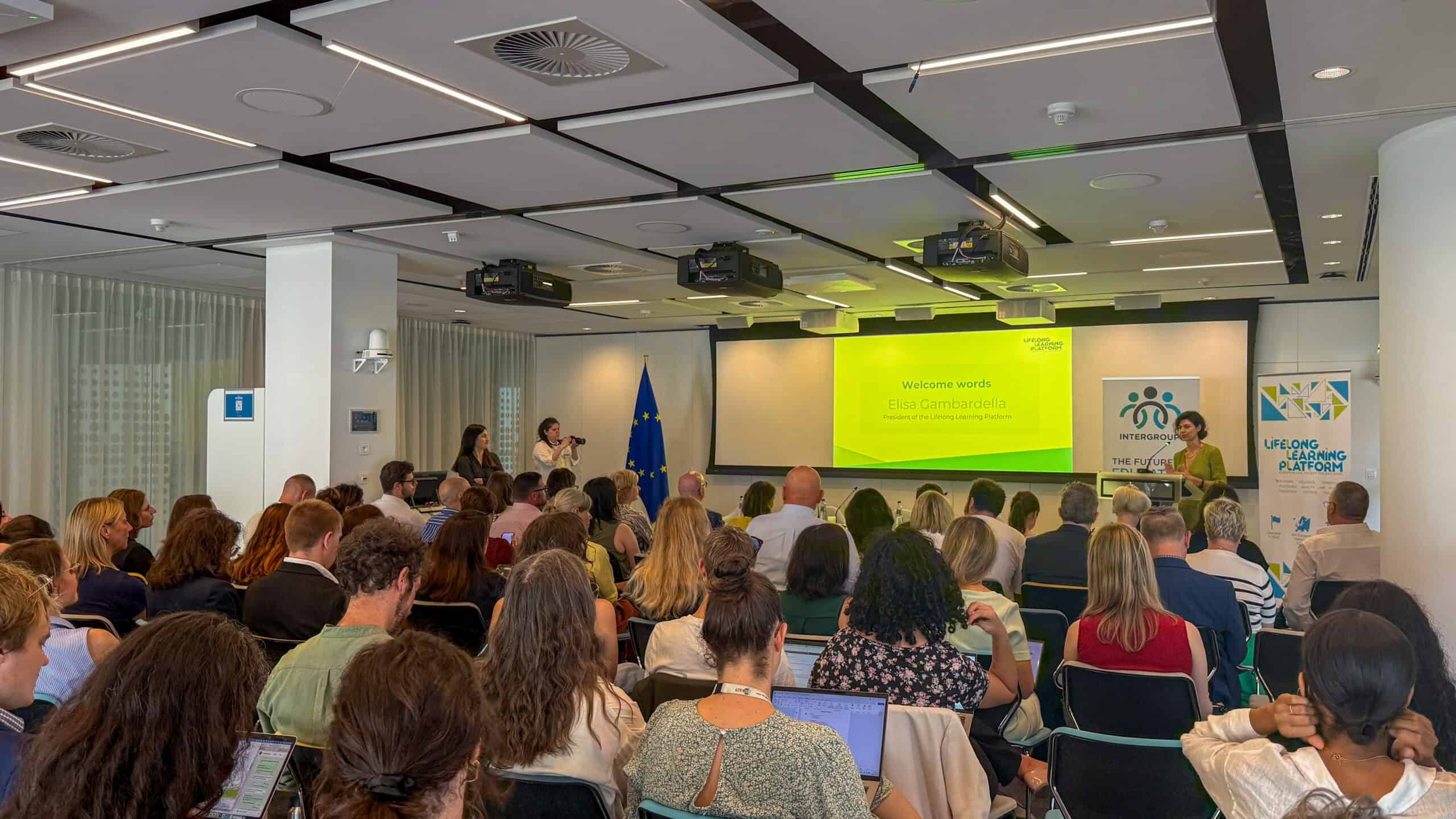
The Lifelong Learning Platform (LLLP) organised a crucial high-level policy debate at the European Parliament Hub in Brussels, addressing one of the most transformative and disruptive topics in today’s learning ecosystem: Artificial Intelligence (AI). The event brought together policymakers, vocational education and training (VET) providers, researchers, higher education institutions, tech leaders and stakeholders to dissect the many questions surrounding the use and effects of AI and tackle the issues requiring urgent policy change.
Opening
The LLLP opened its annual high-level policy debate with a welcome address by Elisa Gambardella, LLLP president, which set out a clear message: rather than accepting artificial intelligence (AI) as an inevitable force in education, stakeholders should call on educators, trainers and policymakers to engage with AI critically and on their own terms.
She invited the community to approach AI ‘with a questioning spirit, driven by curiosity and a sense of exploration’, which she described as the hallmark of the LLLP. She stressed that a lack of technical expertise or being dismissed as reactionary is not the way forward. Instead, she pointed out to the need for spaces in which to ask questions, reflect on effective practices, and determine the desired level of AI uptake.
In her message address she argued against treating AI’s spread in education as inevitable or unquestionable. She stated plainly: “We cannot just accept, passively, the common assumption that AI is inevitable, that AI is here to stay, that we need to change everything about how we teach, and that we need to learn from AI”.
She also anchored the debate in the LLLP’s 2017 position paper on digital education, highlighting four messages that are still relevant today:
- social change is brought about by people, not digital technology;
- digital technology must be carefully integrated and not imposed on learners;
- we must turn words into action by investing in teachers as transformers and awakeners;
- the digital divide will persist as long as there is a basic skills gap. She also warned that AI will inevitably exacerbate inequalities if foundational skills are not addressed first.
She concluded with a clear ambition “to find ways for this community to get involved in AI cooperation, particularly in terms of how AI is used in education and training, and to ensure that it is a means of social progress.”
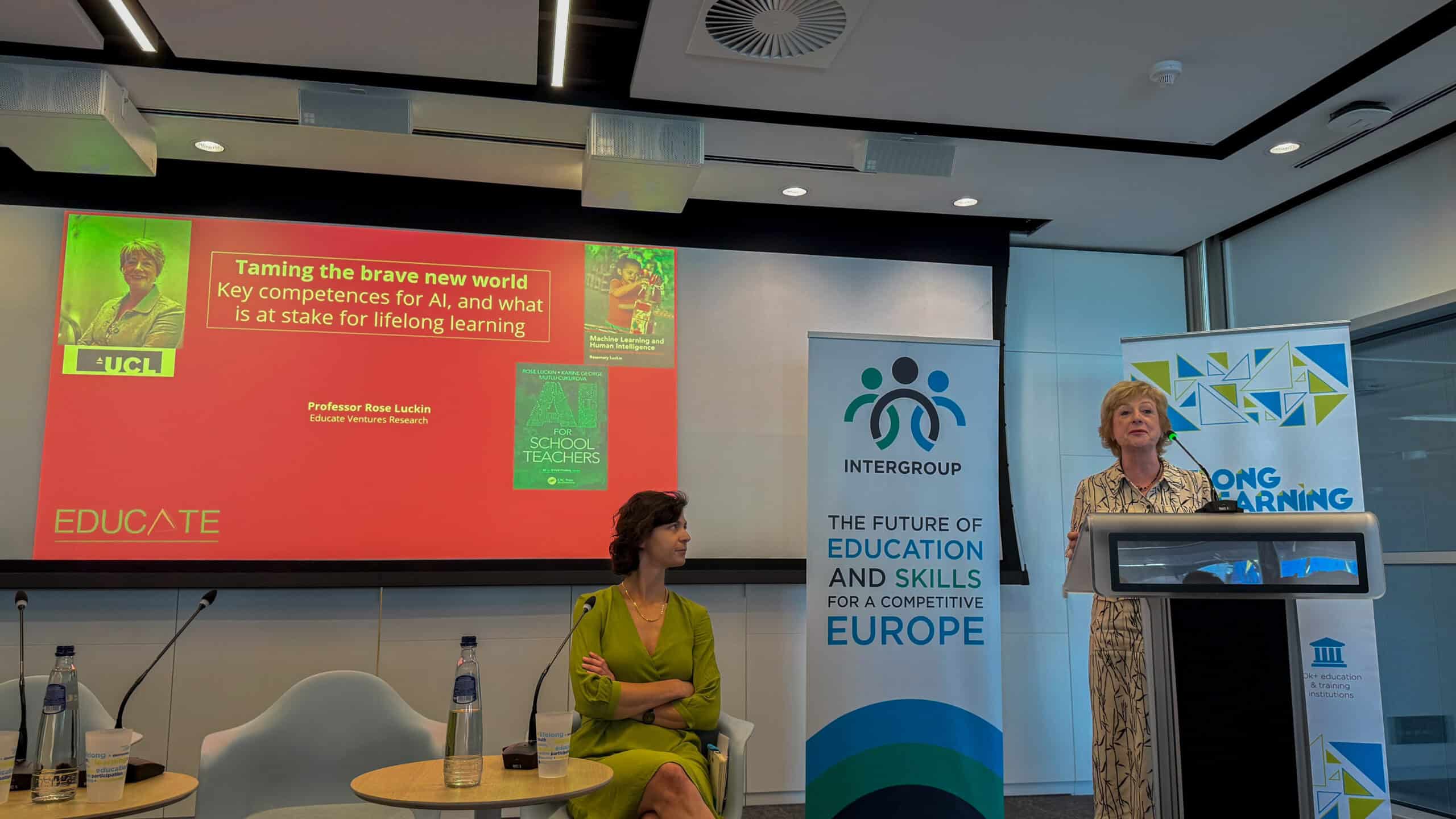
Taming the Brave New World: Competencies for the Age of AI
In her keynote speech, Professor Rose Luckin of Educate Ventures Research urged us not to fear that machines will overtake human intelligence, but rather to beware of allowing them to do so too readily. She argued that AI has been created in our own image – a limited one based on what we have measured about our own intelligence – leaving many essential human capacities unaccounted for.
To illustrate this, she shared a personal reflection: while walking through Brussels that morning, she found herself distracted by a pair of boots left on the pavement. She argued that the self-correction required to refocus, plan ahead and regulate one’s own thinking is a core part of human intelligence that no AI can fully replicate. Professor Rose Luckin stressed: ‘There is no AI that can do all of that — it’s not possible.‘
In her input, she cautioned against the emergence of a hierarchy in AI access, in which the quality of available tools depends on what individuals and nations can afford. She likened this to Aldous Huxley’s dystopian vision in the novel Brave new world. She warned against education systems that prioritise hyper-personalised, screen-based learning over meaningful human interaction. adding that this scenario, once unthinkable, is now “a little bit closer to reality” than she would like. Her final core message: “We need to make sure that AI increases the sophistication of our human capabilities, not the opposite. Key competencies — including personal, social, and learning-to-learn skills — must be placed at the centre of any AI strategy in education”.
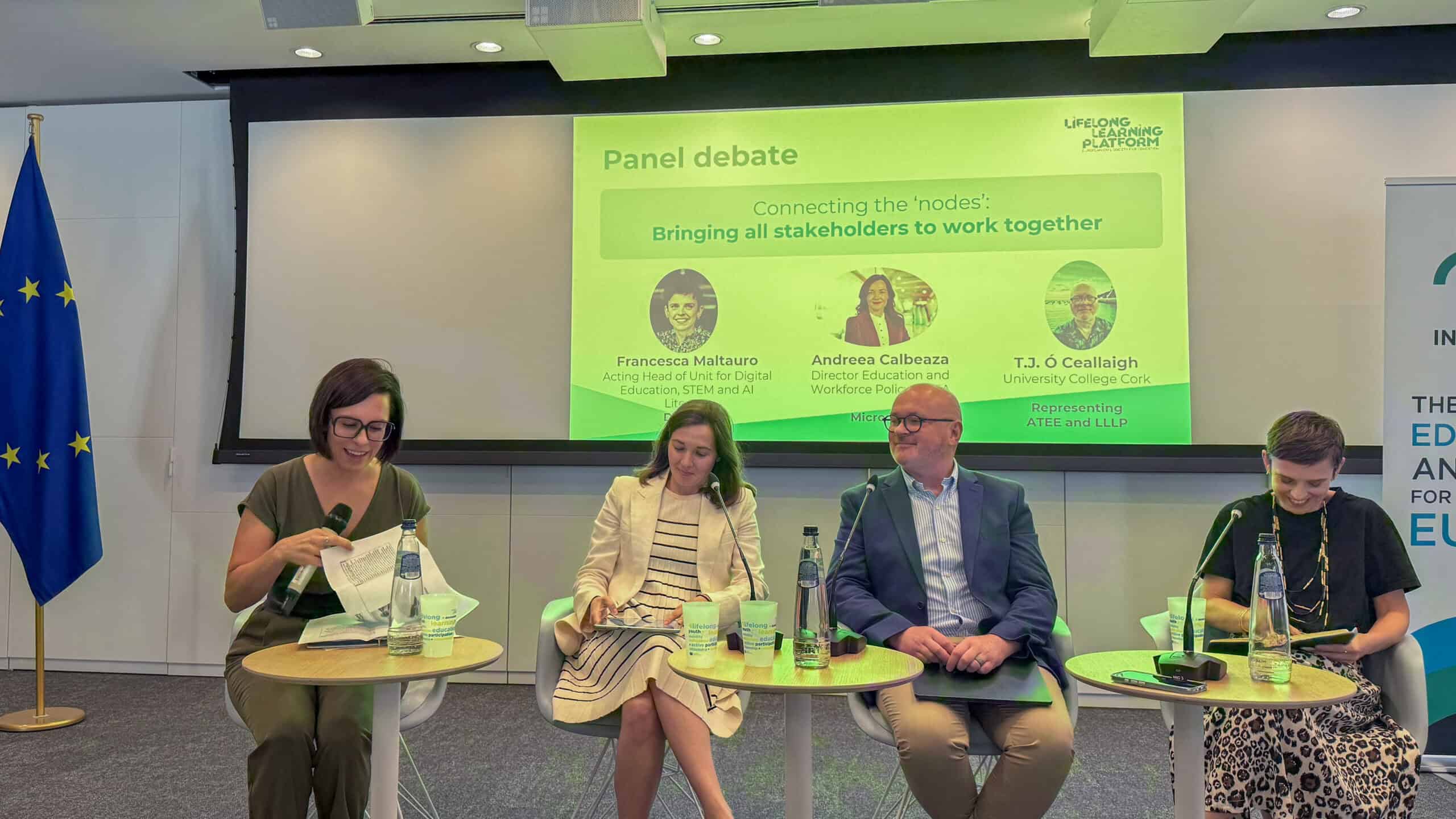
The debate opens: radical questions on humanity, creativity, and AI’s place in Education
Artificial intelligence (AI) is rapidly transforming education, raising important question about how learners, teachers, institutions and policymakers should prepare for the future. Moderated by Giulia Meschino, Vice President of LLLPlatform, the panel discussion on AI literacy and education gathered representatives from the European Commission, Microsoft and Academia to explore how AI can support education while ensuring human values remain at its core.
Francesca Maltauro, acting head of unit for Digital Education, STEAM and AI Literacy from the European Commission’s Directorate-General for Education, Culture and Audiovisual, underlined “the more technology we have, the more humanity we need”. This sentiment echoed across the room, originally attributed to Vice President Vidal, and reinforced throughout the discussion.
Andrea Calbeaza, Director for Education and Workforce Policy EMEA at Microsoft, underlined that AI should be viewed as a tool to enhance learning, not as a replacement for teachers. She highlighted its work with educators through professional learning communities, training programmes and AI tools designed to reduce administrative tasks. By giving teachers more time to focus on their students, AI can strengthen rather that weaken the learning experience. Students’ use of AI tools should encourage curiosity, questioning and critical thinking instead of simply providing ready-made answers.
J. Ó Ceallaigh,representing ATEE and University College Cork, stressed that AI is changing not only how knowledge is accessed, but also how it is created and interpreted. Consequently, education must place greater emphasis on transversal skills such as critical thinking, creativity, ethical judgement, collaboration and lifelong learning. Preparing teachers was identified as a key priority, with a call for AI to be integrated into teacher education programmes rather than being taught as a separate topic.
In the exchange, participants questioned whether carefully integrating AI as a tool is sufficient, or whether the education community needs to reconsider the fundamental purpose of learning and what it means to be human in an age of intelligent machines. The discussion emphasised that machines may have their own place in the educational system if the goal is to nurture individuals who are fully human, creative and socially aware.
The panel concluded that AI represents an opportunity to improve education, provided it is implemented responsibly and inclusively. Teachers remain at the heart of the learning process, while AI should serve as a supportive tool that enhances teaching and learning. Investing in AI literacy, teacher training, critical thinking and lifelong learning will help ensure that education prepares learners not only to use AI effectively but also to shape its future responsibly. Therefore, the success of AI in education will depend on collaboration, trust and a shared commitment to putting people before technology.
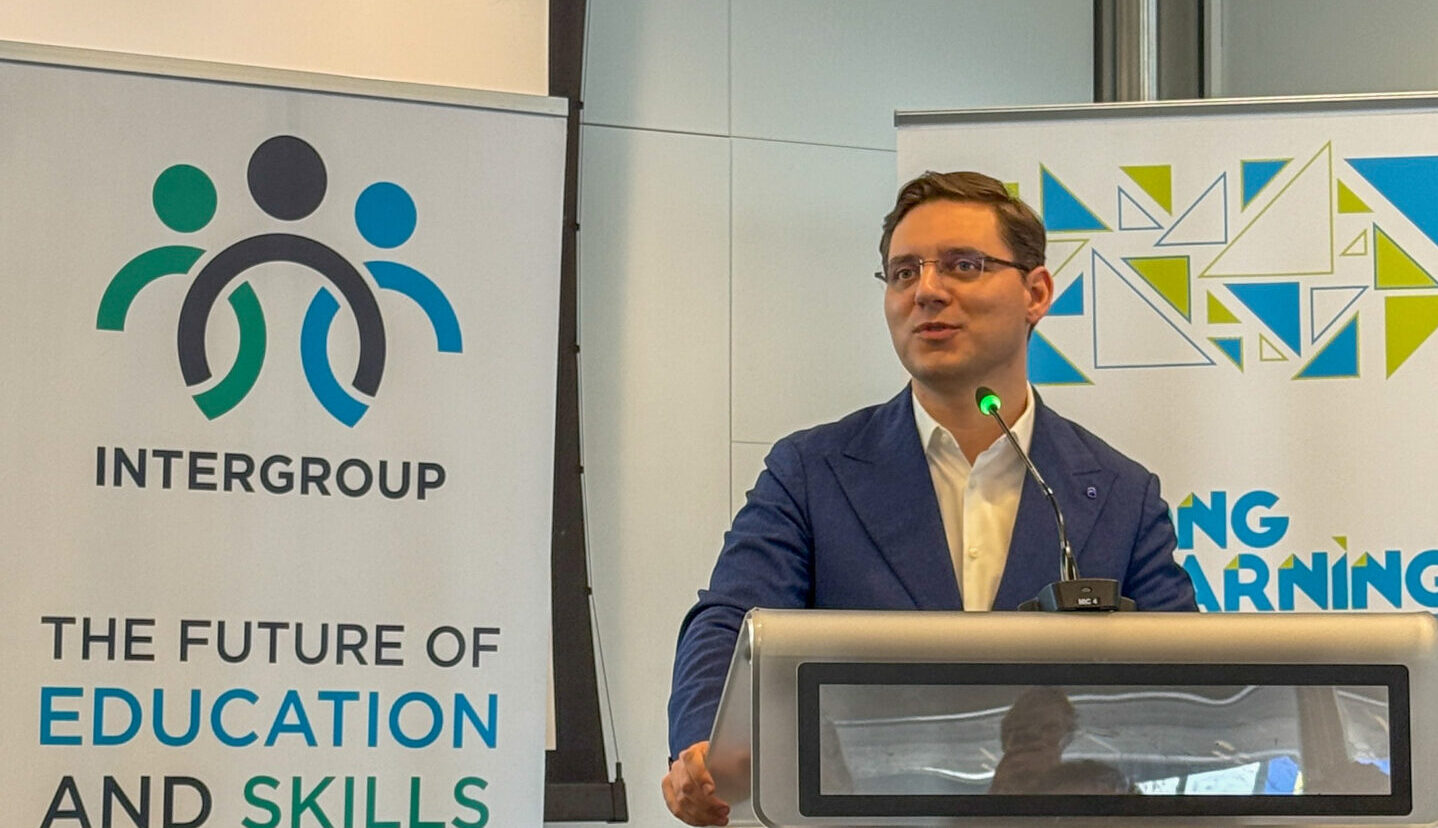
A community committed to hsaping – not simply adapting to – the Age of AI
Victor Negrescu, Vice-President of the European Parliament and Co-Chair of the Intergroup on the Future of Education and Skills, concluded by noting that the high-level policy debate made one thing clear: the Lifelong Learning Platform and its 45 member networks will not unquestioningly accept the use of artificial intelligence in education, nor will they accept exclusion from the decision-making process.
A consistent set of values emerged across all three sessions:
- People-centred AI must be the priority
- Tools must serve learners, not the other way around
- Critical thinking, creativity and human judgement are irreplaceable.
- Educational communities most affected by AI must have a meaningful voice in its design and deployment.
MEP Victor Negrescu also called for closer cooperation across Europe, pointing out that individual countries cannot successfully address the challenges of AI on their own. European governments should develop common strategies and consult with teachers, parents, students, businesses, researchers and civil society when designing AI policies. Additionally, he recommended that technology companies develop AI systems specifically for education. Although current AI tools can be adapted for use in classrooms, education-focused systems created in partnership with educators would better meet the needs of students and teachers. MEP Negrescu also underlined the importance of governments providing dedicated funding for AI in education and digital skills programmes.
In conclusion, both participants and speakers emphasised the need for immediate action. Europe can ensure that AI benefits everyone and prepares citizens for the future by investing in education, encouraging lifelong learning and creating appropriate regulations.