
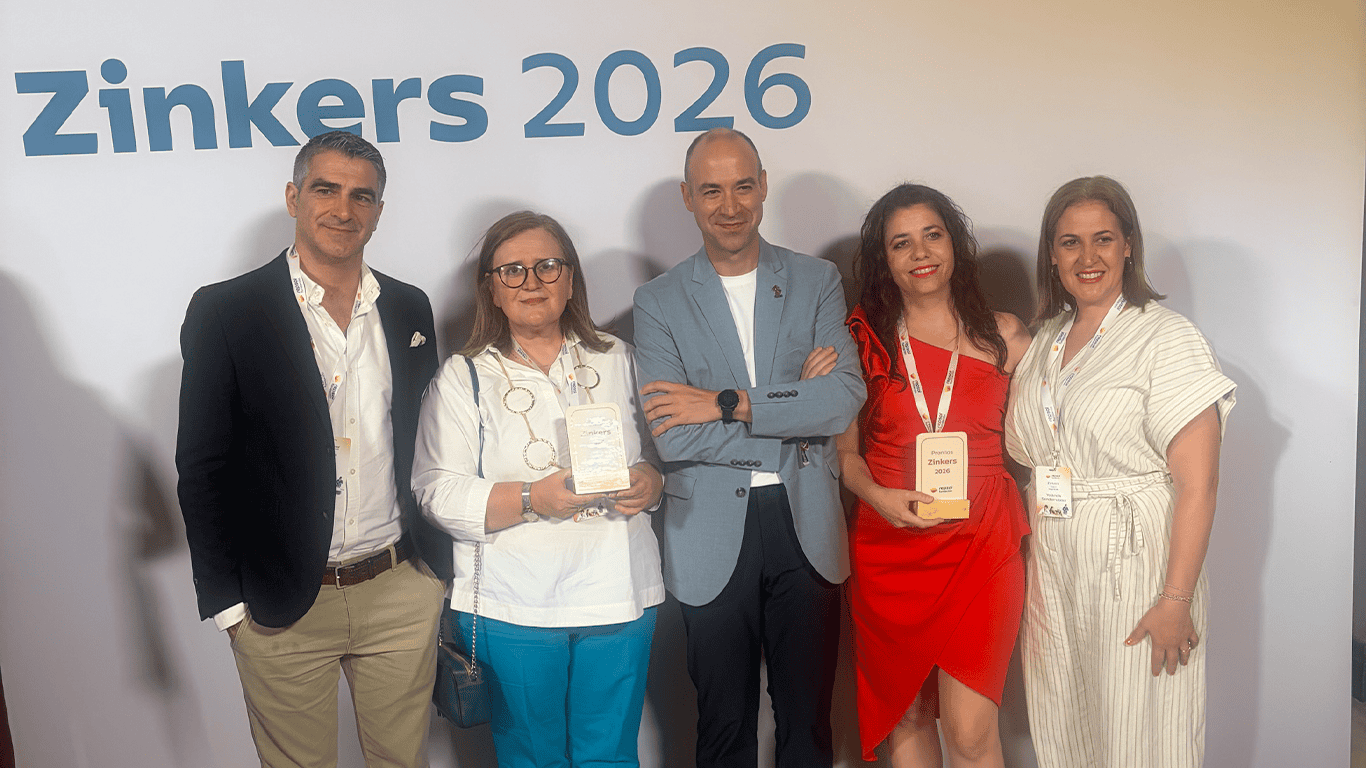
Giving metal waste a second life and transforming it into useful, functional and marketable products. This is the idea behind ReForja Manzanares, a project developed by students at IES Azuer, in Manzanares (Ciudad Real), a member school of FPEmpresa, which has been recognised in the 1st edition of the Zinkers FP Awards organised by Fundación Repsol in the Higher Vocational Education and Training category.
The award includes €2,500 to develop an educational innovation project, as well as an activity for the winning students, and recognises an initiative that brings together technical training, the circular economy, entrepreneurship and commitment to the local community.
ReForja Manzanares has been developed by first-year students enrolled in the Higher VET Programme in Production Programming in Mechanical Manufacturing. The initiative emerged from a local reality: metal waste collected at the municipal recycling centre that could still be reused and given a second life.
Based on this situation, the students designed a circular economy model applied to the machining sector, focusing on the recovery, sorting and transformation of materials. The project demonstrates how the knowledge and skills acquired during their training can be applied to real challenges in their local area.

ReForja Manzanares project logo
From metal waste to a new product
The project is based on processes commonly used in machining and mechanical manufacturing. The recovered materials are transformed into new items such as planters, barbecues, garden furniture and decorative objects, helping to extend their useful life and reduce waste generation.
The process has been designed around the principles of continuous improvement, efficient use of resources and sustainability, while also incorporating a business perspective. The initiative therefore goes beyond simply reusing materials: its aim is to transform them into functional and marketable products, linking environmental sustainability with economic viability.
In this way, ReForja Manzanares brings the principles of the circular economy into a specific production environment and connects them directly with the technical skills developed as part of the VET programme.


Students at the heart of the entire process
One of the central features of the project has been the students’ involvement from its earliest stages. They have taken part in identifying the problem, designing the idea, developing the plan, preparing the application and implementing specific solutions in the workshop.
This involvement turns the project into a learning experience closely connected to real-life situations, allowing students to develop not only technical knowledge but also skills such as teamwork, creativity, responsibility and commitment.
The initiative also has an impact that goes beyond the workshop itself. On the one hand, it showcases the potential of VET to develop useful projects with direct practical applications. On the other, it helps raise awareness of resource efficiency, waste reduction and the creation of value within the local community.
At the same time, the project seeks to strengthen links between the education centre, the business community and wider society, presenting Vocational Education and Training as an environment capable of generating innovation and promoting more responsible production models.
Author:The Association of Vocational Training Centres, FPEmpresa